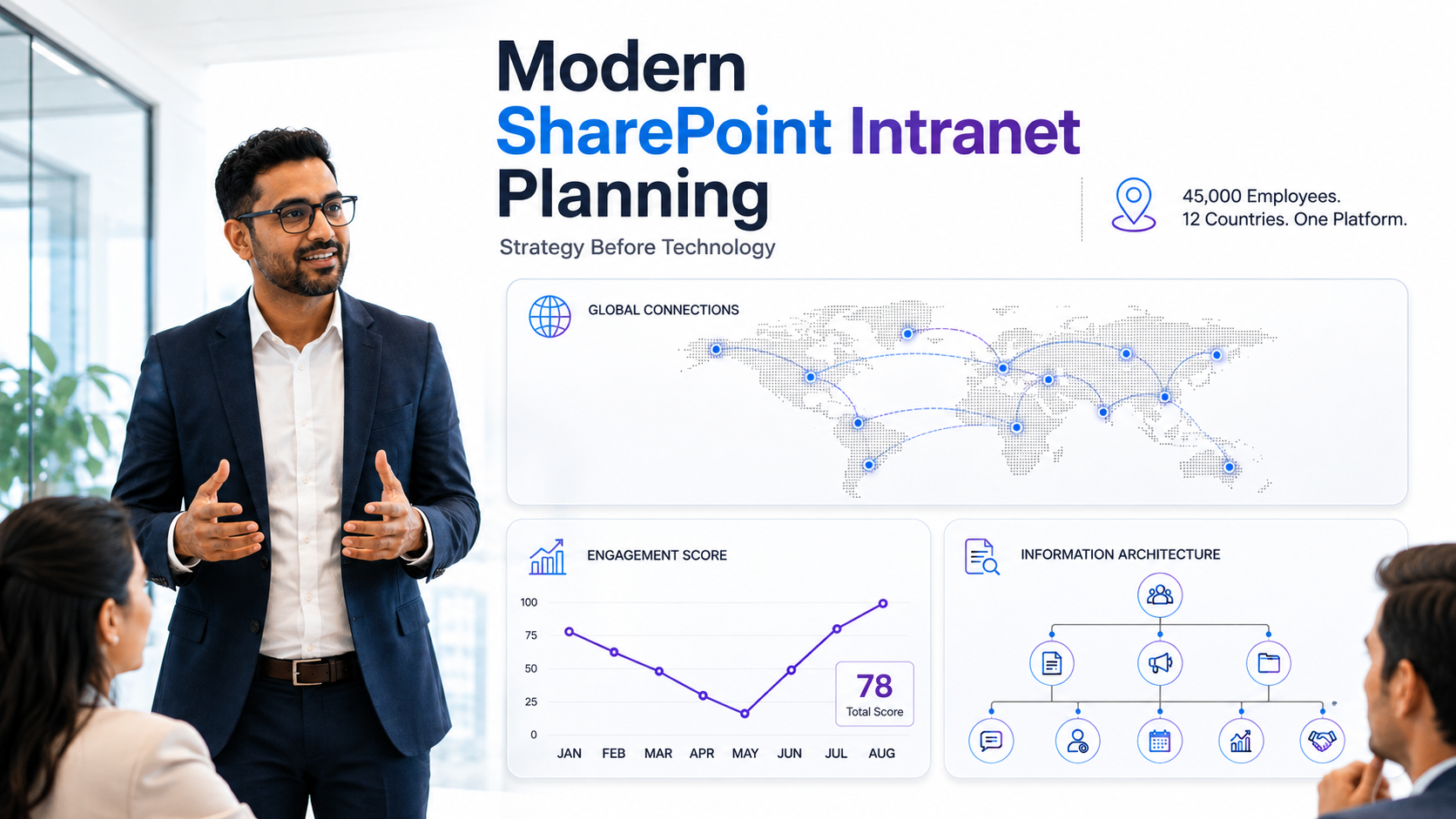
Modern SharePoint Intranet Planning: A Strategic Framework for Enterprise Organizations
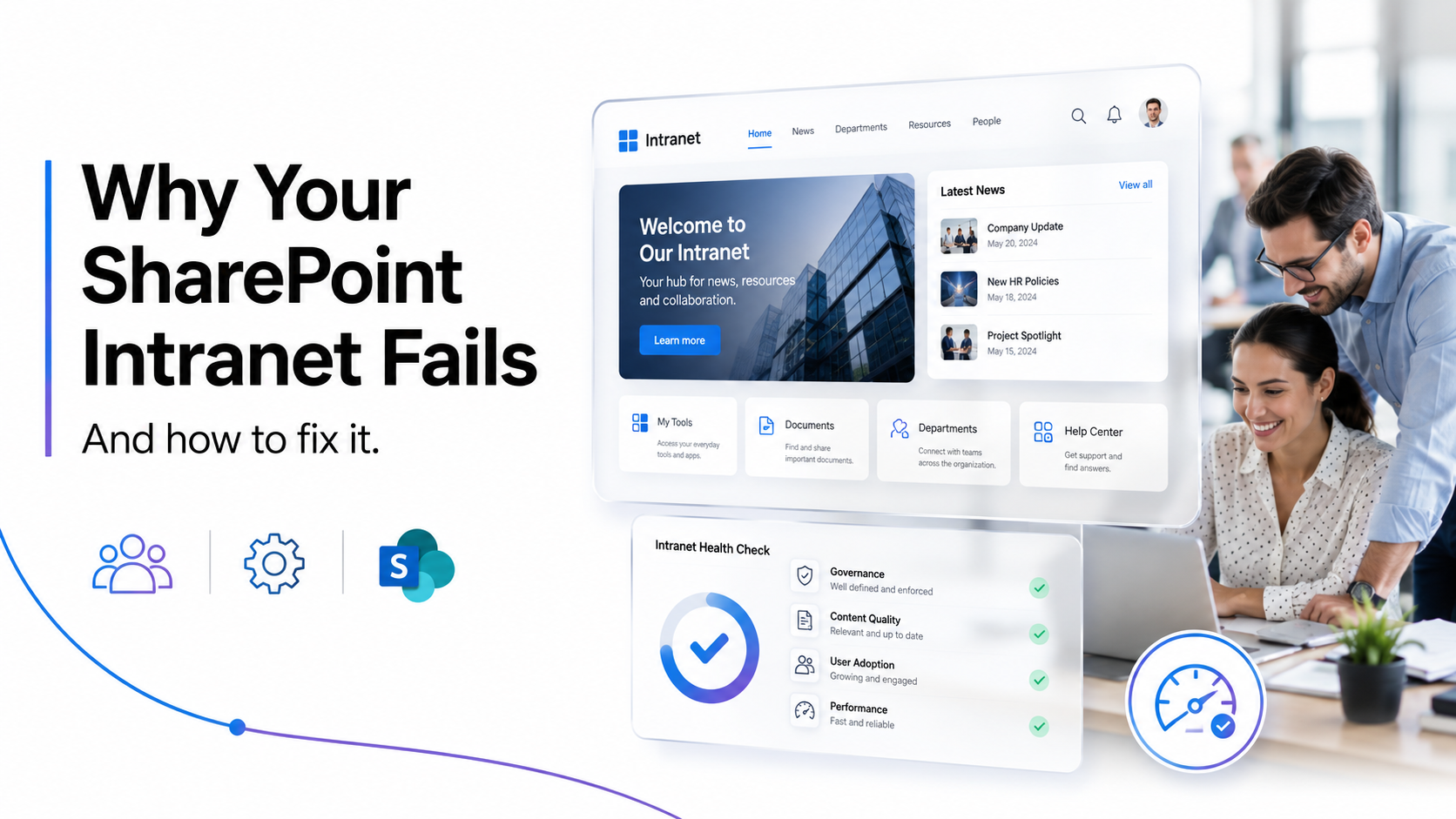
Modern SharePoint intranet planning is fundamentally about aligning organizational structure, communication strategy, and employee experience design before implementation begins. A Fortune 500 financial services company with 45,000 employees across 12 countries faced fragmented communication spread across SharePoint 2013, three separate HR systems, and dozens of departmental sites no one could find. Employee engagement scores declined steadily. Leadership asked a crucial question: why was internal communication so broken? The answer wasn’t technology. It was strategy.
Key Takeaway
Modern SharePoint intranet planning isn’t about selecting software. It’s about designing the organizational communication framework that makes any platform successful. Strategy before technology. Always.
In This Article
- Why Modern SharePoint Intranet Planning Matters Now
- The Core Challenge: Planning a Modern SharePoint Intranet at Scale
- The Solution: Strategic Planning for Modern SharePoint Intranet Development
- Why Leading Enterprises Choose AscenWork for Modern SharePoint Intranet Success
- Industry Applications: SharePoint Intranet Success Across Sectors
- How to Get Started: 5-Step Modern SharePoint Intranet Planning Process
- Frequently Asked Questions
Why Modern SharePoint Intranet Planning Matters Now
Remote and hybrid work have fundamentally changed what employees expect from internal communication. A decade ago, an intranet was primarily a content repository. Today, it’s an operational platform where employees must find information quickly, collaborate across time zones, and access resources without friction. Modern SharePoint intranet solutions directly address this shift.
Organizations with outdated intranets face measurable costs. Employee onboarding time extends significantly when critical information is scattered across multiple systems. Retention suffers because new hires feel disconnected. Productivity decreases when searching for a policy or procedure takes longer than actually doing the work. Research from industry analysts demonstrates the gap between performers and laggards in internal communication platforms.
“Organizations with modern digital workplace platforms achieve 23% to 30% higher employee engagement scores than those relying on legacy systems. Engagement directly correlates with retention, productivity, and customer satisfaction outcomes.”
Gartner Digital Workplace Maturity Research, 2023
On top of that, regulatory compliance and data governance have become non-negotiable. Financial services firms must track communication retention. Healthcare organizations require HIPAA-compliant document storage. Manufacturing and logistics companies need role-based access controls across global operations. A modern SharePoint intranet built with governance in mind solves these problems from day one rather than bolting them on afterward.
And here’s the thing: the rise of AI-integrated search and content discovery means modern SharePoint intranets can deliver personalized experiences. An engineer looking for technical specifications receives different results than a manager searching for company policies. This relevance increases adoption and reduces the cognitive load of navigation.
The Core Challenge: Planning a Modern SharePoint Intranet at Scale
Most organizations don’t fail at SharePoint technology. They fail at strategy. Here are the critical challenges enterprises face when planning a modern SharePoint intranet:
- Fragmented information architecture: Content scattered across dozens of sites with no consistent taxonomy. Employees can’t find what they need because there’s no predictable naming convention or organizational logic.
- Low adoption despite platform investment: A beautiful SharePoint environment sits idle when change management is neglected. Users continue relying on email because the intranet wasn’t designed around how they actually work.
- Compliance and governance misalignment: Records retention policies aren’t enforced. Access controls don’t match organizational structure. Audit trails are unclear. Technical debt accumulates from legacy migrations.
- Stakeholder misalignment: IT wants a secure, governed platform. HR wants employee engagement and culture. Communications wants a beautiful publishing channel. Finance wants to measure ROI. Without alignment, every stakeholder pulls in a different direction.
- Difficulty proving ROI: Leadership invests significant resources but can’t track whether employee engagement actually improved. Time-to-find-information metrics go unmeasured. The platform’s business impact remains unclear.
- Technical debt from legacy systems: Migrating from SharePoint 2013 or legacy intranets often means inheriting poor information architecture, duplicate content, and outdated workflows. Building modern capability on top of this foundation is exponentially harder.
Worth noting: the consequence of these failures compounds quickly. A poorly planned modern SharePoint intranet implementation doesn’t just underperform. It damages organizational trust in digital platforms generally. When employees have one bad experience with intranet adoption, they resist future initiatives.

The Solution: Strategic Planning for Modern SharePoint Intranet Development
A proper modern SharePoint intranet planning approach addresses each pain point systematically. Rather than launching into platform configuration immediately, successful organizations invest in strategy first. This means defining what employee success looks like before building the experience.
Strategic planning for modern SharePoint intranet development accomplishes three critical outcomes. First, it creates a clear vision that all stakeholders, IT, Communications, HR, Finance, and department heads, can rally behind. Second, it establishes information architecture and governance models that scale predictably. Third, it identifies quick wins and phased milestones that build momentum and demonstrate ROI early.
Expert Perspective
In our work with enterprise clients, we’ve consistently observed that projects generating highest adoption and engagement are those that separate discovery and strategy, weeks of listening to user workflows, from implementation, months of building. Teams that skip the listening phase build platforms that look good but don’t solve actual problems. Those that invest in strategy first deploy solutions that employees use without prompting.
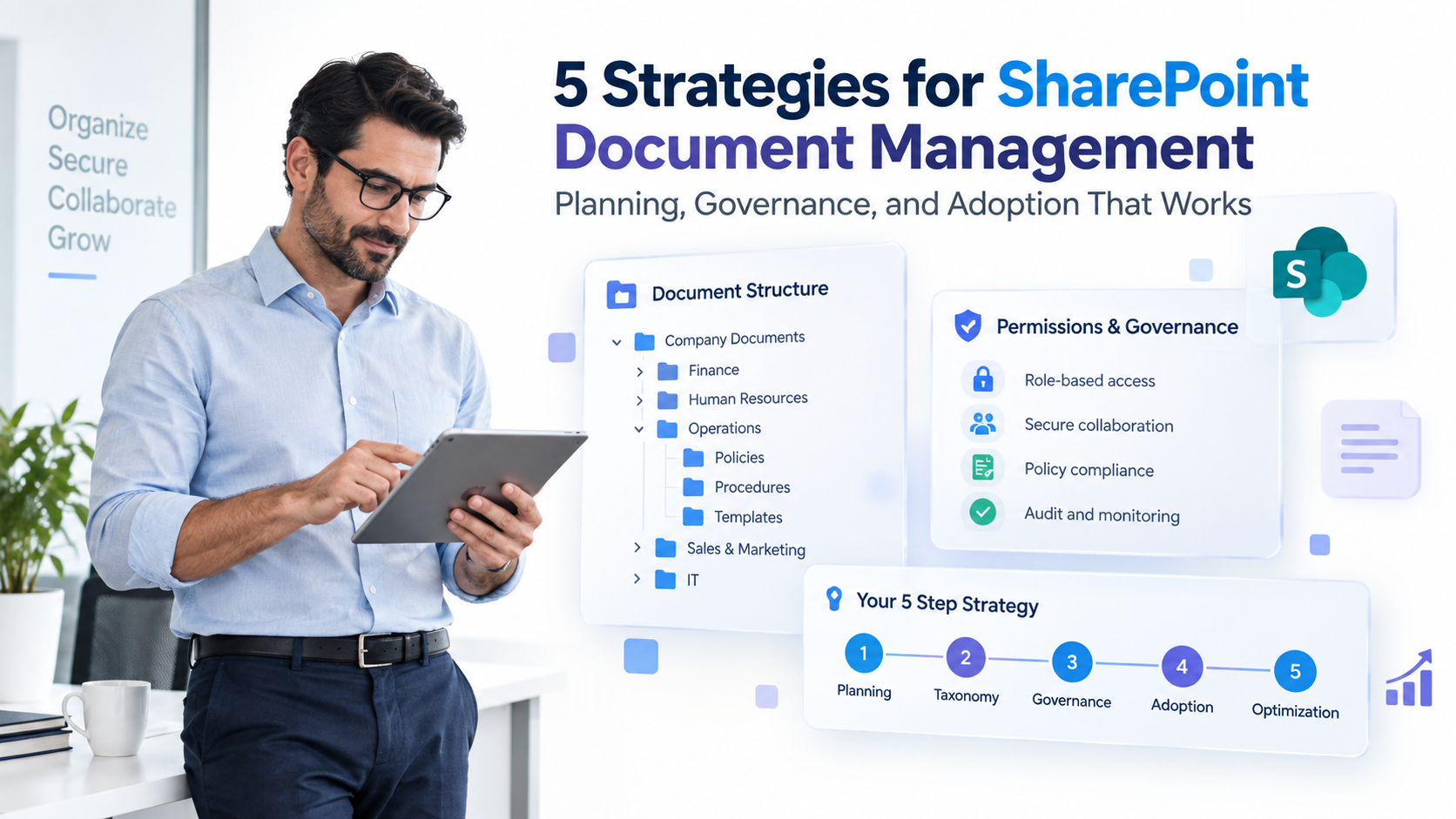
A modern SharePoint intranet built on proper strategy typically includes several foundational components. Hub sites organize content by organizational function or audience segment. Communication sites deliver targeted messages to specific groups. Metadata and taxonomy standards ensure searchability across thousands of pages. Governance models clarify ownership, approval workflows, and content lifecycle. Adoption strategies address training, change management, and sustained engagement.
Here’s the thing most guides won’t tell you: when evaluating a partner or consulting firm for modern SharePoint intranet development, look beyond technical credentials. Does the firm understand your business outcomes, not just SharePoint features? Can they translate employee workflows into platform architecture? Do they have a track record implementing governance models that actually stick after launch? The best partners think like organizational strategists first and technologists second.
Why This Matters for Enterprise Scale
Enterprise organizations managing thousands of users across multiple regions can’t afford learning-by-doing approaches. A modern SharePoint intranet that works well for 50 people often breaks under the weight of 5,000 active users if foundational decisions weren’t made thoughtfully. Performance degrades. Search becomes unreliable. Navigation that worked for one department confuses another region.
In most cases, compliance requirements in regulated industries mean modern SharePoint intranet planning must address governance from day one. Financial services firms can’t retrofit GDPR compliance or records retention after launch. Healthcare organizations can’t add HIPAA controls as an afterthought. Proper planning prevents costly retrofitting.
Why Leading Enterprises Choose AscenWork for Modern SharePoint Intranet Success
Organizations worldwide trust AscenWork to guide modern SharePoint intranet initiatives because we combine strategic thinking with proven delivery. Our approach separates us from generic technology consultants and offshore development shops.
| Capability | AscenWork | Generic Technology Consultants |
|---|---|---|
| Strategy Before Technology | 8-week discovery phase uncovering employee workflows and business drivers before any platform decisions. Documented information architecture approved by stakeholders before build. | Rapid needs assessment followed by immediate technology recommendations. Strategy often compressed or skipped to accelerate project timeline. |
| Governance & Change Management Expertise | Embedded change management specialists work alongside architects. Adoption models are built into project planning, not added at the end. Sustainability frameworks that outlive the initial project. | Technical implementation leads governance discussions. Change management treated as soft skills or relegated to training phases. Minimal focus on long-term sustainability after launch. |
| Enterprise Complexity Experience | We’ve guided modern SharePoint intranet implementations for organizations with 2,000+ users across multiple regions, business units, and legacy systems. Compliance expertise in regulated industries including financial services and healthcare. | Portfolio often weighted toward small-to-mid-market implementations. Limited exposure to governance complexities, multi-region deployments, or compliance-heavy environments. |
| Measurable Adoption & ROI | We define success metrics in the strategy phase and track them continuously. Our modern SharePoint intranet clients typically see 65%+ daily active user rates and measurable engagement improvements within 6 months of launch. | Success often defined as “platform is live.” Post-launch adoption metrics frequently go unmeasured. ROI difficult to isolate from other organizational changes. |
Beyond that, our team includes former corporate communications directors, IT governance leads, and organizational strategists, not just SharePoint developers. This diversity of experience means we think about your modern SharePoint intranet as a business transformation initiative, not a software deployment project.
Additionally, we maintain ongoing partnerships with clients after launch, ensuring that governance models stick and the platform evolves with organizational needs. Modern SharePoint intranet success isn’t about the ribbon-cutting. It’s about the platform becoming indispensable to daily work.
Industry Applications: SharePoint Intranet Success Across Sectors
A modern SharePoint intranet platform built on solid strategy serves different industries with distinct needs. Here’s how leading organizations across sectors leverage modern SharePoint intranet capabilities:
Financial Services & Banking
Modern SharePoint intranet systems in financial services must balance openness with security. Employees need quick access to compliance updates, regulatory changes, and risk management procedures. Simultaneously, data governance and audit trails are non-negotiable. Hub sites organize content by division: Investment Banking, Wealth Management, Operations. Metadata tags ensure every compliance document is discoverable by regulatory requirement. Role-based access controls prevent junior employees from viewing sensitive risk assessments.
Healthcare & Life Sciences
Healthcare organizations deploying modern SharePoint intranet systems must address HIPAA compliance, shift coordination, and clinical documentation. A hospital’s modern SharePoint intranet connects desk-less workers, nurses, technicians, scheduling coordinators via mobile-optimized communication sites. Shift change notices, staffing updates, and clinical protocols must be immediately accessible. Additionally, patient privacy protections extend into the intranet itself, where access to certain content is restricted by department and role.
Manufacturing & Logistics
Modern SharePoint intranet implementations in manufacturing connect office-based teams with warehouse, production, and field operations staff who may have limited desk time. A modern SharePoint intranet becomes the coordination hub for supply chain communication, safety alerts, and production schedules. Mobile accessibility is critical. Shift-based information delivery ensures that night-shift workers receive relevant updates without being overwhelmed by daytime messages.
Higher Education
Universities and research institutions use modern SharePoint intranet systems to balance faculty research collaboration, administrative efficiency, and student/staff information separation. A modern SharePoint intranet organizes content by college, department, and research group while protecting student records from faculty view. Communications sites deliver institutional announcements and HR updates, while department-specific hub sites coordinate research initiatives, hiring decisions, and curriculum development.
How to Get Started: 5-Step Modern SharePoint Intranet Planning Process
Organizations ready to evaluate or upgrade their modern SharePoint intranet can follow a structured approach. This five-step process ensures decisions are informed and aligned:
- Define Goals and Stakeholders: Clarify what success looks like for your organization. Is it improved employee engagement scores? Faster information discovery? Reduced email volume? Identify executive sponsors from IT, Communications, HR, and line-of-business leadership. Document their priorities, which will often differ initially. Outcome: Alignment on a shared definition of success and a project governance structure.
- Assess Current State: Conduct an honest audit of existing intranet infrastructure, content, user roles, and pain points. What content actually drives employee workflow? What sits dormant? Which legacy systems create friction? Interview employees across different roles and regions to understand real-world experience. Outcome: A baseline understanding of what to migrate, modernize, retire, or rebuild in your modern SharePoint intranet.
- Design Information Architecture and Taxonomy: Build a user-centered information model based on employee personas and workflows rather than organizational charts. Define hub site hierarchy, communication site purposes, and metadata standards. Create wireframes and navigation prototypes that reflect how employees actually search for information. Outcome: A documented, stakeholder-approved blueprint for your modern SharePoint intranet structure before any development begins.
- Plan Governance and Adoption Strategy: Define site ownership, content management responsibilities, approval workflows, and training curriculum. Establish success metrics: daily active users, search effectiveness, time-to-find-information. Create a communication plan that explains why change is happening and what employees will experience. Outcome: A sustainable governance model and adoption roadmap that doesn’t depend on a single person or IT team.
- Pilot, Learn, and Scale: Launch your modern SharePoint intranet to one department or region first. Measure engagement, search quality, and user feedback. Refine based on real-world usage before expanding. Early pilots build momentum, provide evidence of ROI, and prevent costly mistakes at scale. Outcome: A refined, battle-tested modern SharePoint intranet approach ready for full organizational rollout.
Worth noting: organizations should anticipate common pitfalls in SharePoint intranet development before they occur. Many teams skip the governance conversation, underestimate change management effort, or migrate legacy content that should have been retired. Awareness of these patterns helps avoid them.
Frequently Asked Questions
What’s the difference between a modern SharePoint intranet and legacy systems?
Modern SharePoint intranets run on cloud-based Microsoft 365 infrastructure, delivering responsive design that works on mobile devices, powerful search capabilities, seamless integration with Teams and other collaboration tools, and easier content management without IT involvement. Legacy systems, often SharePoint 2013 or earlier, run on-premises, require substantial IT overhead, lack mobile optimization, and don’t integrate well with remote work tools. Modern SharePoint intranets support how employees work today. Legacy systems force employees to work around technological limitations.
How long does a modern SharePoint intranet project take?
Project timeline depends heavily on organizational size, complexity of legacy system migration, number of stakeholders requiring alignment, and desired scope. A strategic planning and discovery phase should precede any commitment to a deployment estimate. Organizations should prioritize getting the strategy right rather than rushing to launch. Proper planning ensures the platform succeeds after launch rather than requiring expensive retrofitting.
Do we need to migrate all our existing content to the modern SharePoint intranet?
Not necessarily. A critical part of modern SharePoint intranet planning is deciding what to migrate, archive, retire, or rebuild from scratch. In our experience, organizations often discover that 30-40% of their existing intranet content should be retired rather than migrated. Quality and relevance over volume dramatically improves adoption. A focused modern SharePoint intranet with curated content outperforms a bloated one containing everything that ever existed.
How do we measure success for our modern SharePoint intranet?
Common success metrics include daily active users, percentage of workforce accessing the intranet regularly, page views and engagement patterns, search query success rate and result relevance, average time-to-find-information for key tasks, and employee engagement survey responses focused on internal communication satisfaction. Define these metrics in the strategy phase so you can track them before and after launch. Measurement discipline proves ROI and guides ongoing optimization.
Can we build a modern SharePoint intranet entirely with internal IT staff?
It depends on in-house expertise in modern SharePoint architecture, information architecture, change management, and enterprise governance. Many organizations benefit from a hybrid approach where external expertise guides strategy and design while internal teams manage ongoing governance, updates, and iterations. The best modern SharePoint intranet teams combine external strategic thinking with internal ownership and sustainability planning.
Ready to Transform Your Internal Communication?
A modern SharePoint intranet built on strategy increases employee engagement, reduces communication friction, and creates a sustainable platform for organizational collaboration. Let our team assess your current state and design a roadmap aligned with your business goals.