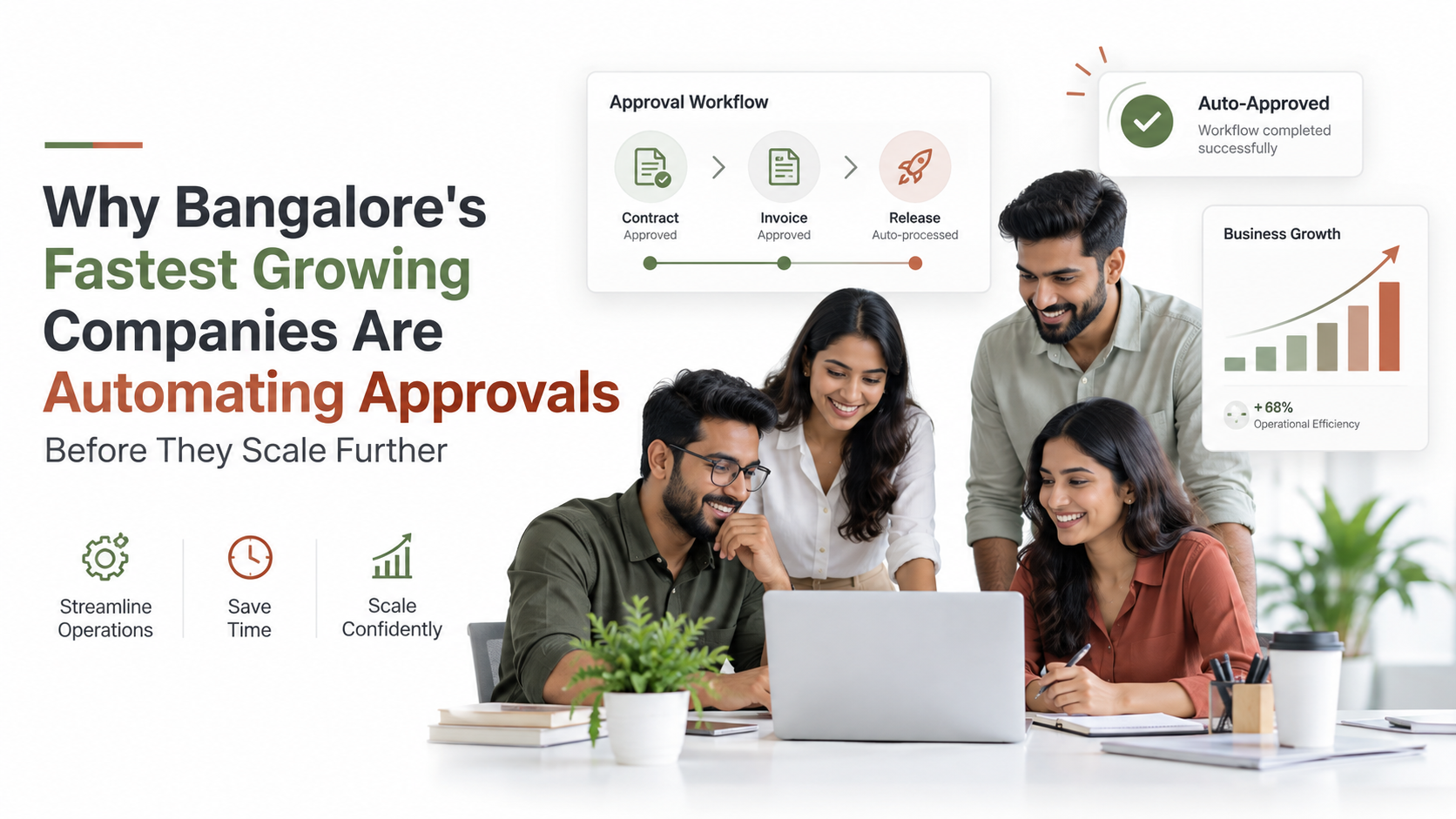
Why Bangalore’s Fastest-Growing Companies Are Automating Approvals Before They Scale Further
Workflow automation company Bangalore services are transforming how tech startups and mid-market firms handle manual approvals as they grow. Your founder is approving every contract. Your finance team is chasing vendors via email for invoice sign-offs. Your engineering lead is managing feature releases through Slack threads. Sound familiar? You’re not alone. And you’re also leaving money on the table.
Key Takeaway
Bangalore tech companies that implement workflow automation reduce approval turnaround time by 40-60% and improve compliance visibility, positioning themselves to scale without operational collapse.
In This Article
- Why This Matters Now: The Bangalore Tech Boom and Its Growing Pains
- The Core Challenge: How Manual Approvals Bottleneck Bangalore Tech Teams
- The Solution: Enterprise Automation via Workflow Automation
- Why Leading Bangalore Companies Choose Workflow Automation
- Industry Applications: Automation in Action Across Bangalore Tech
- How to Get Started: 5-Step Path to Workflow Automation
- Frequently Asked Questions

Why This Matters Now: The Bangalore Tech Boom and Its Growing Pains
Bangalore’s tech ecosystem is exploding. According to NASSCOM’s Digital India Report, Indian tech startups grew 35% year-over-year between 2021 and 2023, with Bangalore accounting for nearly 40% of this growth. But rapid scaling creates a hidden cost: operational bottlenecks that’ll catch up with you fast.
“Manual approval processes are cited as a top 3 operational challenge for 67% of scaling Bangalore tech companies managing 100-500 employees.”
Industry Survey Analysis, 2024
We’ve seen this pattern consistently. Manual approvals work fine at 20 people. They become a liability at 200. Your operations team spends 10+ hours weekly just chasing signatures. Your finance team processes invoices manually. Your HR team onboards new hires using email chains. Your engineering team gates feature releases through Slack conversations.
Here’s the thing: this isn’t inefficiency, it’s a scaling crisis. Bangalore’s competitive talent market means operational efficiency directly impacts your ability to scale headcount responsibly. Companies that automate approvals retain institutional knowledge, reduce onboarding friction, and move faster than competitors still drowning in manual processes.
The Core Challenge: How Manual Approvals Bottleneck Bangalore Tech Teams
Manual approval processes create five interconnected problems that get worse as you scale.
- No single source of truth: Approvals scatter across email, Slack, Google Sheets, and handwritten sign-offs. Nobody knows where a decision actually lives.
- Compliance audits expose gaps: Regulators like GST authorities, TDS compliance officers, and data protection teams expect approval trails. Email forwards and spreadsheets don’t cut it.
- Onboarding nightmare: New team members inherit informal approval rules. “Ask Rajesh when he’s online” isn’t a process, it’s chaos.
- Decision delays cascade: One missing approval blocks entire projects. Finance can’t close books. HR can’t onboard. Engineering can’t ship features.
- Administrative burden: Your best people (finance heads, operations leads, CTOs) spend 5-7 hours weekly just rubber-stamping decisions, chasing approvers, and re-entering data.
- Security risk: Sensitive approvals forwarded via email expose confidential documents to unintended recipients. No audit trail. No encryption. No control.
As you scale, manual approvals don’t just slow you down. They create blind spots. You lose visibility into where decisions are stuck. Auditors find gaps in approval trails. Your best people spend time on admin instead of strategy.
Here’s the real danger: your investors, board members, and regulators start asking uncomfortable questions. “Where’s the vendor approval trail?” “Can you prove that purchase was authorized?” “How do we audit hiring decisions?” Manual processes can’t answer these questions fast.

The Solution: Enterprise Automation via Workflow Automation
Workflow automation company Bangalore solutions solve each of these problems systematically. Rather than replacing people, automation removes the administrative friction that keeps people from doing meaningful work.
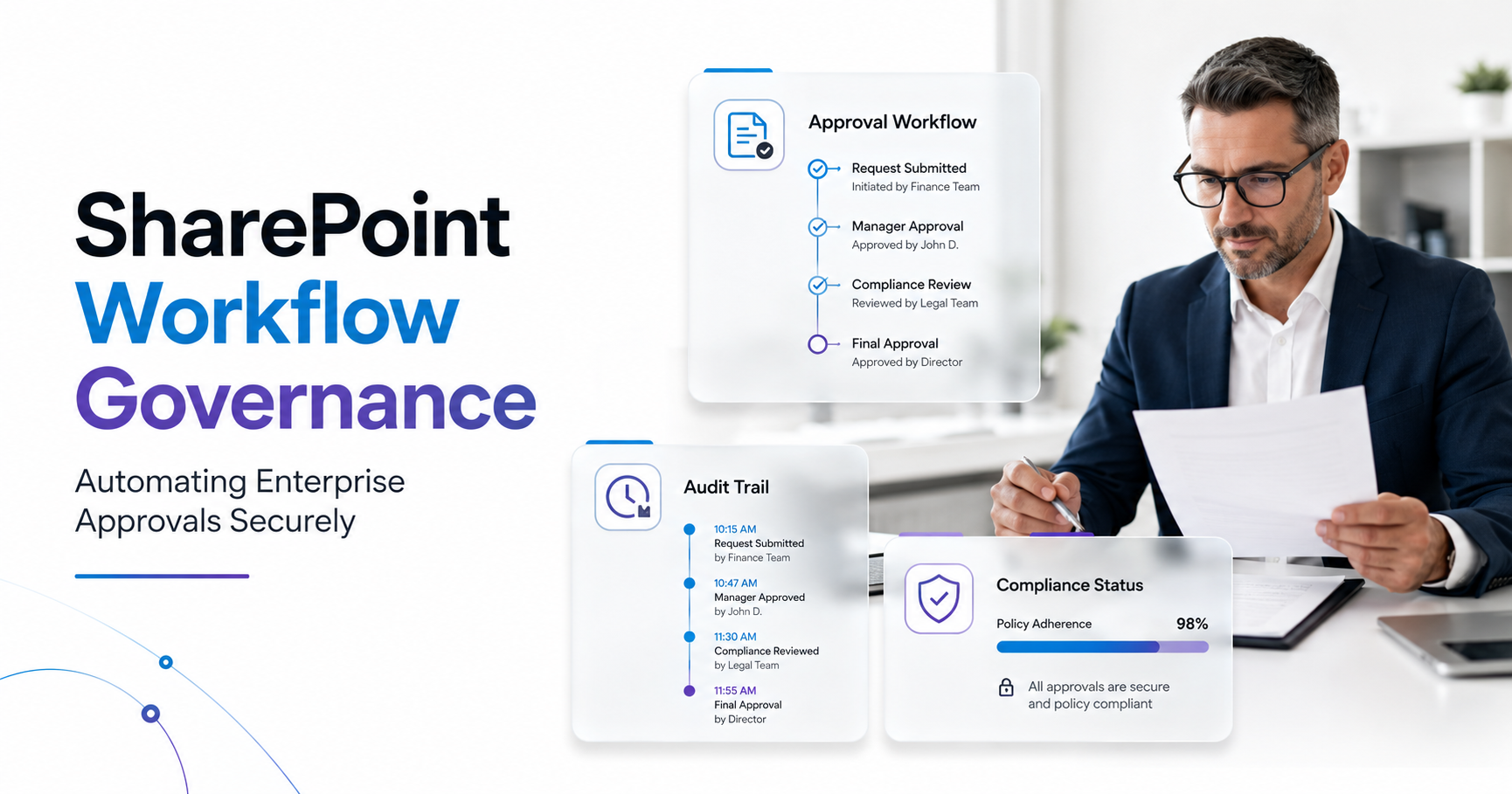
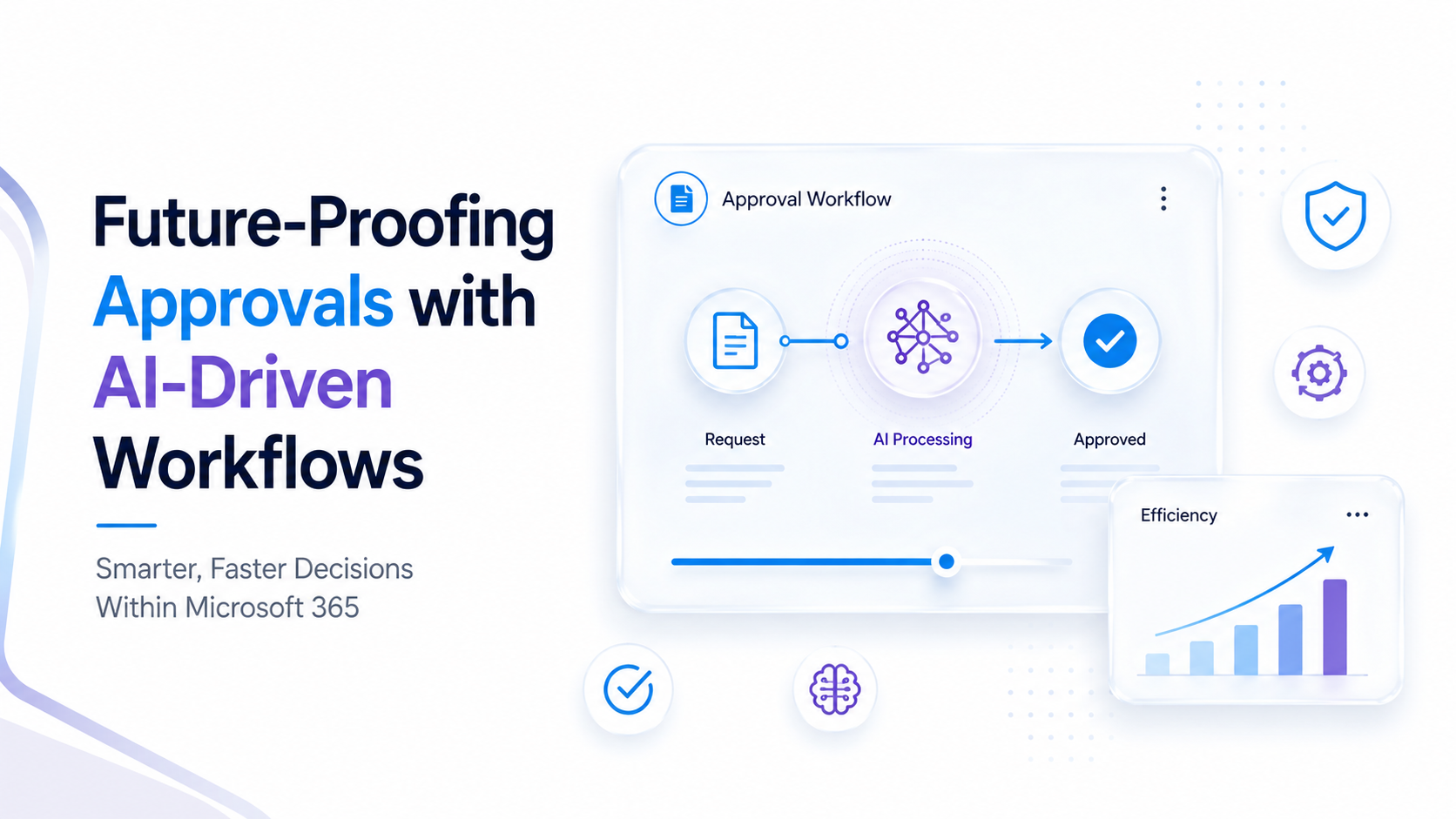
Here’s how it works in practice. A centralized approval hub, typically built on SharePoint or similar enterprise platforms, becomes your single source of truth. Every approval is logged, timestamped, and auditable. Routing rules ensure the right person approves, first time. Real-time notifications eliminate the endless chase-ups. Automated escalation triggers if approvers miss deadlines. And the entire trail is encrypted, documented, and audit-ready.
Expert Perspective
The best workflow automation implementations don’t try to automate everything at once. Start with your highest-friction approval process, usually finance or vendor management, and prove the value first. Then expand. This approach minimizes change resistance and accelerates ROI. In our work with Bangalore companies, we’ve consistently seen measurable improvements within 4-6 weeks of pilot launch.
On top of that, workflow automation integrates with your existing stack, your ERP, HRIS, accounting software, CRM. Instead of manually re-entering data into approval systems, workflows connect seamlessly between tools. Data flows once. No duplication. No errors. No wasted time.
Consider vendor onboarding. The traditional way: email the vendor a form, wait for response, manually enter details into your accounting system, create a PO, route it for approval, chase your CFO, finally pay them. With workflow automation: vendor submits form via a portal, system auto-checks GST compliance, flags incomplete data, routes to finance automatically, tracks approval status in real-time, triggers payment instruction at approval. One vendor onboards in 2 days instead of 2 weeks.
The security benefit is equally important. Sensitive approvals no longer move through Gmail inboxes or WhatsApp. They live in encrypted systems with role-based access control. You know exactly who saw what and when. Regulators are satisfied. Your CTO can actually sleep at night.
What to Look for in a Workflow Automation Partner
Not all workflow automation company Bangalore providers are equal. Look for three things: deep experience with Bangalore’s tech ecosystem, understanding of Indian compliance requirements like GST, TDS, and data localization, and a proven playbook for rapid implementation.
Generic enterprise software vendors don’t understand startup scaling patterns. They sell enterprise bloat. You need a partner who’s implemented approvals workflows for 50-person startups and 500-person scale-ups. Someone who knows that Indian compliance requirements are different from US enterprise standards. Someone who can deliver value in weeks, not quarters.
Why Leading Bangalore Companies Choose Workflow Automation
Workflow automation company Bangalore leaders in tech consistently outpace competitors on operational efficiency. Here’s why they’ve standardized on modern workflow automation.
| Capability | Workflow Automation | Manual/Spreadsheet | Generic Automation |
|---|---|---|---|
| Audit Trail Completeness | Compliance-grade, timestamped, encrypted | Fragmented, unreliable, email-dependent | Basic logging, generic fields |
| Integration with Existing Tools | Seamless API connections, data sync, no re-entry | Manual data re-entry, version conflicts | Limited integrations, monthly fees per connection |
| Scalability Model | Scales with volume, no per-approval cost | Breaks at 50+ approvals/day, team overload | Scales exponentially in cost |
| Compliance (India-specific) | Built for GST, TDS, RBI data localization requirements | No compliance framework, audit risk | Generic global compliance, India blind spots |
Moreover, workflow automation company Bangalore implementations speak a language that resonates with Indian tech leaders. You’re not buying enterprise software designed for Fortune 500 companies. You’re implementing a system built by people who understand your scaling challenges: hiring bottlenecks, regulatory complexity, competitive pressure for speed.
The difference is measurable. Companies implementing workflow automation report faster decision cycles, cleaner audit trails, and significantly reduced administrative overhead. Your finance team stops chasing approvals and starts analyzing cash flow. Your HR team stops managing email threads and starts building culture. Your engineering team ships features faster because infrastructure changes move through approvals predictably.
Industry Applications: Automation in Action Across Bangalore Tech
Workflow automation applies across every department. Here’s how leading Bangalore companies are deploying it.
Finance and Accounting: Invoice and Expense Approvals
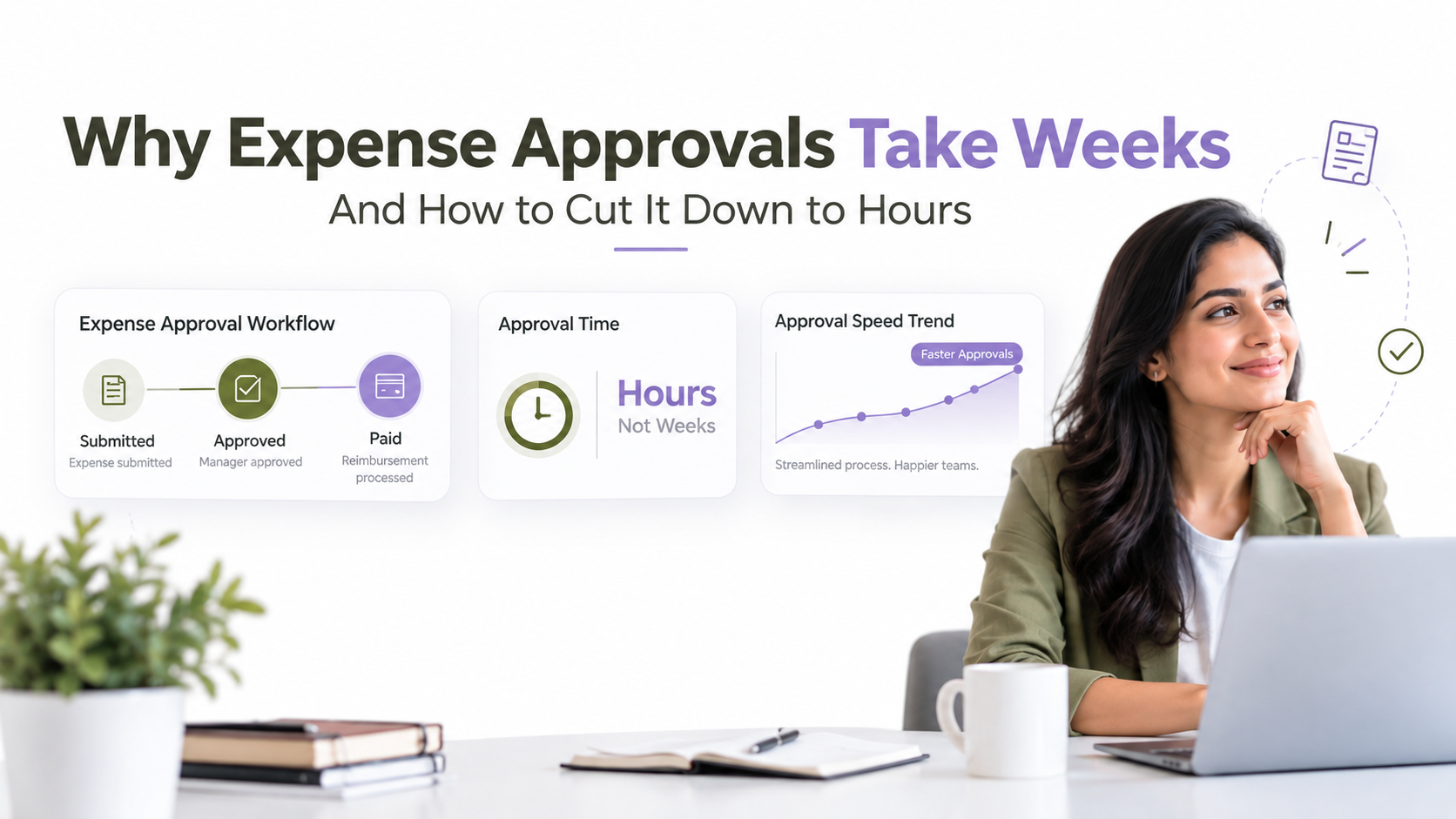
Finance teams automate multi-level expense approvals with real-time visibility. When an employee submits an expense report, it routes to their manager, then to department head, then to CFO, each step tracked, each decision visible. If the CFO doesn’t approve within 24 hours, the system escalates automatically. Result: expenses close in days instead of weeks. Your CFO has a real-time dashboard of cash status. Auditors see complete approval trails.
HR and Operations: Hiring and Vendor Onboarding
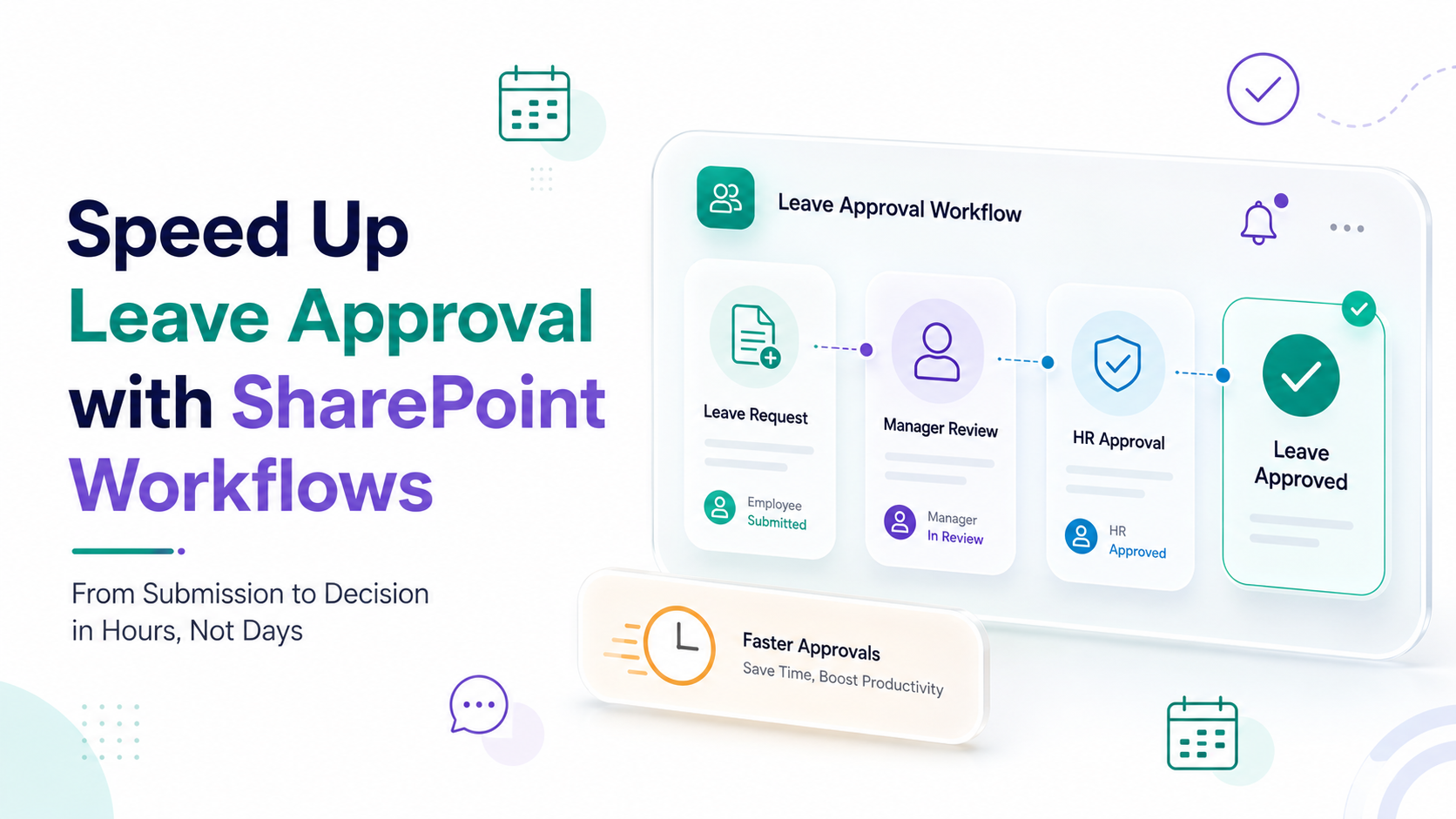
Worth noting: HR teams use workflow automation to standardize hiring requisitions. New hire request flows from hiring manager to department director to finance for budget check, to HR, then to background check trigger. Each step is documented. New vendors follow similar logic: compliance verification before first payment, GST validation, tax ID confirmation. Onboarding cycles compress. Audit readiness improves. Maverick spending disappears.
Engineering and Product: Feature Release and Infrastructure Approvals
Engineering teams gate infrastructure changes through automated approval workflows. A database migration requires security review. A new API endpoint needs architecture approval. A production configuration change demands engineering lead sign-off. All approvals route automatically. All decisions are logged. Security audits pass instantly because the approval trail is complete and auditable.
Procurement and Vendor Management: Contract and Purchase Order Approvals
Procurement teams automate purchase order workflows with automatic budget checks. A PO above $5,000 routes to finance. Above $25,000 goes to CFO. The system checks budget allocation automatically, flags exceptions, and routes intelligently. Vendor compliance verification happens before the first invoice. Payment authorizations follow documented approval chains. GST and TDS compliance is baked in.
How to Get Started: 5-Step Path to Workflow Automation
Implementing workflow automation doesn’t require ripping out your existing systems. Start small, prove value, then scale. Here’s the playbook.
- Audit Your Current Approvals: Map all approval workflows across departments. Document who approves, in what order, using what tools. Identify the highest-friction process, usually finance or vendor management. This becomes your pilot.
- Define Your Ideal Workflow: Design the future state with stakeholders. Who should approve? In what order? Under what conditions? What triggers escalation? What requires exception handling? Get this documented before any implementation starts.
- Pilot with Your High-Friction Process: Implement workflow automation on one approval type that’s currently causing significant delays. Use this as proof-of-concept. Build internal buy-in by showing real results before expanding to other processes.
- Integrate with Your Existing Stack: Connect workflow automation to your ERP, HRIS, CRM, and accounting software. This is where the real time-saving happens. Data flows once. No manual re-entry. No version conflicts.
- Scale and Continuously Optimize: Once your pilot succeeds and teams see the benefit, expand to other approval processes. Use data from the first implementation to refine subsequent workflows. Measure approval times, escalation rates, and team feedback. Iterate.
Throughout this journey, remember that workflow automation company Bangalore partners should guide implementation thoughtfully. Change management matters. People need to understand why approvals are moving to a new system and how it benefits them personally.
Frequently Asked Questions
What approval workflows can we automate?
Any approval that follows a repeatable process can be automated: expense reports, purchase orders, contract reviews, hiring requisitions, vendor onboarding, compliance certifications, and infrastructure changes. The key is consistency. If the approval process is the same every time or follows predictable rules, it’s a candidate for automation. Exceptions and nuanced decisions can still route to humans, but the predictable 80% moves automatically.
Will workflow automation work with our existing tools like SAP or NetSuite?
Yes. Modern workflow automation platforms integrate with enterprise software through APIs and connectors. You don’t need to replace your ERP, HRIS, or accounting system. Workflow automation connects between systems, eliminating manual data re-entry and keeping your existing tools intact. Your tech team will handle integration details, but the workflow system acts as the approval orchestrator across your entire stack.
How do we handle exceptions or truly urgent approvals?
Workflow automation includes escalation and override rules. Standard approvals follow normal routing. Urgent cases can trigger immediate escalation to senior approvers. You can also set manual override capabilities for emergency situations while keeping everything auditable. The goal isn’t to eliminate human judgment. It’s to automate routine decisions and make exceptions visible.
Will workflow automation replace our finance or HR team?
No. Automation removes administrative busywork, chasing approvals, re-entering data, managing spreadsheets. Your team becomes more strategic. Instead of spending 40% of their time on admin, they spend 90% on analysis, relationship management, and decision-making. You’re not reducing headcount; you’re increasing the value your existing team creates.
Isn’t automation risky for compliance and security?
When done correctly, workflow automation improves compliance and security. Every approval is logged, timestamped, and auditable. You have a complete trail for regulators. Documents stay in encrypted systems instead of moving through email. Access is role-based and controlled. The risk comes from manual approvals, which are hard to audit. Workflow automation is compliance insurance.
Ready to Stop Chasing Approvals
Workflow automation transforms how Bangalore tech companies scale their operations. Reach out to discuss your approval bottlenecks and explore how automation can unlock your team’s productivity.