DMS Implementation Pitfalls: Why Projects Fail in India
DMS failures in Indian enterprises stem from predictable mistakes: poor governance, weak change management, and inadequate data migration planning. Most organizations invest significantly in document management systems, yet see disappointing adoption rates and minimal return on investment. Here’s the thing: the problem isn’t the technology, it’s the organizational discipline required to make it work. In this guide, we’ll explore the five critical pitfalls that derail DMS implementations across Indian enterprises, and how to avoid them.
Key Takeaway
Document management pitfalls are avoidable. Most DMS failures in India are driven by poor governance and weak change management, not by technology limitations. Organizations that invest equally in organizational readiness and platform capabilities succeed.
In This Article
- Why DMS Implementations Matter, And Why They Fail
- The 5 Critical Pitfalls in DMS Implementations
- How Document Management SharePoint Addresses These Pitfalls
- Critical Success Factors When Implementing Document Management in India
- Industry Applications and Real-World Contexts
- How to Get Started: A Practical Roadmap
- Frequently Asked Questions
Why DMS Implementations Matter, And Why They Fail
India’s digital transformation wave has accelerated sharply over the past five years. Remote work adoption, multi-location operations, and stricter regulatory compliance requirements have made enterprise document management a strategic imperative rather than a nice-to-have. Yet studies show that a significant portion of DMS initiatives in the Asia-Pacific region, including India, miss their adoption targets.
“Approximately 40-50% of ECM and DMS projects in Asia-Pacific fall short of user adoption targets within the first 18 months of go-live.”
Gartner Magic Quadrant for Content Platforms, 2024
Why does this happen? We’ve seen it consistently: organizations spend 70% of their budget on technology selection and infrastructure, then allocate just 30% to change management, training, and governance frameworks. This imbalance is the root cause of most DMS failures. When a financial services firm in Mumbai rolled out an enterprise document management system, they invested heavily in SharePoint infrastructure but underestimated the governance structure needed. Within 18 months, the system became a digital dump, documents filed randomly, metadata inconsistent, compliance audits failing.
Here’s the reality: document management SharePoint and other enterprise platforms are powerful. However, they require three equally weighted investments to succeed. You need strong technology architecture. You also need clear governance structures and information strategies. Most critically, you need disciplined change management and executive sponsorship. Miss any of these, and the system fails regardless of platform capability.
The 5 Critical Pitfalls in DMS Implementations
After working with organizations across India’s financial services, healthcare, manufacturing, and public sector spaces, five recurring pitfalls emerge. Understanding these pitfalls, and how to avoid them, is essential for any organization planning a DMS implementation.
Pitfall 1: Weak Information Governance and Metadata Strategy
This is the most common failure point. Organizations begin DMS implementations without a clear information architecture or metadata taxonomy. Teams create ad hoc folder structures. Naming conventions vary wildly: one department uses “Q3-FY24-Invoices,” another uses “FY24-Q3-Invoices,” another simply uses “Invoices-Sept-Dec-2023.” Different systems, same problem.
The result is predictable. Within 12 to 18 months, the system becomes impossible to navigate. Users can’t find documents. Search returns hundreds of irrelevant results. Compliance officers struggle to enforce retention policies. The organization loses trust in the system and reverts to email and local file shares. Sound familiar? A document management system without taxonomy is just expensive cloud storage.
Pitfall 2: Underestimating Change Management and User Adoption
Technology adoption is fundamentally a human problem, not a technical one. Yet most organizations treat it as a technical deployment exercise. Training gets squeezed into a two-hour session before go-live. Communication about why the system matters is sparse or absent. Competing priorities mean users never make time to learn the new platform.
The consequence is severe: low usage rates. Power users in IT embrace the system. Most other employees continue using email and file shares. Shadow IT systems proliferate. Two years post-implementation, adoption rates sit at 25-35% despite significant investment. Here’s the thing: this is entirely avoidable through structured change management, executive sponsorship, and ongoing reinforcement of the value proposition.
Pitfall 3: Inadequate Data Migration Planning
Legacy data is messy. It’s unstructured, duplicated, poorly organized, and often contains sensitive information that shouldn’t be migrated to a cloud system. Many organizations attempt to move this chaos directly into a modern DMS without cleaning, classifying, or deduplicating it.
The outcome includes data loss during migration, security and compliance violations, and user distrust of the new system. A healthcare organization in Bangalore migrated 25 years of unstructured patient records into SharePoint without proper data governance protocols. Compliance audits flagged serious regulatory violations. The reputational and legal damage far exceeded the cost of proper migration planning and data cleansing.
Pitfall 4: Poor Integration With Existing Enterprise Systems
Most organizations don’t implement DMS in isolation. They operate complex ecosystems: ERP systems, CRM platforms, accounting software, custom legacy applications. When DMS implementations are siloed, not connected to these critical systems, they create friction.
Users experience duplicate data entry. Information flows break down. Process efficiency gains never materialize. A manufacturing organization in Pune implemented a new document management system without integrating it to their SAP ERP. Quality inspectors had to manually enter document references into two systems. The promised efficiency gains vanished. Adoption suffered. The system became an additional burden rather than a solution.
Pitfall 5: Insufficient Executive Sponsorship and Governance Structure
Document management systems require ongoing maintenance, optimization, and strategic governance. Yet many organizations treat DMS as a one-time implementation project. Once go-live concludes, funding dries up. Governance councils disband. The system becomes neglected.
Without clear ownership and budget for continuous improvement, the system stagnates. New regulatory requirements can’t be accommodated. Performance degrades. User feedback goes unaddressed. What begins as a strategic initiative transforms into a data graveyard. This pitfall is entirely preventable through sustained executive commitment and clearly defined governance responsibilities.
How Document Management SharePoint Addresses These Pitfalls
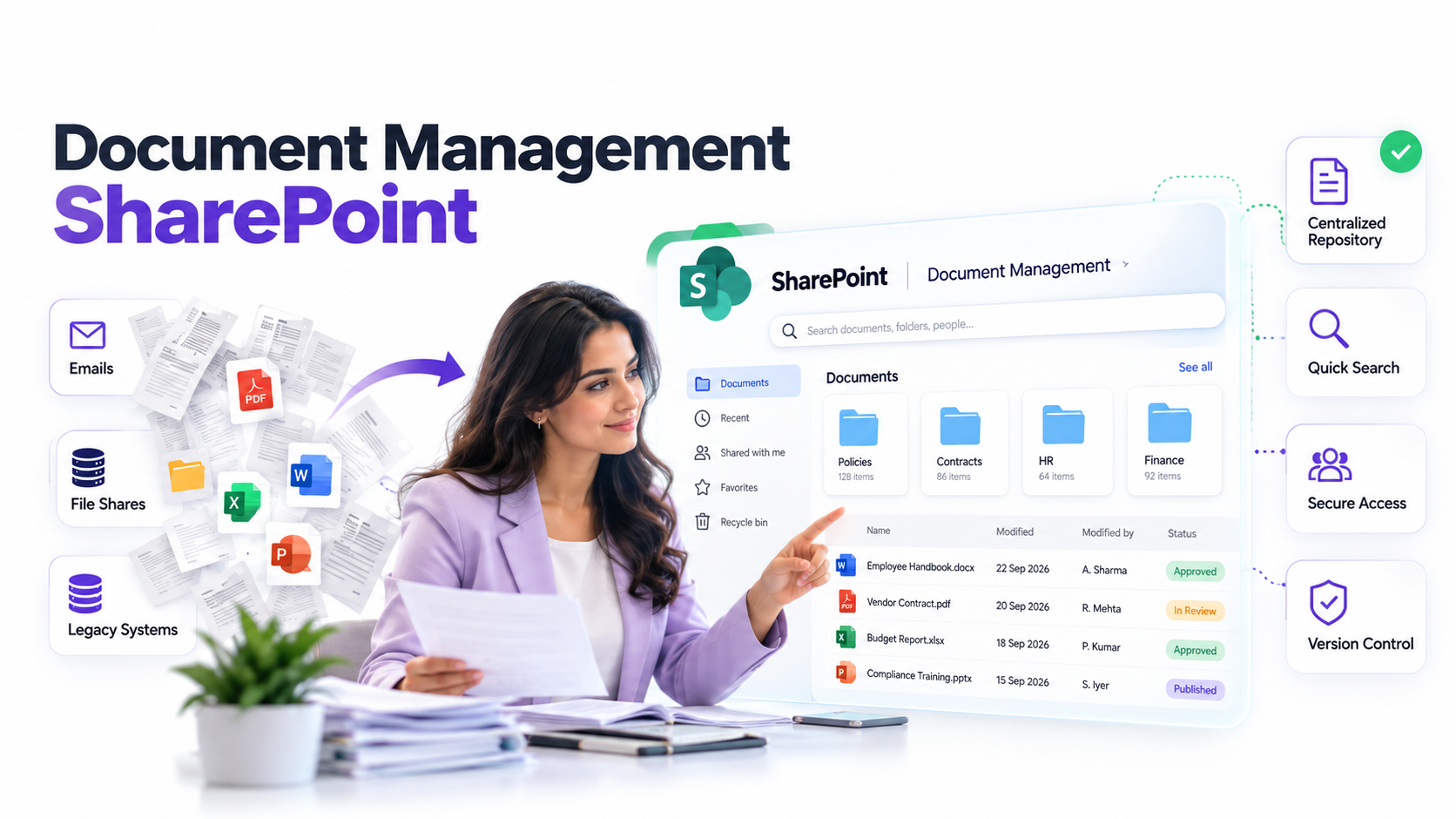
Document management SharePoint is specifically designed to address many of these challenges. That said, it’s critical to understand that SharePoint is a tool, a powerful one, but it’s not a cure-all. Technology capability without organizational discipline will still fail.
SharePoint’s governance and taxonomy features include content types, retention policies, and information governance controls that enable structured, maintainable information systems. Organizations can define metadata standards upfront, enforce them through content types, and automate retention policies. This doesn’t eliminate the need for clear information architecture, but it makes governance enforceable rather than aspirational.
Change management support is embedded in the Microsoft 365 ecosystem. SharePoint integrates tightly with Microsoft Teams, Viva Engage (formerly Yammer), and comprehensive training resources. Organizations can build adoption campaigns, facilitate peer-to-peer learning, and create feedback loops, all within the Microsoft ecosystem. What’s essential to remember: SharePoint enables adoption, but organizational commitment to change management is still critical. Technology alone drives no behavior change.
Data migration tooling is robust. Microsoft provides native migration tools, and a mature partner ecosystem offers specialized data quality services, secure migration environments, and comprehensive testing capabilities. Organizations can execute clean, auditable migrations that protect data integrity and compliance. This requires planning and discipline, but the technical barriers to safe migration are low.
Integration capabilities are extensive. SharePoint connects natively to Microsoft Teams, Power Automate, Dynamics 365, and hundreds of third-party applications through Power Platform connectors. Organizations can build integrated workflows that eliminate silos and reduce manual data entry. Integration requires thoughtful process design, but technical barriers are minimal.
Governance frameworks are built into SharePoint through role-based access control, site permissions, hub hierarchies, and compliance management features. Organizations can design governance structures that clearly assign ownership, define escalation paths, and enforce accountability. The platform supports governance, but human governance discipline is still essential.
Expert Perspective
In our engagements with Indian enterprises, we’ve observed that SharePoint removes technical barriers to DMS success, but organizational discipline around governance, training, and change management remains non-negotiable. The most successful implementations we’ve seen pair SharePoint’s capabilities with a governance council that meets regularly, invests in user education, and actively manages adoption metrics. Technology enablement plus human commitment equals success.
Critical Success Factors When Implementing Document Management in India
Based on patterns across successful and failed implementations, several factors emerge as critical for document management system success. These aren’t technical considerations, they’re organizational and strategic.
Establish a cross-functional governance council before go-live. This council should include representatives from IT, business process owners, compliance/risk, and key user departments. They meet regularly to define information architecture, set taxonomy standards, resolve governance conflicts, and drive adoption. This isn’t a one-time kickoff meeting, it’s an ongoing body that stewards the system post-implementation.
Invest in user training and change communication equivalent to or exceeding IT infrastructure investment. If you budget ₹100 for technology, budget ₹100 for change management, training, and communication. This sounds counterintuitive to many CIOs accustomed to technology-heavy spending. It’s also the single strongest predictor of adoption success.
Plan data migration with full data quality audits before transfer. Don’t migrate garbage. Conduct thorough data discovery, deduplication, classification, and cleansing before moving anything to the new system. This upfront effort prevents years of problems downstream.
Define clear information architecture and metadata standards upfront. Before implementation, define your taxonomy. Document naming conventions, metadata fields, folder structures, and retention policies. Get stakeholder buy-in on these standards. Then enforce them through technology (content types, managed metadata, information barriers).
Build a phased rollout strategy to manage complexity and gather feedback. Don’t attempt a big-bang implementation across the entire organization. Roll out to pilot teams first. Gather feedback. Iterate. Expand gradually. This approach reduces risk and improves adoption significantly.
Secure and maintain executive sponsorship throughout the project lifecycle. A successful DMS implementation requires senior leadership commitment, not just project funding. Executives need to visibly champion the system, allocate ongoing resources for governance, and hold organizations accountable for adoption.
Industry Applications and Real-World Contexts
DMS implementation challenges and best practices vary by industry. Understanding your industry-specific context is essential for designing an effective approach.
Financial Services and Banking
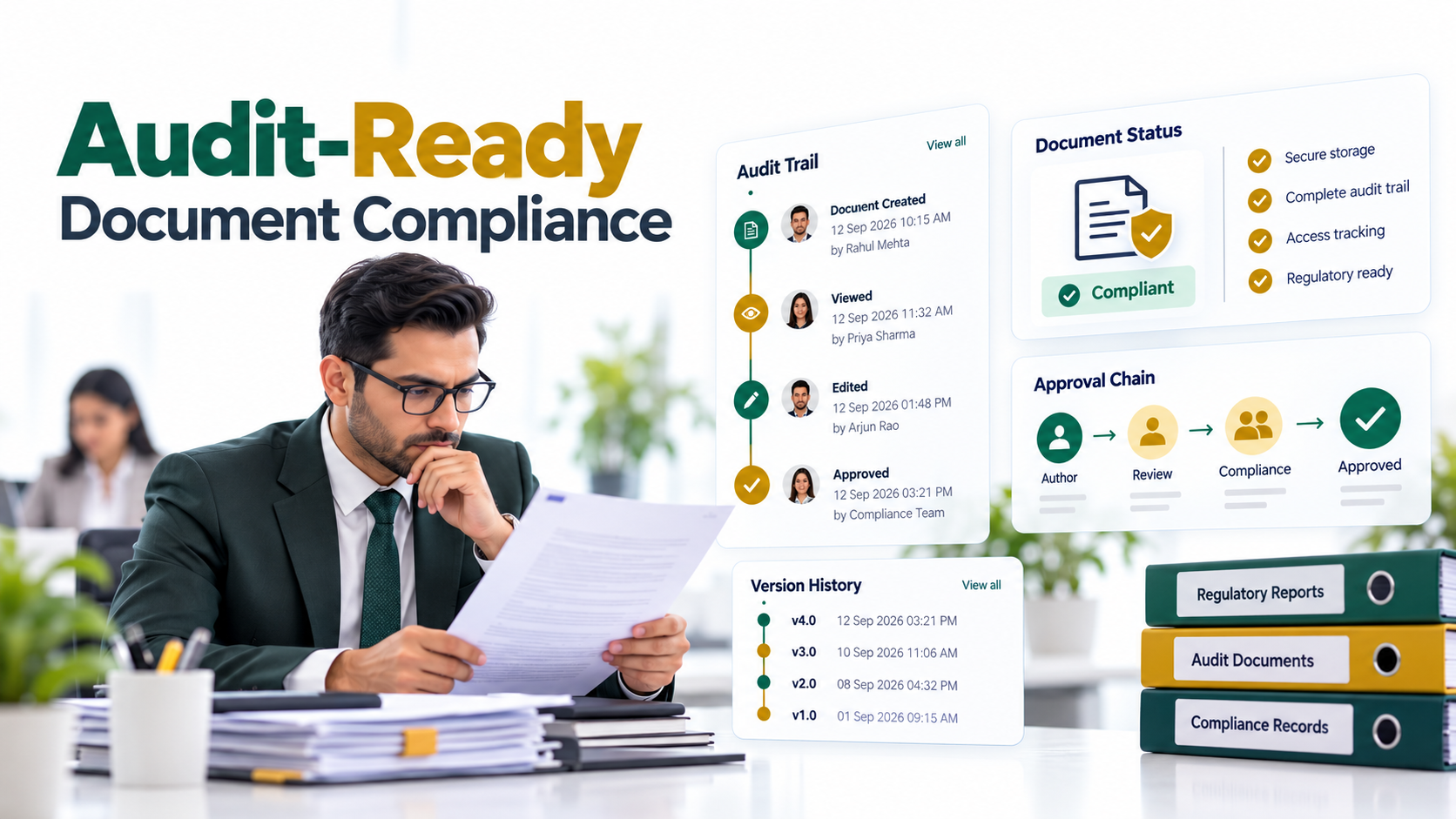
Compliance is paramount. Regulatory bodies like the RBI mandate strict document retention policies, audit trails, and data security protocols. A DMS failure in financial services isn’t just an operational problem, it’s a compliance violation with potential legal consequences. Document management SharePoint’s built-in compliance management, retention policies, and audit logging directly address these requirements. However, governance discipline around document classification and retention enforcement must be ironclad.
Healthcare and Pharmaceuticals
Regulatory requirements (data localization, patient confidentiality, Good Manufacturing Practice documentation) are stringent. Case management systems, electronic health records, and clinical workflows must integrate with document management. Data migration here is particularly sensitive, patient privacy violations during migration are catastrophic. Information governance and integration architecture are non-negotiable considerations.
Manufacturing and Logistics
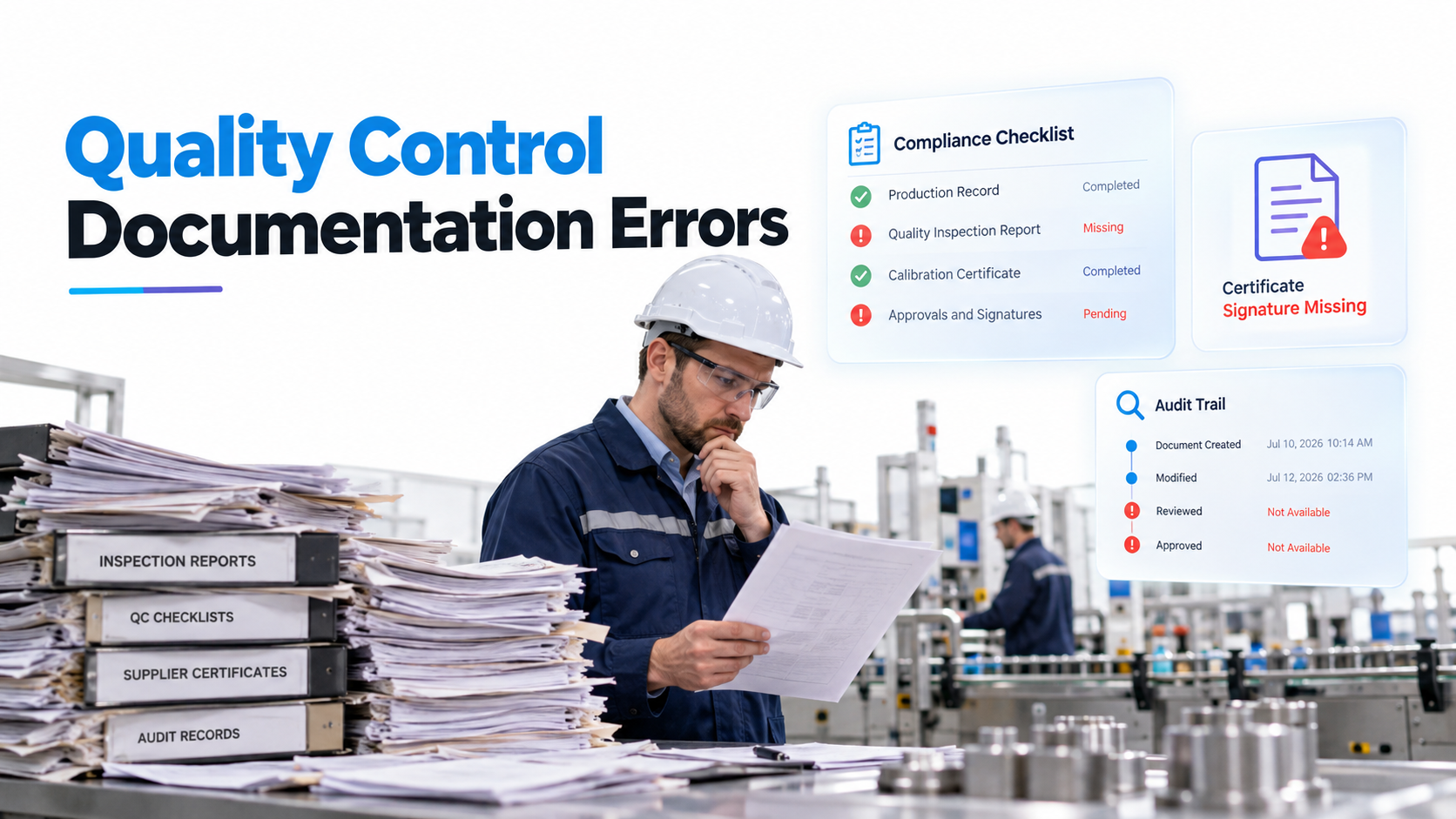
Document-heavy supply chains require sophisticated search, workflow automation, and OCR capabilities for scanned documents. Integration with ERP systems (SAP, Oracle) is critical. A manufacturing firm needs to quickly locate quality certificates, supplier documentation, and regulatory records. DMS implementation success here depends heavily on integration architecture and metadata design. If documents aren’t properly classified and tagged, findability suffers in high-volume environments.
Government and Public Sector
Multi-stakeholder governance, records management at scale, data localization requirements, and multilingual support (India has multiple official languages) create unique complexity. Public sector DMS implementations often involve complex approval workflows, multiple levels of authority, and strict archival requirements. Change management is particularly challenging in government organizations due to legacy processes and organizational inertia.
How to Get Started: A Practical Roadmap
If you’re considering a DMS implementation, or assessing why a current initiative is struggling, follow this structured approach.
- Conduct a thorough organizational readiness assessment. Before selecting technology, assess your organization’s change readiness, existing governance maturity, data quality, and stakeholder alignment. This assessment identifies risks and prerequisites. You’ll learn whether additional change management preparation is needed before starting.
- Define clear requirements and governance principles before platform selection. Work with stakeholders to articulate your information architecture, metadata taxonomy, retention policies, compliance requirements, and integration needs. Only after requirements are clear should you evaluate platforms. Document management SharePoint is powerful, but fit depends on your specific governance model and integration landscape.
- Select a partner with proven experience in your industry and organization type. Implementation success depends heavily on partner expertise. Look for organizations with deep experience in Indian enterprises, multi-location rollouts, data migration at scale, and change management. References from similar-sized organizations in your industry are invaluable.
- Build a phased roadmap with clear success metrics and governance checkpoints. Design your rollout in phases: pilot, wave 1, wave 2, and so on. Define adoption metrics, governance milestones, and success criteria for each phase. Build in feedback loops. Adjust your approach based on learnings from each phase.
- Invest in executive governance and ongoing optimization from day one. Establish your governance council, define ownership for information architecture, allocate budget for training and change management, and create accountability for adoption metrics. DMS implementation doesn’t end at go-live, it begins there. Plan for continuous improvement.
Frequently Asked Questions
What’s the most common reason DMS implementations fail?
Weak change management and insufficient user buy-in top the list. Organizations often treat DMS as a technology deployment when it’s fundamentally an organizational change. Technology decisions account for roughly 30% of implementation success. Organizational readiness, governance discipline, and change management account for 70%. Invest proportionally in these areas.
Why is metadata and taxonomy so important in DMS?
Metadata is the connective tissue of a usable document management system. Clean metadata enables findability, automated governance, compliance enforcement, and system interoperability. Poor taxonomy renders a DMS unusable within months. Fixing taxonomy after go-live is exponentially more difficult and expensive than designing it upfront. This is why information architecture planning must precede implementation.
How do we ensure high user adoption for our DMS?
Invest early in structured change management. This includes executive sponsorship, clear communication about why the system matters, hands-on training, peer-to-peer learning networks, and ongoing feedback loops. Make the system easy to use and obviously valuable to your users’ daily work. Remove friction where possible. Address adoption as seriously as you would address technology architecture.
What should we look for in a DMS implementation partner?
Proven experience with large-scale implementations in Indian enterprises is essential. Look for deep expertise in information governance, data migration, change management, and technology architecture. Ask for references from similar-sized organizations in your industry. Assess their post-implementation support model, can they help you optimize governance and adoption ongoing? Avoid partners who focus primarily on technology selection and hand off after go-live.
Is Microsoft 365 SharePoint the right choice for our organization?
SharePoint is powerful and widely adopted, but fit depends on your governance model, integration needs, compliance requirements, and IT maturity. A thorough requirements and fit analysis, conducted before platform selection, will clarify whether SharePoint aligns with your strategy. No single platform is right for every organization. Make your decision based on clear requirements, not analyst reports or peer pressure.
Ready to Evaluate Your DMS Strategy?
Most DMS failures in India are avoidable. Understanding your organizational readiness, governance requirements, and integration needs is the critical first step. Let’s discuss your implementation strategy and identify risks before they derail your project.