How Financial Firms Are Closing Their Compliance Document Gap
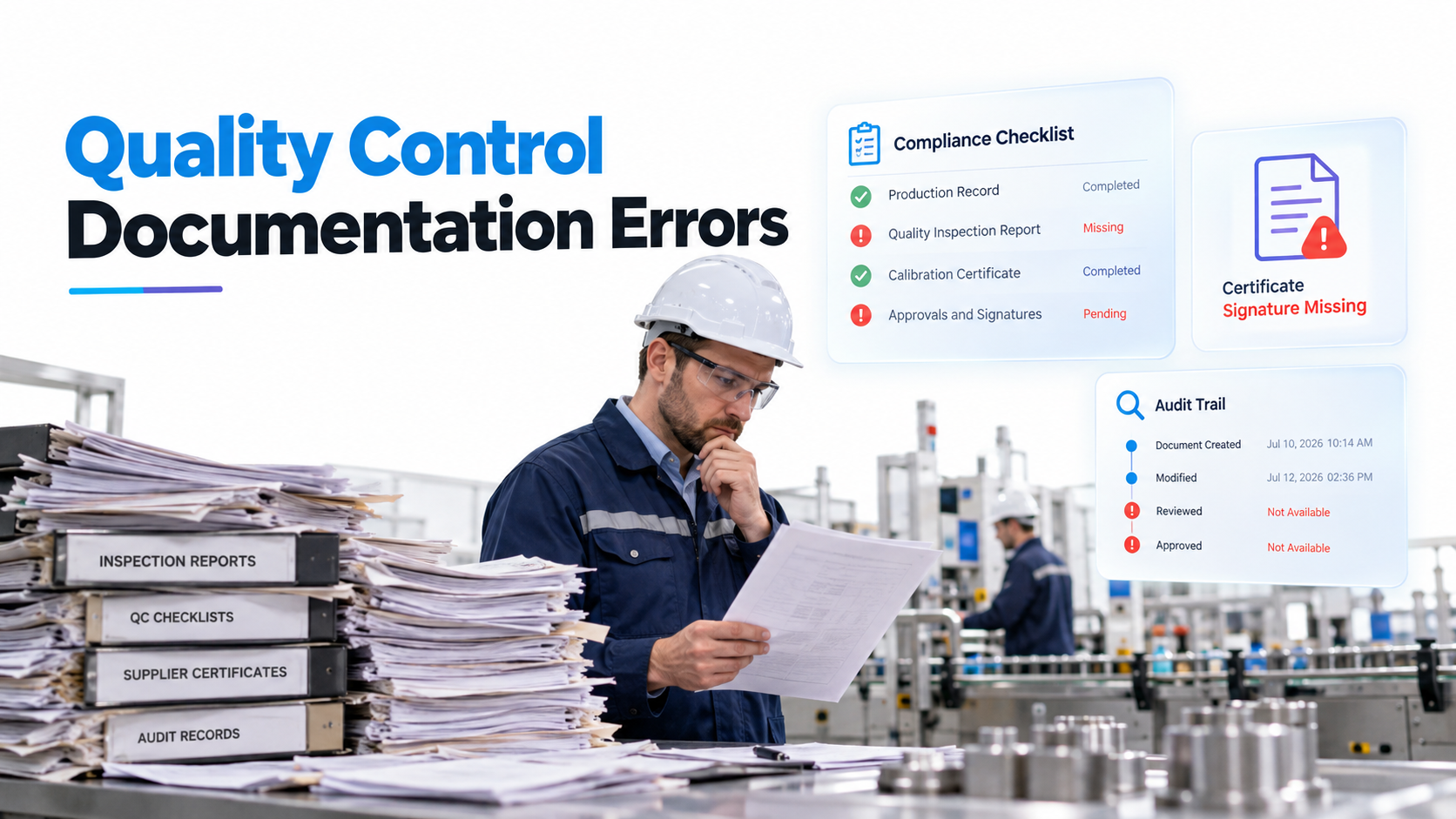
Financial services document compliance is no longer optional, it’s a regulatory expectation enforced during every audit. Picture this: a compliance officer at a mid-sized regional bank receives an exam notice. The regulator wants to review the approval chain for a specific commercial loan from 18 months ago. The bank’s document system can’t reliably show who saw it, when, or what they changed. What should be a routine production becomes a weeks-long scramble. Without traceable audit trails, your firm faces fines, reputational damage, and escalated regulatory scrutiny.
Key Takeaway
Financial regulators expect complete, time-stamped evidence of who accessed, modified, and approved every material document. Without a system that creates these audit trails automatically, you’re at risk during every exam.
In This Article
Why Audit-Ready Document Trails Matter Now for Financial Institutions
Regulatory scrutiny of document management has intensified since the 2008 financial crisis. The SEC, FINRA, OCC, and Federal Reserve now conduct routine exams specifically focused on whether firms can produce auditable, time-stamped records of document handling. This isn’t a niche concern. According to recent FINRA enforcement data, document management deficiencies rank among the top five compliance findings in annual examinations.
On top of that, the shift to remote and hybrid work has amplified the problem. Teams now collaborate across email, cloud storage, messaging apps, and legacy systems. Documents get forwarded, copied, and edited without any traceable chain of custody. Version control disappears. Approval workflows become ambiguous. When an examiner asks to see the complete history of a document, firms spend days reconstructing evidence that should have been automatic.
“According to OCC examination guidance, institutions lacking adequate audit trail capability for critical documents face heightened supervisory concern and potential compliance orders.”
Office of the Comptroller of the Currency (OCC), 2023 Supervision Guidance
Worth noting: regulatory requirements have become far more prescriptive. SEC Rule 17a-3 demands that broker-dealers maintain records showing the identity of persons responsible for authorization of entries. FINRA Rule 4511 requires that supervisory systems be reasonably designed to achieve compliance with securities laws. The OCC’s guidance on third-party relationships explicitly calls out the need for auditable document governance when working with vendors. These regulations don’t suggest document trails, they mandate them.
The Core Challenge: Why Standard Document Systems Fail Compliance
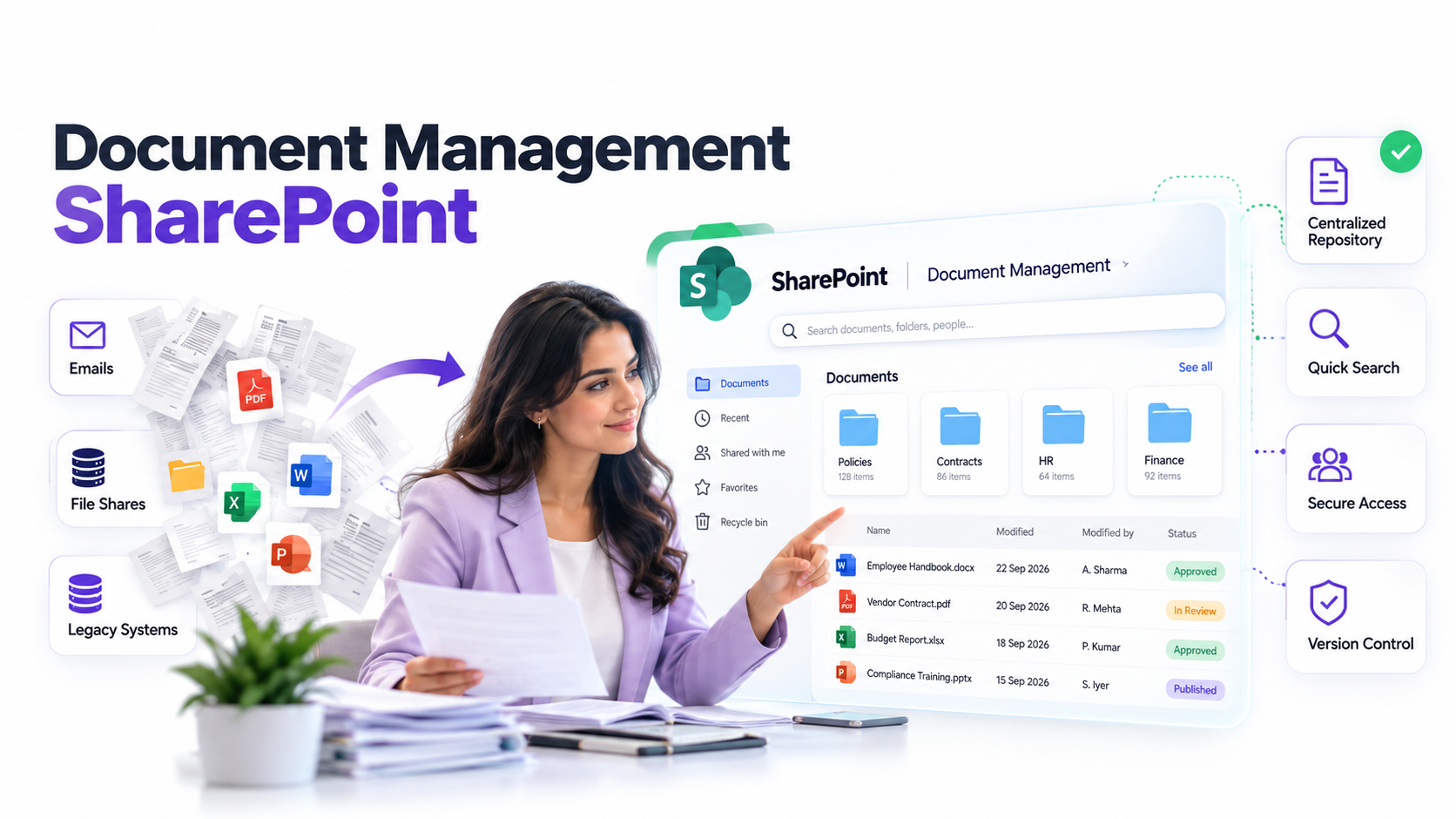
Most financial firms today rely on a mixture of tools that were never designed for regulatory compliance. Email, shared drives, and legacy imaging systems create an illusion of organization while actually destroying audit integrity. Here’s why they fail:
- Email destroys version control. When a document is forwarded, the recipient has no way to know if they’re looking at the original or a modified version. Deletion is permanent. There’s no timestamp of when the email was read or by whom.
- Shared drives lack access logs. Multiple people can edit a document simultaneously. You can’t reliably prove who made which change or when. Downloads leave no trace. Deleted files are often unrecoverable, and there’s no proof they ever existed.
- Manual approval workflows are ambiguous. A supervisor might review a document via email, a conversation, or a brief hallway chat. No timestamped record of approval exists. Later, during an exam, you can’t prove the review happened or when.
- Legacy imaging systems lack integration. Scanned documents sit in isolated repositories. They’re disconnected from the workflows and approvals happening in modern banking platforms. Recreating a complete document history requires manual detective work across multiple systems.
- Legal holds are impossible to enforce. When litigation or a regulatory request arrives, you must manually identify and segregate relevant documents. If documents have been deleted or edited without a trail, you can’t prove you preserved the original or demonstrate its authenticity.
- Exam production takes weeks instead of hours. Examiners request a specific document’s history. Your team must search emails, check shared drives, interview staff, and reconstruct timelines. What should be a simple export becomes a labor-intensive scramble. Delays signal weakness to regulators.
The consequence is serious. When an exam uncovers missing or untraceable documents, regulators cite deficiencies in your control environment. Repeated findings can trigger enforcement actions, consent orders, or heightened supervisory engagement in future exams. Your reputation with regulators deteriorates, making every subsequent exam more difficult and more expensive.
The Solution: Building Financial Services Document Compliance Into Your Document System
A purpose-built document management system designed for financial services addresses every pain point above. Unlike generic cloud storage or legacy imaging, a compliance-focused system makes audit trails automatic, tamper-proof, and exam-ready.
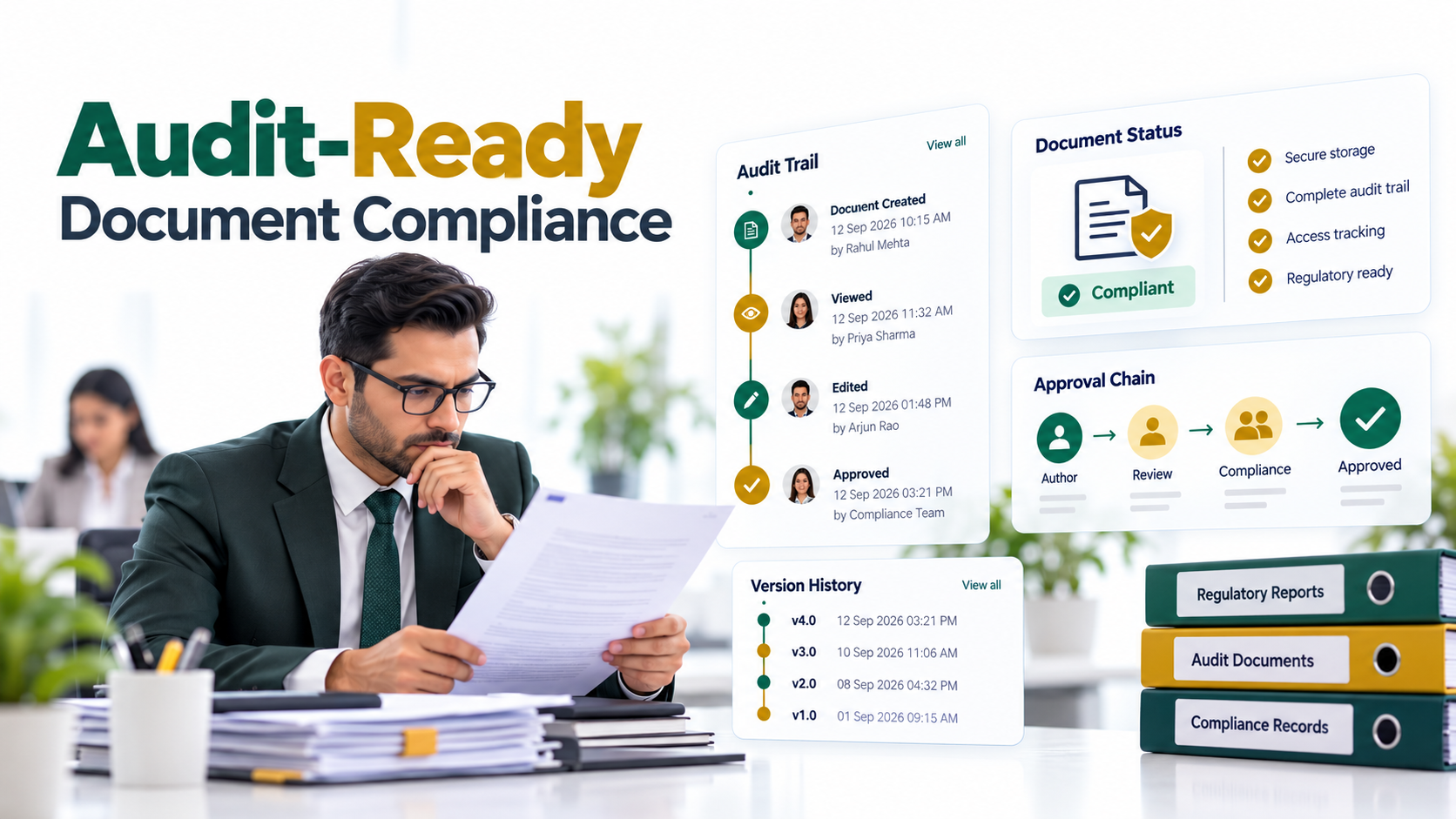
Here’s how it works: every action on every document is logged with a timestamp, user ID, and description of what changed. This log is immutable. Once recorded, it can’t be edited or deleted. When an examiner asks to see the approval chain for a loan document from 18 months ago, you run a single report and produce complete, auditable evidence in minutes.
Expert Perspective
The difference between a “document system” and a “compliance system” is the audit trail. A document management system designed for financial services builds accountability into every action, not as a report you run later, but as a real-time, tamper-proof record that meets SEC Rule 17a-3, FINRA Rule 4511, and OCC guidance from day one.
Specifically, a compliance-built system includes these features:
- Automatic version control. Every edit is logged with timestamp, user, and change description. You can view the complete history and revert to any prior version if needed.
- Role-based permissions. Control precisely who can view, edit, approve, and download documents. Sensitive loan files stay restricted. Junior staff can only access documents their role permits. Permissions are logged and reportable.
- Integrated approval workflows. Documents route automatically to the correct approver based on document type and value. Approvals are timestamped. If someone doesn’t approve within a defined timeframe, escalations trigger. Every approval is recorded as proof the review happened.
- Legal hold functionality. When a regulatory request or litigation hold arrives, you tag relevant documents and lock them. They can’t be modified or deleted. The system generates a report proving the hold was applied, how long documents were retained, and what happened to them.
- Exam-ready reporting. Generate reports showing document history, approval chains, access logs, and compliance metrics without custom queries. Examiners see complete, organized evidence immediately.
When choosing a partner, look for firms with demonstrated experience in financial services. They understand regulatory requirements (SOX, GLBA, FINRA, SEC, OCC rules). They’ve worked with banks, credit unions, and wealth management firms. They can integrate with your existing banking systems, core processors, imaging platforms, loan origination software. Most importantly, they design for compliance first, not as an afterthought.
Why Leading Financial Firms Choose Auditable Document Management Systems
The best financial firms don’t just adopt a document system, they choose one purpose-built for compliance. Here’s how they compare to generic alternatives:
| Capability | Compliance-Built DMS | Generic Cloud Storage | Legacy Imaging System |
|---|---|---|---|
| Immutable Audit Trail | ✓ Complete, tamper-proof logs | ✗ Limited or missing | ✗ No change tracking |
| Exam-Ready Reporting | ✓ Compliance templates included | ✗ Requires custom exports | ✗ Manual reconstruction needed |
| Role-Based Access Control | ✓ Granular permissions, logged | ✗ Basic user/admin only | ✗ Folder-level only |
| Legal Hold Capability | ✓ Tag, lock, and report | ✗ Not designed for holds | ✗ Difficult to enforce |
| Integrated Workflow Approval | ✓ Automated, timestamped | ✗ Email-based, untracked | ✗ Manual sign-offs |
| Regulatory Compliance Templates | ✓ SEC, FINRA, OCC built-in | ✗ Generic configuration | ✗ Not applicable |
Three factors differentiate compliance-built systems from the rest. First: audit-ready from day one. The system is designed with regulatory requirements embedded, not bolted on as an afterthought. You don’t have to customize extensively or hire consultants to configure it for compliance. Second: real-time visibility. Dashboards show document status, approval bottlenecks, and compliance metrics without manual reporting. You know at a glance whether your firm is audit-ready. Third: reduced audit risk. Examiners see complete, tamper-proof trails immediately. A weakness becomes a strength. Your transparency and systematic approach actually build examiner confidence.
Here’s the thing most guides won’t tell you: these systems also reduce operational burden significantly. Your compliance team spends less time gathering evidence and more time on strategic risk management. Audit season becomes less stressful. Your firm answers exam requests faster, which regulators notice and appreciate.
How Different Financial Services Use Audit Trail Document Management
Financial services document compliance applies across the entire industry. Different business lines have distinct requirements, but the core principle remains: traceable, auditable document trails.
Retail Banking
Retail banks manage thousands of loan applications, consumer disclosures, and regulatory correspondence. A compliance-built DMS tracks the complete lifecycle of each loan file. Who reviewed the credit decision? When was the Truth in Lending Act disclosure signed? Was the anti-money laundering check completed before funding? Examiners can audit a sample of closed loans and verify every step was documented and timestamped.
Commercial Banking
Commercial loan files are more complex. They include credit analysis, covenant monitoring documents, syndication agreements, and ongoing compliance certifications. Financial services document compliance here means proving that quarterly reviews happened, that covenant violations were identified and addressed, and that all approvals were current. A DMS captures this automatically and makes it reportable.
Wealth Management
Investment advisors must document suitability analysis, client meetings, and compliance reviews for each account. Regulatory rules require proof that recommendations were appropriate given client circumstances. A document system with audit trails demonstrates that reviews occurred on time, that conflicting interests were disclosed, and that supervisory oversight was continuous.
Compliance and Risk Functions
Compliance teams themselves produce audit workpapers, exam responses, policy documentation, and training records. These are meta-documents: they prove the control environment exists. An auditable DMS ensures that policy updates are version-controlled, that training completion is recorded, and that audit workpapers can be defended. When regulators review your compliance program, they see a systematic, documented approach.
How to Get Started: Building Your Financial Services Document Compliance Program
Implementing financial services document compliance doesn’t have to be disruptive. A phased approach allows you to build confidence and scale systematically.
- Assess Your Current State. Conduct an audit of where key documents live today. Are they in email, shared drives, legacy systems, or a mix? Identify which regulatory requirements apply to your firm. Work with your compliance and risk teams to list the document classes that must have auditable trails.
Outcome: You have a clear picture of compliance gaps and a prioritized list of document types to address first.
- Define Audit Trail Requirements. Document what trails you need for each document class. Who must approve a commercial loan? When must that approval happen? What changes require re-approval? What documents trigger legal hold requirements? Who should have access, and what should be restricted?
Outcome: You have a specification document that guides system configuration.
- Implement With Governance. Deploy the document system alongside updated policies and training. Establish approval workflows that route documents to the right person at the right time. Build in checkpoints so documents don’t slip through. Start with one business line (e.g., retail loan origination) to prove the model before scaling.
Outcome: Audit trails are being created automatically for new documents and workflows. Your team understands the system and trusts the process.
- Migrate Historical Documents. Systematically move critical historical documents into the system. Establish clear versioning and dating conventions so the record is defensible. Focus on documents regulators care about most: loan files, compliance certifications, approval documentation.
Outcome: Examiners can review both recent and historical document trails, demonstrating that your control environment is comprehensive.
- Test and Verify. Run a mock exam scenario before the real one. Pull document histories, verify audit logs, confirm you can produce evidence quickly. Invite your audit team or a trusted external advisor to stress-test the system. Fix gaps before regulators see them.
Outcome: You have confidence that your audit response will be smooth, organized, and persuasive.
Frequently Asked Questions
What exactly is an audit trail in document management?
An audit trail is a time-stamped, immutable record of every action taken on a document. It shows who accessed the document, when, what changes they made, and in what order. The trail can’t be altered or deleted. It’s designed to be tamper-proof and reportable to regulators on demand. Think of it as a complete history ledger for every document you create.
Which financial regulations require document audit trails?
Multiple frameworks apply. SEC Rule 17a-3 requires broker-dealers to maintain records showing who authorized entries. FINRA Rule 4511 mandates supervisory systems reasonably designed to prevent violations. The Gramm-Leach-Bliley Act (GLBA) requires safeguards for customer information. The OCC’s guidance on risk management explicitly calls for documented oversight and approval chains. Additionally, HIPAA applies if your firm handles health information. Requirements vary by institution type, so audit your regulatory obligations with your compliance team.
Can we audit our current system without replacing it?
You can conduct a gap assessment and identify which documents lack proper trails. However, most legacy systems and generic cloud storage can’t retroactively create compliant audit logs. A compliance-built DMS is usually the most defensible long-term solution. That said, you can start by implementing new processes for new documents while assessing options for historical records. Your compliance team can guide you on which gaps are most urgent for regulators.
How do we handle documents that are already in our current system?
This depends on document age and regulatory importance. Current documents and those from recent years should be migrated to an auditable system. Older documents that are rarely requested can often remain archived in legacy systems, provided you document where they are and how to access them if needed. Work with your compliance team to define a migration timeline that prioritizes the most frequently audited document types first.
Will a document management system eliminate compliance findings in audits?
A properly configured system significantly reduces document-related findings and strengthens your control environment. However, compliance also requires ongoing training, policy adherence, and management oversight. The system supports these elements but doesn’t replace them. Examiners will still evaluate whether people follow procedures, not just whether procedures exist. Think of the system as a foundation that makes compliance easier and more defensible, not a magic solution.
Ready to Build Audit-Ready Document Compliance
Financial regulators aren’t slowing down. Document compliance audits are here to stay, and they’re only becoming more detailed. The firms that succeed are those that systematically build audit readiness into their operations, not those that scramble when examiners arrive.
The right document system transforms compliance from a burden into a competitive advantage. Your team spends less time on evidence reconstruction and more time on strategy. Your regulators see a disciplined, systematic approach. Your audit season becomes predictable and manageable.
Let’s Build Your Audit-Ready System
AscenWork helps financial firms implement compliance-built document systems that turn regulatory risk into confidence. We understand the regulations, the workflows, and the operational reality of banking compliance. Let’s talk about your specific document challenges and design a path forward.