Employee Experience Platforms: Integrating SharePoint, Viva & Teams for Modern Workplaces
Employee experience platforms are reshaping how organizations connect, communicate, and collaborate across distributed workforces. Modern employee experience platforms built on Microsoft 365, combining SharePoint, Viva, and Teams, are replacing fragmented tool ecosystems with unified, purposeful digital workplaces that employees actually want to use. The shift isn’t just technological. It’s a fundamental reset in how companies think about workplace engagement, culture, and talent retention.
Key Takeaway
An integrated employee experience platform combining SharePoint’s knowledge management, Viva’s engagement and insights, and Teams’ collaboration capabilities reduces tool sprawl, accelerates adoption, and provides real-time visibility into employee engagement metrics.
In This Article
- Why Employee Experience Platforms Matter Now
- The Core Challenge: Fragmented Workplace Experiences
- The Solution: Integrated Employee Experience Through SharePoint, Viva & Teams
- Why Leading Organizations Choose Integrated Employee Experience Approaches
- Industry Applications & Use Cases
- How to Get Started With Integrated Employee Experience Platforms
- Frequently Asked Questions

Why Employee Experience Platforms Matter Now
The modern workplace has fundamentally shifted. Remote and hybrid work, generational expectations around digital-first experiences, and heightened competition for talent have made employee experience a strategic business priority. Organizations that fail to prioritize seamless, integrated communication lose employees to competitors who do.
Here’s the thing: the post-pandemic workforce is evaluating employers not just on compensation but on the quality of their digital work experience. According to the Microsoft Work Trend Index, 67% of employees expect their company to provide technology that helps them work smarter, not just harder. Yet most organizations rely on fragmented tools that create friction, confusion, and low adoption rates.
“Organizations with integrated digital workplace strategies see 25% to 40% higher employee engagement scores compared to those using disconnected point solutions.”
Gartner Magic Quadrant for Employee Experience Management, 2024
Employee experience platforms address this gap directly. They consolidate communication, knowledge, recognition, and insights into a single unified interface. On top of that, they enable HR leaders, IT teams, and business managers to make data-driven decisions about culture, engagement, and retention based on real-time employee signals.
The Core Challenge: Fragmented Workplace Experiences
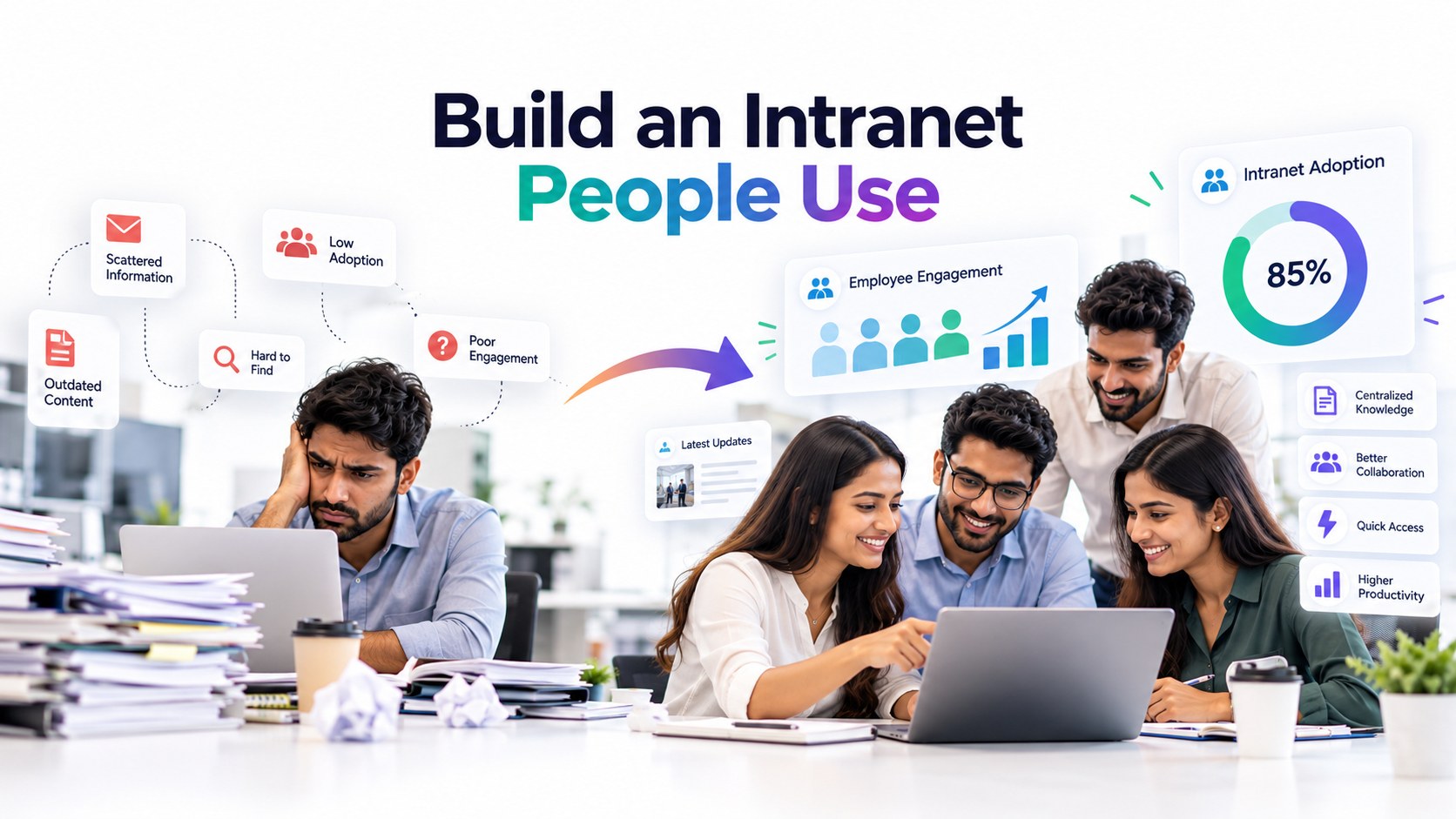
Most organizations operate with a sprawling ecosystem of tools, each solving one specific problem but creating a larger experience problem overall. Sound familiar? Here’s what we see consistently:
- Communication fragmentation: Employees toggle between email, Teams, Slack, internal portals, and department-specific apps, leading to missed messages and decision-making delays.
- Siloed information: Knowledge exists in multiple locations: SharePoint sites, file servers, OneDrive folders, external wikis, with no clear governance or searchability.
- Low tool adoption: HR systems, learning platforms, and engagement tools sit unused because they require separate logins and feel disconnected from where employees actually work.
- Limited employee insights: Without integrated data, HR teams lack visibility into engagement, sentiment, and the employee experience in real time.
- Onboarding friction: New hires navigate fragmented processes across multiple systems, extending time-to-productivity and increasing early turnover.
- Culture disconnection: Remote and distributed teams struggle to feel connected to company values, initiatives, and each other when communication is scattered across platforms.
When these challenges persist, the business impact is measurable: higher attrition, lower engagement scores, reduced productivity, and difficulty scaling culture as the organization grows. Employees become frustrated. IT teams spend endless hours managing integrations and support tickets. HR leaders lack the data they need to improve the experience.
The Solution: Integrated Employee Experience Through SharePoint, Viva & Teams
An integrated employee experience platform isn’t about forcing everyone to use three Microsoft tools. It’s about architecting those tools to work as one seamless system where communication, knowledge, collaboration, and insights flow naturally together.
SharePoint serves as the knowledge and intranet backbone. It organizes company information, policies, resources, and content in a structured, searchable way. Teams enables real-time collaboration and communication: day-to-day chat, video meetings, project-based channels. Viva, built natively on Teams and SharePoint, layers on top with purpose-built employee experience capabilities. That includes Viva Connections for personalized news and engagement, Viva Insights for individual and organizational wellbeing signals, Viva Learning for skills development, and Viva Engage for employee voice and recognition.
When integrated strategically, the three platforms create an employee experience architecture where:
- Employees access all the information and tools they need from a single familiar interface
- HR content, onboarding, learning, and engagement flow naturally within the communication flow
- Managers and leaders get real-time signals on team engagement, sentiment, and wellbeing
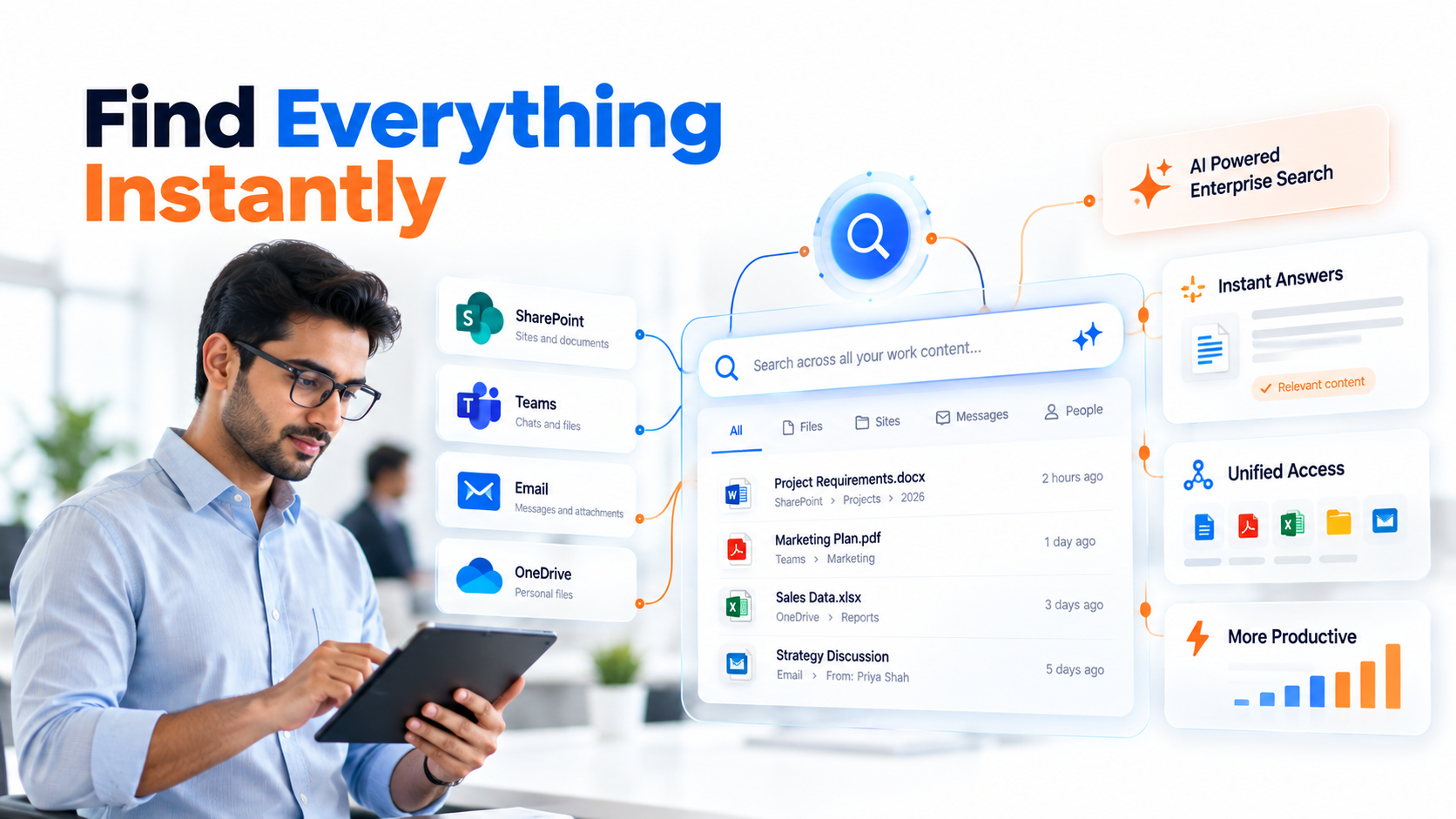
- Knowledge discovery is frictionless. Search finds content across SharePoint, Teams channels, and organizational records
- Adoption accelerates because the experience is intuitive and deeply integrated with how people already work
Expert Perspective
Here’s what we’ve learned: integration success depends 30% on technology and 70% on change management, organizational design, and iterative employee feedback. The platform is the enabler, but adoption requires leadership alignment, clear communication about the vision, training tailored to different user groups, and willingness to iterate based on what employees tell you. Organizations that skip change management often see initial adoption but fail to achieve sustained engagement.
When evaluating an approach to integrated employee experience platforms, look for partners or solutions that offer deep expertise in Microsoft 365 architecture and best practices, proven change management and adoption methodologies, ability to research and incorporate employee feedback throughout implementation, and commitment to ongoing optimization rather than one-time deployment.
Why Leading Organizations Choose Integrated Employee Experience Approaches
Forward-thinking organizations are adopting integrated employee experience platforms because the business case is compelling. The comparison below illustrates why:
| Capability | Integrated Microsoft 365 Approach | Fragmented Legacy Tools |
|---|---|---|
| Communication Efficiency | Unified interface; single source of truth; reduced context-switching | Siloed channels; employees search multiple platforms; missed messages |
| Adoption & Time-to-Value | Native ecosystem; intuitive experience; adoption accelerated by integration | Separate logins; disparate workflows; low adoption due to friction |
| Employee Insights & Data | Real-time engagement signals, sentiment analysis, usage patterns; actionable dashboards for leaders | Limited visibility; engagement surveys only; siloed HR and IT data |
| Scalability & Change Management | Integrated change methodology; feedback loops; iterative improvement; scales across geographic regions | Point solution implementations; change management per tool; difficult to scale culture |
Beyond the comparison, three differentiating factors make integrated approaches superior:
First, unified data architecture. One system of record for employee information, roles, organizational structure, and engagement history means better insights, fewer data silos, and smarter automation. When HR data lives in one place alongside communication and collaboration context, predictive analytics on engagement and retention become possible.
Second, native ecosystem integration. Built-in connectors, workflows, and authentication mean fewer manual handoffs, less duplicate data entry, and lower IT overhead. Employees don’t think about where information lives; they find it naturally through search and personalized experiences.
Third, scalable change management. An integrated approach designed for adoption from day one, with built-in onboarding, learning pathways, and feedback mechanisms, scales more cleanly across departments and geographies than bolting on adoption programs after the fact.
Industry Applications & Use Cases
Finance & Banking
In regulated financial services, communication compliance and security are paramount. A securities trading floor using an integrated employee experience platform can share real-time market insights via Teams channels while maintaining audit logs, compliance tagging, and secure information governance through SharePoint and Viva. New analyst onboarding accelerates because learning pathways, compliance certifications, and peer mentoring all flow through Viva Learning, reducing time-to-productivity from months to weeks.
Healthcare & Life Sciences
Frontline healthcare workers, nurses, clinicians, caregivers historically have limited access to digital tools. An integrated employee experience platform designed for mobile-first access allows shift-based staff to receive critical updates, access protocols, and communicate with teams via Teams mobile. Hospital systems deploying Viva Connections have seen significant improvements in shift worker engagement, reducing information silos that previously existed between desk-based administrators and frontline staff.
Technology & Professional Services
Knowledge-intensive, project-based organizations benefit enormously from integrated platforms. Distributed consulting teams use Teams for project collaboration, SharePoint for proposal and methodology repositories, and Viva Insights to track team wellbeing and prevent burnout during intense engagements. Thought leadership and skills development flow through Viva Learning, creating transparent career pathways that improve retention.
Retail & Hospitality
Multi-location retail and hospitality chains with mobile, hourly workforces face unique challenges. An integrated employee experience platform accessible from a smartphone allows store managers to communicate scheduling changes, brand updates, and recognition instantly. Employees see personalized content relevant to their location or role, reducing information overload while improving brand alignment and engagement.
How to Get Started With Integrated Employee Experience Platforms
Moving toward an integrated employee experience platform is a journey, not an overnight transformation. Here’s a pragmatic five-step process:
- Audit Your Current Landscape. Map all existing tools, measure adoption rates, identify pain points through employee surveys, and recognize quick wins. Understand what employees actually use versus what leadership mandates. This clarity prevents reimplementing the same siloed experience under a new name.
- Define Your Employee Experience Vision. Work with HR, IT, and business leaders to establish desired outcomes: engagement targets, retention goals, time-to-productivity improvements, culture metrics. Connect these outcomes to business strategy so investment is justified and progress is measurable.
- Design Your Integrated Architecture. Plan how SharePoint, Viva, and Teams will work together in your context. Determine information governance, content strategy, workflow automation, and role-based access. This design phase prevents costly rework later and ensures scalability.
- Pilot With Early Adopters. Launch the integrated experience with a volunteer department or cohort. Gather feedback, measure adoption, identify friction points, and refine the experience. Early adopter insights are invaluable for informing organization-wide rollout and preventing organization-wide failures.
- Scale With Change Enablement. Implement organization-wide with training tailored to different roles, leadership advocacy, clear communication about the vision, and ongoing feedback mechanisms. Measure adoption, engagement, and business impact iteratively, and refine continuously rather than declaring victory after launch.
Throughout this process, view the employee experience platform not as a technology project but as an organizational change initiative where technology enables better ways of working.
Frequently Asked Questions
How is Microsoft Viva different from just using Teams and SharePoint?
Viva is a purpose-built employee experience platform layer that sits on top of Teams and SharePoint. While Teams handles communication and SharePoint stores knowledge, Viva adds capabilities specifically designed for employee engagement: Viva Connections personalizes company news and resources by role, Viva Insights surfaces wellbeing signals and network analysis, Viva Learning integrates learning content, and Viva Engage enables peer recognition and employee voice. In essence, Viva transforms Teams and SharePoint from communication and storage tools into a strategic employee experience system.
Do we need to replace our existing tools to integrate with Viva, SharePoint, and Teams?
Not necessarily. Organizations often integrate the Microsoft ecosystem alongside legacy tools initially, with a phased approach to retiring redundant systems. A pilot phase reveals which existing tools are truly essential and which create unnecessary complexity. The goal is reducing fragmentation, not mandating an all-or-nothing Microsoft adoption.
What factors influence the timeline for seeing results from an integrated employee experience platform?
Results depend on several factors: scope of integration, organizational readiness, change management maturity, and clarity of desired outcomes. Early wins like improved communication clarity or streamlined onboarding can emerge relatively quickly once the foundations are stable. Broader cultural and retention impacts typically become measurable over longer cycles. The key is defining specific metrics upfront and measuring consistently rather than expecting transformation overnight.
What is the role of change management in platform adoption?
Change management is critical to success. Even the best platform technology fails without leadership alignment, clear vision communication, role-specific training, and feedback loops that allow employees to shape the experience. Organizations underestimating change management often see initial adoption spikes followed by declining engagement as employees default to old habits. Successful implementations pair technology with dedicated change leadership.
Can small organizations benefit from integrated employee experience platforms?
Yes, though the approach may be simpler. Organizations with 100+ employees often see the strongest return on focused platform investment, but smaller teams can benefit from streamlined communication, accessible HR tools, and reduced tool sprawl. The question isn’t organization size but pain level: if tool fragmentation and communication friction are limiting growth or culture, an integrated approach has value regardless of headcount.

The shift toward integrated employee experience platforms isn’t a trend. It’s a response to genuine workplace evolution. Organizations that build seamless, unified digital workplaces using SharePoint, Viva, and Teams create competitive advantage in talent attraction and retention. Employees prefer working for companies that respect their time, consolidate tools, and provide experiences that feel intentional rather than accidental.
Worth noting: integrated platforms enable HR and business leaders to move from reactive engagement surveys to proactive, data-driven culture building. When you can see real-time signals about team wellbeing, communication effectiveness, and learning engagement, you can intervene earlier and make smarter decisions about where to invest in culture.
The journey toward an integrated employee experience platform requires commitment, but the payoff in engagement, retention, productivity, and culture justifies the investment. The question for your organization isn’t whether to integrate, but when to begin.
Transform Your Workplace Into a Connected Experience
An integrated employee experience platform strategy starts with clarity on your vision and a realistic roadmap tailored to your organization. We’ve guided dozens of enterprises through SharePoint, Viva, and Teams integrations, uncovering quick wins and designing scalable architectures that drive real adoption. Reach out to discuss what’s possible for your workplace culture.