Transform Your Intranet with AI-Powered SharePoint Solutions
AI-powered SharePoint intranets are fundamentally transforming how enterprises manage employee experience and internal communications. Rather than forcing employees to navigate fragmented information across email, legacy systems, and disconnected portals, modern AI intranets use Microsoft 365 Copilot and semantic search to deliver personalized, intelligent content instantly. This shift addresses a critical business challenge: organizations are losing productivity, escalating helpdesk costs, and failing to engage distributed workforces with outdated portal technology.
Key Takeaway
AI-powered intranets use semantic search and Copilot to turn your employee portal into an intelligent assistant that reduces IT tickets by automating routine queries, personalizes content by role and department, and surfaces institutional knowledge on demand without manual searching.
In This Article
- Why AI-Powered Intranets Matter Now
- The Core Challenges Enterprise IT and HR Leaders Face
- The Solution: AI-Powered SharePoint Intranets
- Why Leading Enterprises Choose Modern AI Intranet Solutions
- Industry Applications and Use Cases
- How to Get Started with an Intelligent Intranet
- Frequently Asked Questions About AI Intranets

Why AI-Powered Intranets Matter Now
The shift to hybrid and distributed workforces has exposed a fundamental weakness in traditional employee portals. Employees now expect the same intuitive, personalized experience they get from consumer applications like Google, Netflix, and Amazon. But most enterprise intranets still deliver static content, poor search results, and information scattered across multiple systems. This friction directly impacts productivity and increases IT support burden.
On top of that, organizations are under pressure to maximize return on their Microsoft 365 investments. Copilot for Microsoft 365 and semantic search capabilities represent a significant opportunity to modernize intranets without costly rip-and-replace projects. Leading enterprises are moving quickly to implement AI-powered solutions to capture competitive advantage in employee experience.
“Organizations with AI-enhanced digital workplace solutions see 25-30% higher intranet adoption rates and measurable reductions in IT helpdesk volume, according to Gartner’s 2024 Digital Workplace Maturity research.”
Gartner, 2024
Worth noting: the market is consolidating rapidly around intelligent intranet platforms. McKinsey research indicates that enterprises treating the intranet as a strategic asset rather than an IT project achieve measurable improvements in employee engagement, time-to-productivity for new hires, and operational efficiency. AI intranet solutions aren’t a future consideration anymore. They’re becoming table stakes for competitive employers.
The Core Challenges Enterprise IT and HR Leaders Face
Organizations deploying traditional SharePoint portals and legacy intranet systems encounter predictable obstacles that compound over time.
- Information Fragmentation: Policies, benefits documentation, org charts, forms, and training materials live in different systems. Employees waste hours searching or submit questions to IT that could be self-served.
- Helpdesk Bottlenecks: Routine requests (password resets, policy lookups, benefits questions, form submissions) clog IT and HR queues. Employees wait days for answers to questions the system could answer instantly.
- Low Intranet Adoption: Static designs, keyword-based search, and irrelevant content recommendations push employees back to email and Teams for information discovery. Portal usage drops over time.
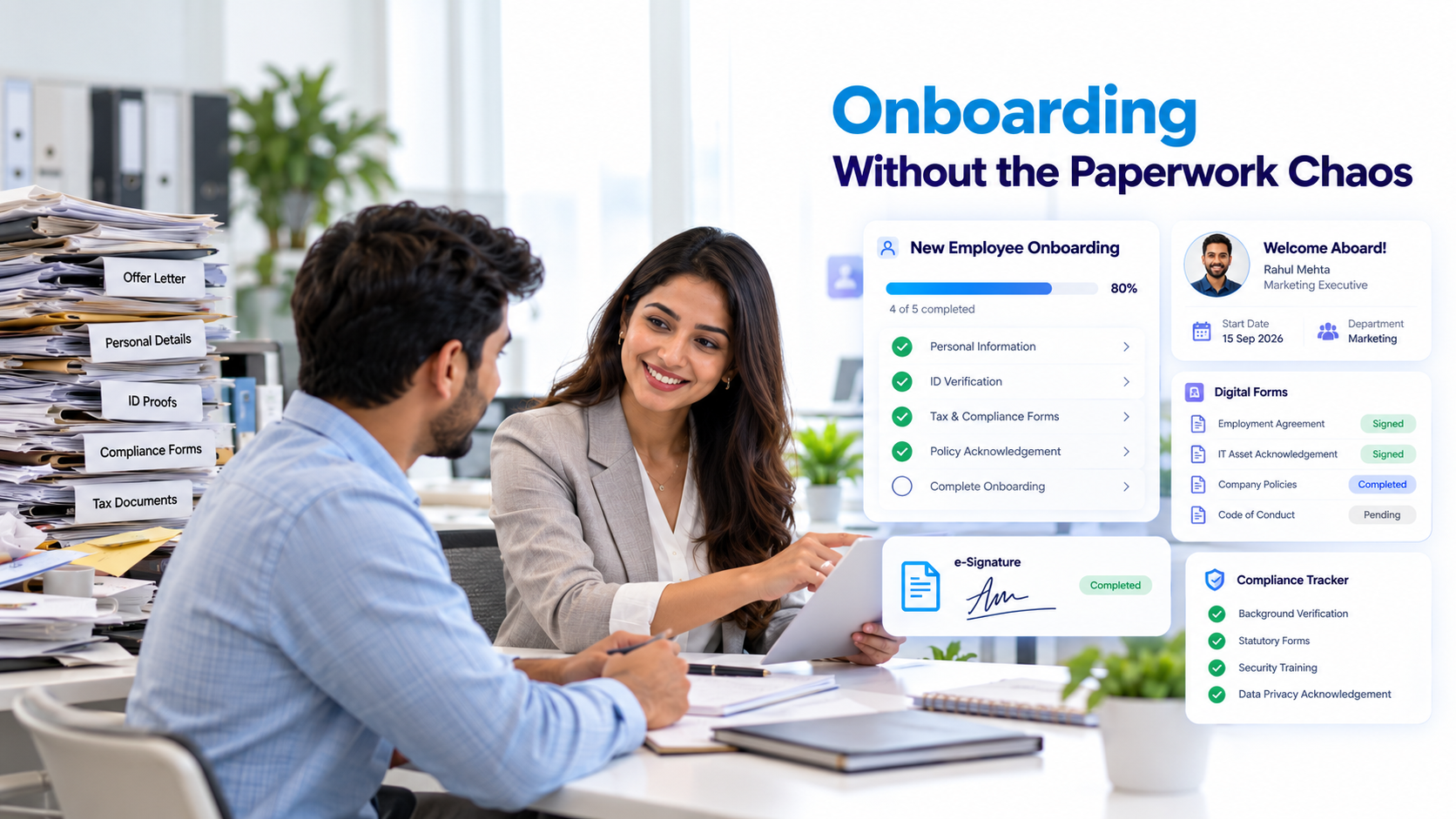
- Onboarding Inefficiency: New hires struggle to find onboarding checklists, training modules, org structure, and role-specific information. Manual handoffs create compliance gaps and extend time-to-productivity.
- Knowledge Silos: Institutional knowledge remains trapped in individual email accounts, Teams channels, or disconnected drives. Teams reinvent solutions rather than discovering existing resources.
- Compliance and Governance Risks: Without centralized content management and audit trails, organizations struggle to maintain policy consistency, regulatory compliance, and data residency across distributed teams.
The cumulative effect is measurable: higher IT costs, lower employee satisfaction, compliance exposure, and competitive disadvantage in talent retention. Without modernization, these gaps widen as organizations scale.
The Solution: AI-Powered SharePoint Intranets
AI-powered SharePoint intranets address each of these challenges through intelligent architecture built on Microsoft 365 native capabilities. Rather than replacing existing systems, modern AI intranets elevate them.
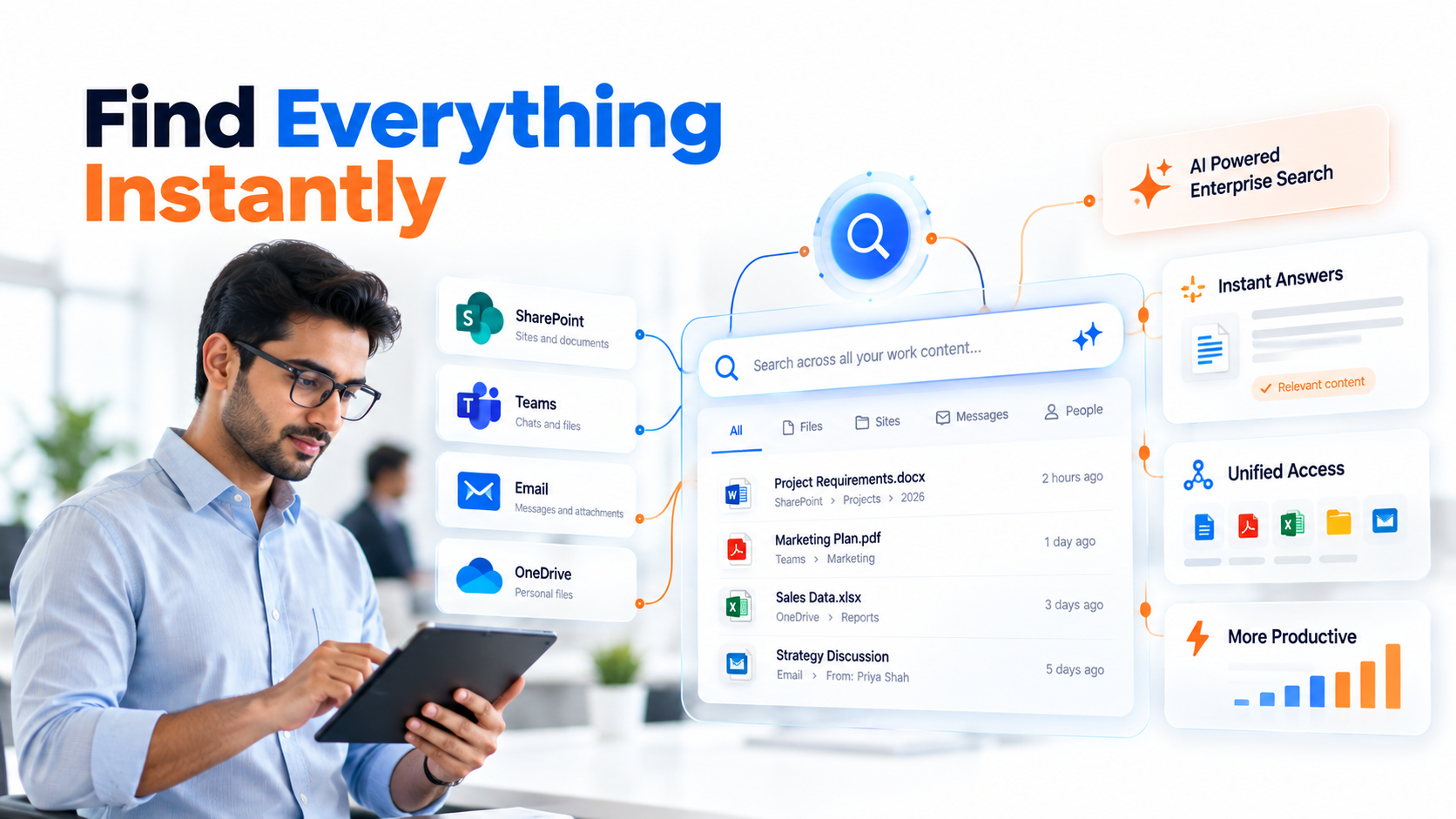
Here’s the core: an AI-powered intranet uses semantic search powered by Microsoft 365 Copilot, which understands natural language intent rather than keyword matching. When an employee asks, “What’s my maternity leave policy?” the system interprets meaning and surfaces relevant HR policies, approval workflows, and benefits documentation. Not generic results for pages containing “maternity” or “leave.” Sound familiar?
Role-based personalization is another critical differentiator. Rather than displaying identical content to all employees, intelligent intranets use metadata, organizational hierarchy, and behavioral signals to surface relevant information. HR staff see HR processes and news. Finance teams discover finance policies and training. New hires receive onboarding-specific content recommendations. This personalization increases engagement and reduces cognitive load.
Integration with Power Automate enables intelligent self-service workflows. Employees submit requests through conversational interfaces, and AI-driven routing automatically assigns them to the right department or automates routine approvals. Time-to-resolution improves dramatically for common processes like vacation requests, equipment orders, or benefits changes.
Behind the scenes, governance infrastructure ensures data quality and compliance. Metadata standards, content ownership models, and Azure OpenAI integration with enterprise data residency controls create trustworthy AI models. Analytics dashboards provide visibility into search quality, adoption metrics, and user satisfaction, enabling continuous improvement.
Expert Perspective
Organizations implementing AI intranets don’t simply deploy technology and expect success. The most effective deployments combine robust data governance, clear content ownership models, comprehensive change management, and user training. AI is only as valuable as the structured information and metadata it’s trained on. Without governance discipline, even the most sophisticated AI models deliver poor results. Successful implementations treat the intranet as a strategic platform, not an IT infrastructure project.
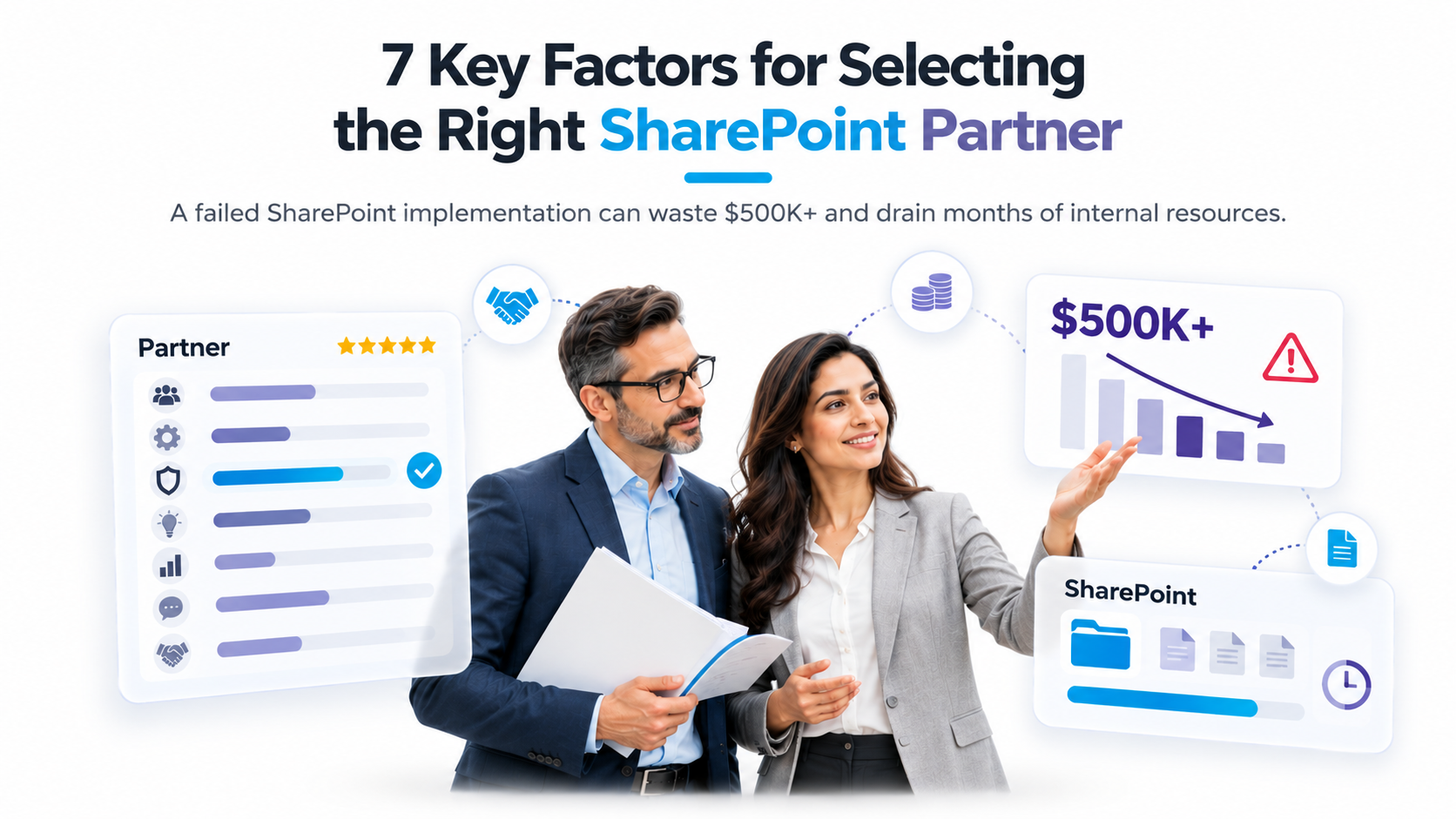
When evaluating potential partners or solutions, prioritize expertise in three areas. First, deep Microsoft 365 knowledge across SharePoint Online, Copilot for Microsoft 365, Power Automate, and Power Apps ensures seamless integration with your existing environment. Second, proven governance and data strategy services help establish metadata standards, content ownership, and AI model guardrails. Third, dedicated change management and adoption support drives user engagement and measurable ROI. Technology alone rarely succeeds without organizational alignment.
Why Leading Enterprises Choose Modern AI Intranet Solutions
The difference between generic SharePoint implementations and purpose-built intelligent intranet platforms is substantial. A comparison illustrates why enterprises are moving beyond basic SharePoint.
| Capability | Generic SharePoint | Traditional Intranet Vendor | AI-Powered Intelligent Intranet |
|---|---|---|---|
| Search Quality | Keyword matching, low relevance | Faceted search, manual tagging | Semantic AI search, Copilot-powered, learns from behavior |
| Content Personalization | Manual by IT, role-based only | Limited segmentation, static rules | Dynamic ML-driven personalization by role, department, seniority, behavior |
| Self-Service Automation | Basic workflow templates | Manual approval routing, limited intelligence | AI-driven Q&A, intelligent routing, one-click resolutions via Copilot |
| Onboarding Experience | Static PDF checklists, email-driven | Checklist tool, manual assignment | Personalized AI journey mapping, auto-suggested training, role-specific content flow |
| Integration Ecosystem | Custom connectors, maintenance burden | Limited API flexibility, vendor lock-in | Native Microsoft Graph, Power Automate extensibility, open architecture |
| Governance and Compliance | Basic permissions, audit logs | Content management, limited compliance features | Sophisticated metadata governance, AI transparency, regulated industry support |
Three factors drive the preference for modern AI-powered intelligent intranets. First, AI-native architecture built on Copilot and semantic understanding creates fundamentally different user experience compared to traditional search and static content. The system learns from employee behavior and continuously improves result relevance. Second, enterprise-grade governance provides sophisticated metadata management, compliance controls, and data residency support required by regulated industries like healthcare, finance, and government. Third, comprehensive change management services ensure adoption success. Technology investments fail without clear communication strategy, user training, and executive sponsorship.
That’s why organizations evaluating intelligent intranet solutions should assess not just the platform capabilities but the partner’s ability to drive organizational change and demonstrate measurable ROI through adoption metrics, helpdesk ticket reduction, and employee satisfaction improvements.
Industry Applications and Use Cases
Financial Services and Banking
Compliance-heavy financial institutions use AI-powered intranets to instantly surface regulatory requirements, training certifications, and policy updates to relevant teams. An employee searching “KYC requirements” receives instantly personalized results for their specific role and regulatory jurisdiction. Audit trails and content versioning provide compliance evidence. Self-service workflows automate routine approvals without manual IT involvement.
Healthcare Organizations
Health systems use intelligent intranets to onboard clinical and administrative staff efficiently despite high turnover. New nurses receive role-specific onboarding journeys with shift schedules, HIPAA training, department procedures, and payroll information delivered through conversational AI. Shift assignments, schedule changes, and benefits information surface through mobile-friendly personalized portals. Search results respect access controls, ensuring patient-sensitive information remains protected.
Manufacturing and Logistics
Distributed warehouses and production facilities use AI intranets to deliver safety procedures, equipment manuals, shift assignments, and training in local languages across geographies. Shop floor workers access safety checklists and equipment documentation without needing desktop computers. Multilingual Copilot capabilities support diverse workforces. Integration with shift management systems personalizes schedules and role-specific procedures.
Professional Services and Technology
High-growth technology and consulting firms use intelligent intranets for rapid employee onboarding, project resource discovery, and skills mapping. New hires quickly learn firm culture, locate project templates, and find mentorship resources. Employees searching for expertise discover colleagues with specific skills without manual directory maintenance. Knowledge management automation captures institutional learning rather than allowing expertise to walk out the door.
How to Get Started with an Intelligent Intranet
- Assess Current State: Conduct a comprehensive audit of where employees currently find information (email, Teams, SharePoint, legacy systems), measure baseline helpdesk ticket volume by category, and establish intranet adoption baselines. This baseline enables future ROI measurement.
- Define Goals and Success Metrics: Establish clear targets like reducing helpdesk tickets by a specific percentage, achieving intranet adoption among a defined employee population, enabling self-service for particular processes, or reducing onboarding time. Document these upfront so you can measure implementation success.
- Plan Governance and Architecture: Develop metadata strategy, establish clear content ownership across departments, define user roles and personalization rules, and plan integration points with HR systems, directory services, and knowledge bases. Governance discipline directly impacts AI quality.
- Pilot and Refine: Start with a focused pilot such as onboarding, benefits self-service, or a single department. Gather user feedback, refine search relevance, improve content structure, and validate your governance model before enterprise rollout.
- Measure and Iterate: Track adoption through analytics dashboards, monitor search quality and user satisfaction, measure helpdesk ticket reduction, and use insights to continuously improve content relevance and personalization rules. Successful implementations treat the intranet as a living platform requiring ongoing optimization.
Frequently Asked Questions About AI Intranets
How does Microsoft 365 Copilot differ from basic SharePoint search?
Copilot uses semantic understanding and natural language processing to interpret user intent rather than matching keywords. It understands context, relationships between documents, and can synthesize answers across multiple sources. Basic search requires users to guess keywords. Copilot answers questions in natural language, dramatically improving findability and user satisfaction.
What’s the difference between an intelligent intranet and an AI-powered intranet?
Intelligent intranets use metadata, personalization rules, and recommendation engines to deliver relevant content. AI-powered intranets add semantic understanding, predictive personalization powered by machine learning, and autonomous workflows through Copilot. The difference is similar to comparing a recommendation engine to generative AI: the latter provides fundamentally more capability and user value.
Do we need to migrate or restructure all existing SharePoint content to implement an AI intranet?
No. Modern AI intranets leverage Microsoft Graph APIs to work with existing SharePoint structures without migration. That said, data quality and metadata governance matter significantly. AI models are only as effective as the structured information and consistent tagging they’re trained on. You may benefit from metadata cleanup and governance improvements, but complete content migration isn’t typically required.
How quickly can we measure ROI from an AI-powered intranet implementation?
ROI measurement depends on the specific goals you define during planning. Helpdesk ticket reduction and onboarding efficiency improvements often show results within the first few months of active use. Adoption metrics and employee satisfaction improvements typically emerge over two to three quarters as the platform becomes embedded in daily workflows. Establishing clear baselines before implementation is essential for measuring these improvements accurately.
What happens if we implement AI incorrectly or without proper governance?
Poor governance leads to ineffective AI models that return irrelevant results, eroding user trust in the platform. Content ownership remains unclear, leading to stale information. Without change management, adoption remains low despite technology investment. The most successful deployments combine technology excellence with organizational discipline around data governance and user engagement. Partner selection should prioritize governance and change management expertise alongside technical capability.
Here’s the thing worth noting: building a modern SharePoint intranet for enterprise collaboration requires understanding how to structure content for AI discoverability. Similarly, organizations scaling SharePoint workflow automation can combine those capabilities with intelligent intranet features to create powerful end-to-end employee experiences. For organizations earlier in their digital transformation, understanding why employee experience platforms are becoming the new corporate intranet provides important strategic context.
Transform Your Employee Experience Today
AI-powered intranets unlock significant efficiency and engagement gains for enterprises ready to modernize. Our team brings deep Microsoft 365 expertise, proven governance frameworks, and comprehensive change management to ensure your intelligent intranet delivers measurable ROI. Discover how leading organizations are reducing IT overhead and increasing employee satisfaction with intelligent intranet solutions.