Document Management Compliance: Best Practices Guide
Document management compliance isn’t optional anymore. If you’re managing regulated data, you’re already dealing with GDPR, HIPAA, SOX, and industry-specific requirements that keep tightening. The truth is this: the difference between a well-organized document system and a scattered one usually determines whether you pass an audit or face penalties. Modern document management systems turn compliance from a reactive scramble during audit season into something seamless and automated that runs alongside your everyday work.
Key Takeaway
A modern, optimized document management system transforms compliance from a reactive burden into a proactive competitive advantage, cutting audit preparation time and reducing regulatory risk.
In This Article
- Why Document Management and Compliance Are Inseparable Today
- Core Challenges: The Compliance and Document Management Gap
- The Solution: Optimizing Document Management and Workflow Automation
- Why Leading Organizations Choose Modern DMS for Compliance
- Industry Applications: Compliance Across Sectors
- How to Get Started: A Practical Roadmap
- Frequently Asked Questions

Why Document Management and Compliance Are Inseparable Today
Regulatory complexity has exploded over the past five years. GDPR enforcement alone has resulted in billions in fines across Europe and beyond. HIPAA violations continue to expose healthcare organizations to penalties exceeding $1.5 million per incident. SOX audits remain a constant pressure for public companies. Add industry-specific mandates in financial services, manufacturing, and life sciences, and here’s the thing: document control is now a cornerstone of corporate risk management.
“According to a 2023 Gartner report, 62% of compliance failures stem from inadequate audit trails and uncontrolled document access rather than a lack of security technology.”
Gartner, 2023
The business impact goes well beyond fines. Regulatory violations trigger remediation costs, reputational damage, and loss of customer trust. Remote and hybrid work arrangements have further decentralized document handling, expanding your compliance surface area exponentially. When documents live across email inboxes, personal cloud drives, SharePoint sites, and on-premises servers with no unified governance, auditors struggle to verify control. That’s why organizations that centralize document management and automate approval workflows are seeing measurable improvements in audit readiness and risk posture.
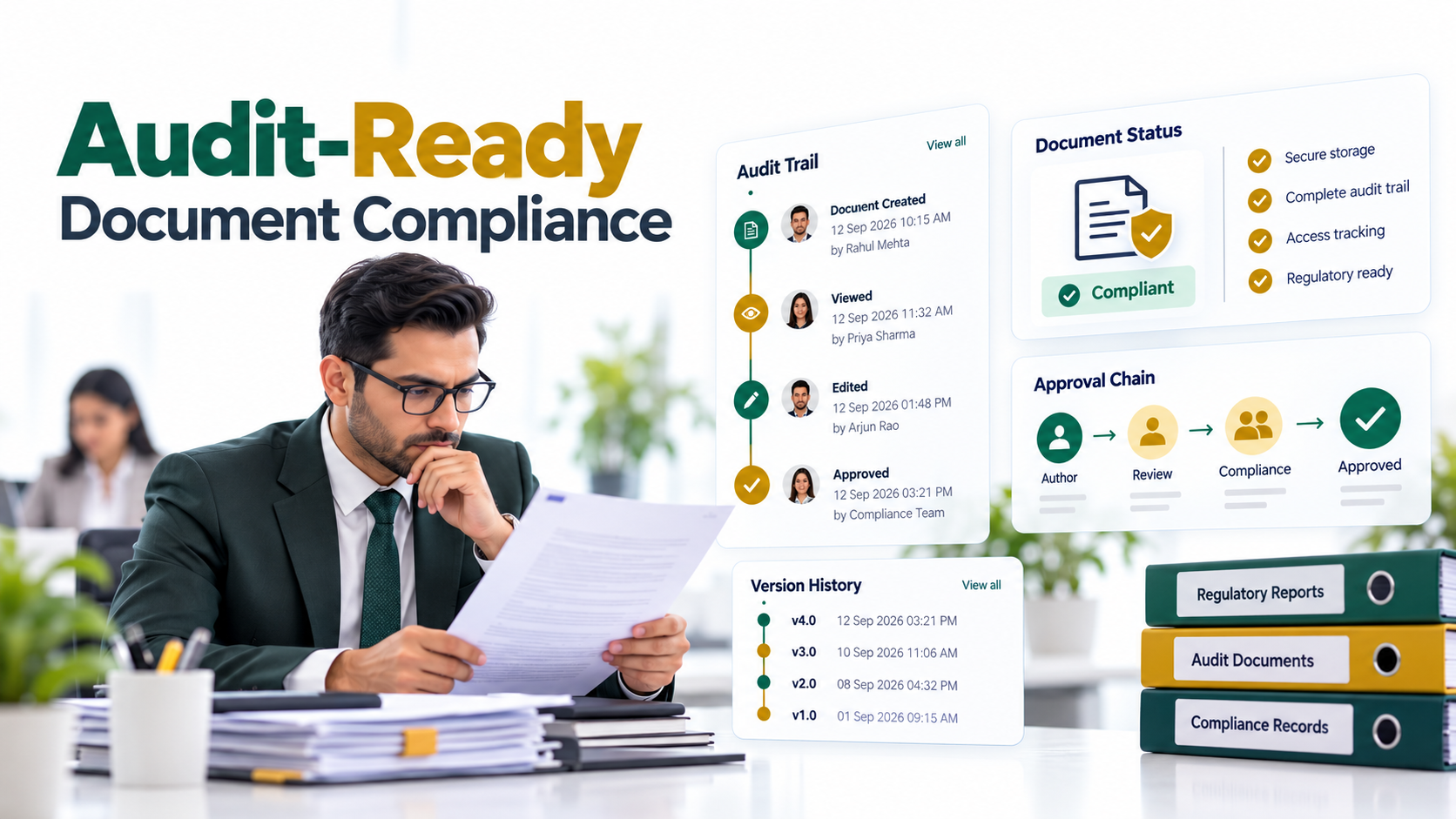
Here’s what’s critical to understand: modern regulators and auditors now expect digital evidence, not paper trails or manually assembled spreadsheets. They want immutable audit logs, timestamped approvals, and searchable retention policies embedded in your systems. A modern document management system delivers exactly that.
Core Challenges: The Compliance and Document Management Gap
Most mid-market and enterprise organizations face a consistent set of obstacles when it comes to document management compliance. These aren’t theoretical pain points. They’re what IT teams and compliance officers encounter every day.
- Fragmented repositories across platforms: Documents scatter across email, SharePoint, on-premises file servers, Google Drive, Dropbox, and cloud apps with no unified access control or governance. This fragmentation creates blind spots, making it impossible to know where sensitive data truly lives.
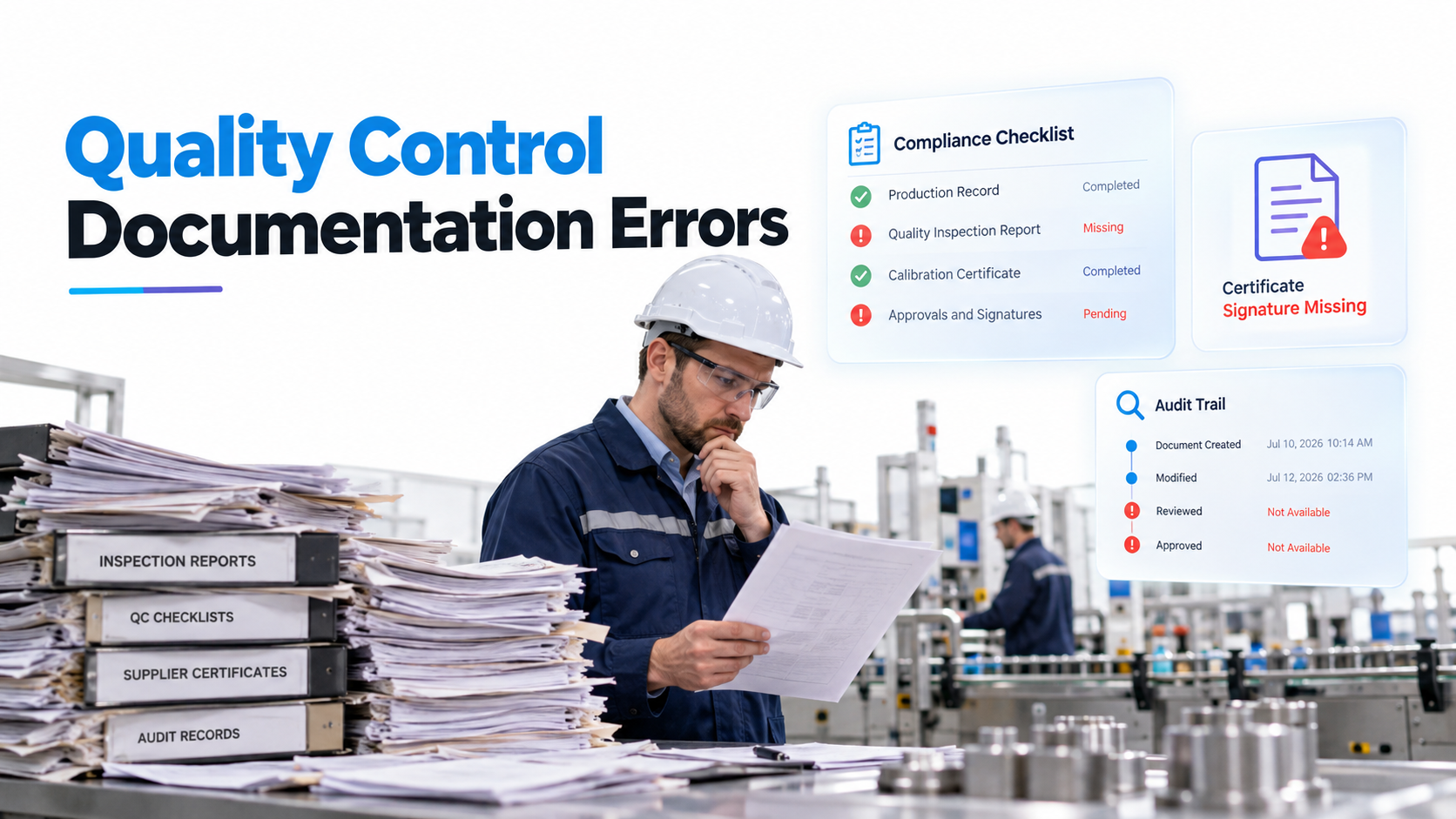
- Manual approval bottlenecks: Sign-offs rely on email chains, spreadsheet workflows, or physical signatures. Approvals get lost, delayed, or never properly documented. When an auditor asks for proof of approval, your team scrambles to reconstruct the chain.
- Weak data security and access controls: Sensitive documents remain accessible to unauthorized users because share permissions are overly permissive or never reviewed. High-risk documents lack encryption, and there’s no easy way to revoke access when someone leaves the team.
- Audit preparation becomes a months-long nightmare: Compliance teams spend weeks gathering evidence of document handling, approvals, and access. Manual searches across multiple systems yield incomplete results, and auditors are left skeptical of your control environment.
- Retention and deletion chaos: Documents are kept far too long, creating legal liability, or deleted prematurely, destroying audit evidence. Without rules-based retention policies, this risk spirals as organizations grow.
- No visibility into document lifecycle or user actions: IT and compliance teams can’t easily answer critical questions: Who accessed this PHI record? When did the contract get approved? Which financial documents lack required sign-offs? Without real-time visibility, you’re flying blind.
The consequence is predictable. Compliance violations lead to regulatory penalties, forced remediation, and damaged stakeholder confidence. Operational inefficiency diverts resources away from strategic initiatives. Teams spend energy proving compliance rather than innovating. Most critically, poor document controls elevate the risk of insider threats, data breaches, and accidental data loss.

The Solution: Optimizing Document Management and Workflow Automation
Document management compliance improves dramatically when you centralize control, embed compliance logic into workflows, and generate audit evidence automatically. This isn’t a software-only solution. It’s an approach that combines technology, process design, and governance discipline.
Here’s how optimization addresses each pain point. Fragmented repositories get consolidated into a single, governed platform with unified access policies. Manual approval bottlenecks vanish when you automate routing using conditional logic: “If contract value exceeds $100K, route to both legal and procurement. If under $50K, only finance approval required.” Weak security improves through role-based access control (RBAC), encryption at rest and in transit, multi-factor authentication (MFA), and real-time data loss prevention (DLP) policies. Audit preparation shifts from manual evidence gathering to automated compliance reports and searchable audit trails. Retention chaos is replaced by rules-based policies tied to document type and regulatory requirement. And visibility becomes real-time through comprehensive activity logs, dashboard reporting, and user action tracking that answers every auditor question instantly.
Expert Perspective
Workflow automation is a force multiplier for compliance. By encoding your regulatory rules directly into approval workflows, segregation of duties, dual sign-offs, and conditional routing, you shift from manual oversight to systemic control. The compliance decision happens as work flows through the system, not afterward when an auditor asks for proof.
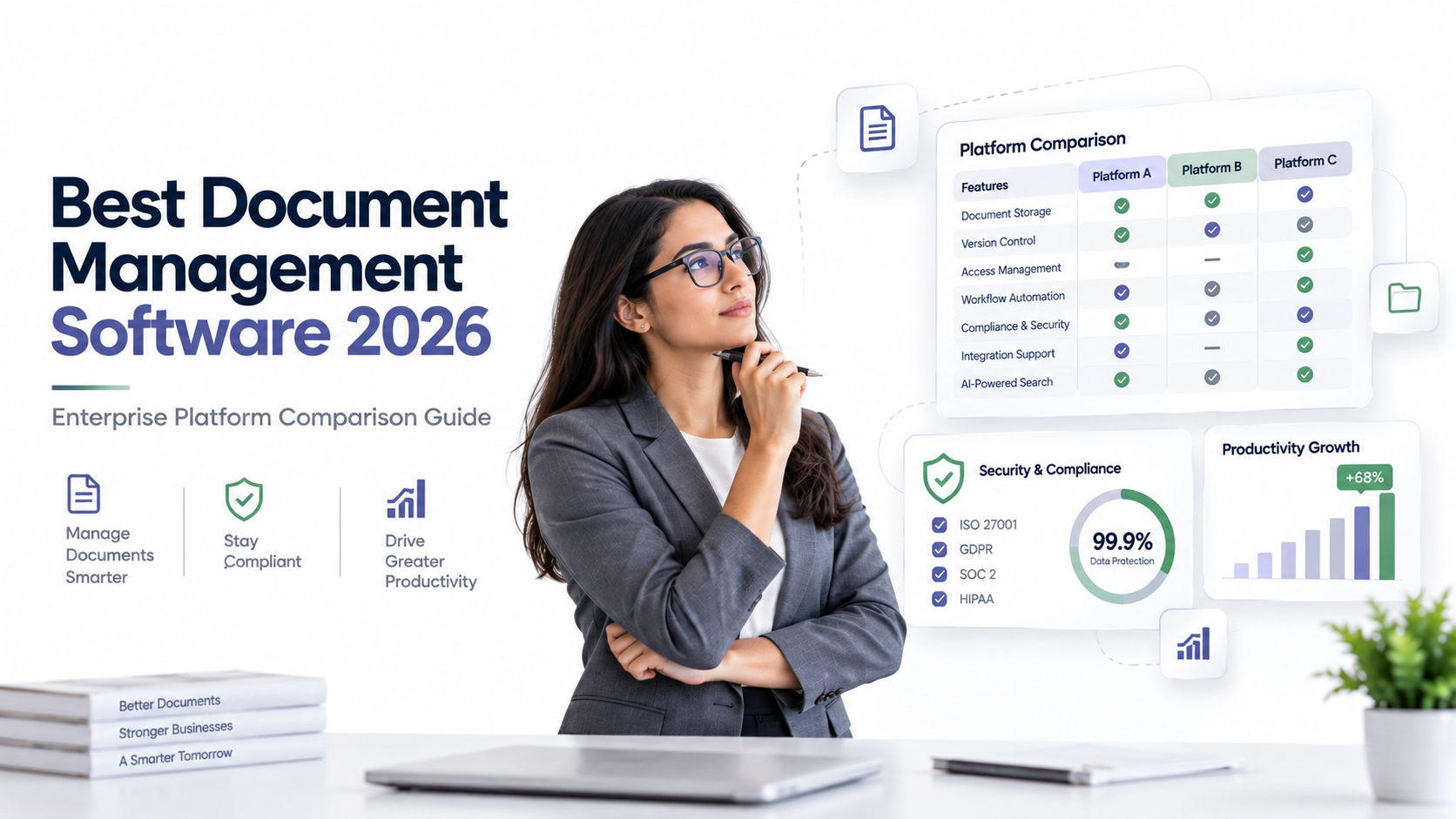
When evaluating a document management compliance solution, prioritize these capabilities: tight integration with your existing tech stack (SharePoint, Microsoft 365, cloud storage platforms); a flexible, rules-based workflow designer that avoids rigid, hard-coded templates; transparent audit logging and compliance reporting built natively into the platform; strong data security certifications (SOC 2 Type II, ISO 27001, FedRAMP if applicable); and scalability plus change management support during implementation.
On top of that, look for platforms that support eDiscovery and advanced search, allowing you to quickly locate documents by metadata, content, or user action. Version control and immutable audit trails are non-negotiable. Finally, ensure the platform offers flexible retention and hold capabilities so you can honor legal holds while still enforcing retention schedules for other documents.
Why Leading Organizations Choose Modern DMS for Compliance
Organizations that have moved away from ad-hoc, manual document management, particularly in finance, healthcare, and regulated manufacturing, have adopted modern document management systems that embed compliance logic directly into everyday workflows. This shift produces two measurable outcomes: compliance becomes a byproduct of normal work rather than an afterthought, and teams spend less time proving compliance and more time on strategic priorities.
| Dimension | Modern DMS + Optimization | Legacy/Manual Process |
|---|---|---|
| Audit Trail | Automated, timestamped, tamper-evident, instantly searchable | Email chains, manual logs, incomplete, time-consuming to assemble |
| Approval Cycle Time | Hours to days; parallel workflows, rule-based routing, escalation automation | Days to weeks; sequential email approvals, manual follow-ups, lost chains |
| Access Control | Fine-grained RBAC, time-limited access, instant revocation, encryption by default | Broad role-based shares, difficult to revoke, weak or missing encryption |
| Compliance Reporting | Automated reports, real-time dashboards, auditor-ready documentation | Manual evidence gathering, spreadsheet compilation, incomplete data |
| Data Security Risk | Low; centralized controls, DLP policies, activity monitoring, clear visibility | Moderate to high; visibility gaps, document sprawl, inconsistent controls |
| Scalability | Designed for growth; policies apply org-wide, new locations plug in seamlessly | Difficult as organization grows; manual processes break under scale |
The three differentiating factors explain why leading organizations prioritize modern platforms. First is centralization: a single source of truth for document control eliminates shadow systems and compliance blind spots. Second is automation: policies and workflows embedded in the platform reduce human error and ensure consistency across all document handling. Third is auditability: real-time, immutable audit trails provide evidence of compliance without manual work or guesswork.
Worth noting: modern platforms scale with organizational growth. When you add a new department, location, or regulatory requirement, you configure policies once and they apply everywhere. Manual, email-based processes can’t scale that way.
Industry Applications: Compliance Across Sectors
Finance and Banking
In banking and financial services, loan documents, signed agreements, and audit reports must be immutable and completely traceable. Approval workflows enforce segregation of duties: loan officers approve credit decisions, compliance teams verify adherence to policies, and legal reviews all terms. Document retention policies align precisely with banking regulator hold periods. Auditors can instantly search for any document, verify approvals, and trace every access event. The business driver is straightforward: SOX and banking regulator mandates require proof of control, and penalties for violations can be severe.
Healthcare and Life Sciences
HIPAA-covered entities face constant pressure to protect patient records and consent forms. Document management compliance systems enforce access controls so that only authorized staff can view PHI. Access logs track who viewed sensitive records, when, and for how long, creating an immutable trail for breach investigations. Retention policies align with medical record keeping laws and state-specific requirements. When a patient or regulator requests proof of data handling, the audit trail is immediate and complete.
Regulated Manufacturing and Pharma
Batch records, quality assurance documents, and regulatory submissions must be validated and auditable for FDA or ISO inspections. Modern document management systems enforce change control, requiring approval before any document revision. Workflows capture every version and signature, satisfying FDA 21 CFR Part 11 and GxP compliance requirements. Auditors can verify that controlled documents have been approved and that no unauthorized changes occurred.
Professional Services and Legal
Client engagement letters, work product, and billing documents require secure handling and strict version control. Workflows manage matter approvals and billing sign-offs without delays. Retention policies honor professional responsibility rules and malpractice defense requirements. Client confidentiality is protected through fine-grained access controls and encryption, building trust and reducing liability.
How to Get Started: A Practical Roadmap
Implementing document management compliance doesn’t require a lengthy, overwhelming transformation. A structured, phased approach reduces risk and delivers measurable value quickly. Here’s what the core steps look like.
- Assess Your Current State: Audit existing document repositories, document flows, approval processes, and known compliance gaps. Identify bottlenecks and high-risk areas where sensitive documents have overly broad access. Outcome: A baseline understanding of your compliance posture and readiness level for a DMS implementation.
- Define Compliance and Business Requirements: Meet with compliance, legal, IT, and operations stakeholders to document regulatory obligations, internal approval policies, retention schedules, and security controls needed. Outcome: A clear requirements document that guides platform selection and configuration.
- Evaluate and Select a Platform: Assess leading DMS and workflow solutions against your requirements. Prioritize platforms that integrate seamlessly with your existing tech stack (SharePoint, Microsoft 365, etc.) and offer strong audit and security features. Outcome: A shortlist of 2-3 qualified platforms with clear business fit.
- Design and Configure Workflows: Work with your chosen platform to design approval workflows that embed your compliance rules. For example: “Contracts over $250K require legal, procurement, and CFO approval in parallel. Escalate if not approved within five business days.” Configure access policies, retention schedules, and audit logging. Outcome: A fully operational document management system that enforces your compliance policies automatically.
- Pilot, Train and Roll Out: Begin with a pilot group, refine workflows based on feedback, then roll out across the organization. Provide training to all users so they understand how compliance is embedded in their day-to-day work. Outcome: Organization-wide adoption and measurable improvements in audit readiness and efficiency.
Throughout this roadmap, change management is critical. Document management compliance affects how people work. Involve teams early, address concerns openly, and communicate the benefits clearly. Users who understand why a new workflow matters are far more likely to adopt it enthusiastically.
Frequently Asked Questions
What’s the difference between document management and compliance management?
Document management is the infrastructure: where documents live, how they’re organized, and who can access them. Compliance management is the discipline: ensuring that document handling follows regulatory rules and business policies. A modern document management system integrates compliance controls directly into the platform, so document management and compliance management become inseparable. You’re not managing documents in one place and verifying compliance in another; compliance is embedded in the workflow.
Can SharePoint alone handle document management compliance?
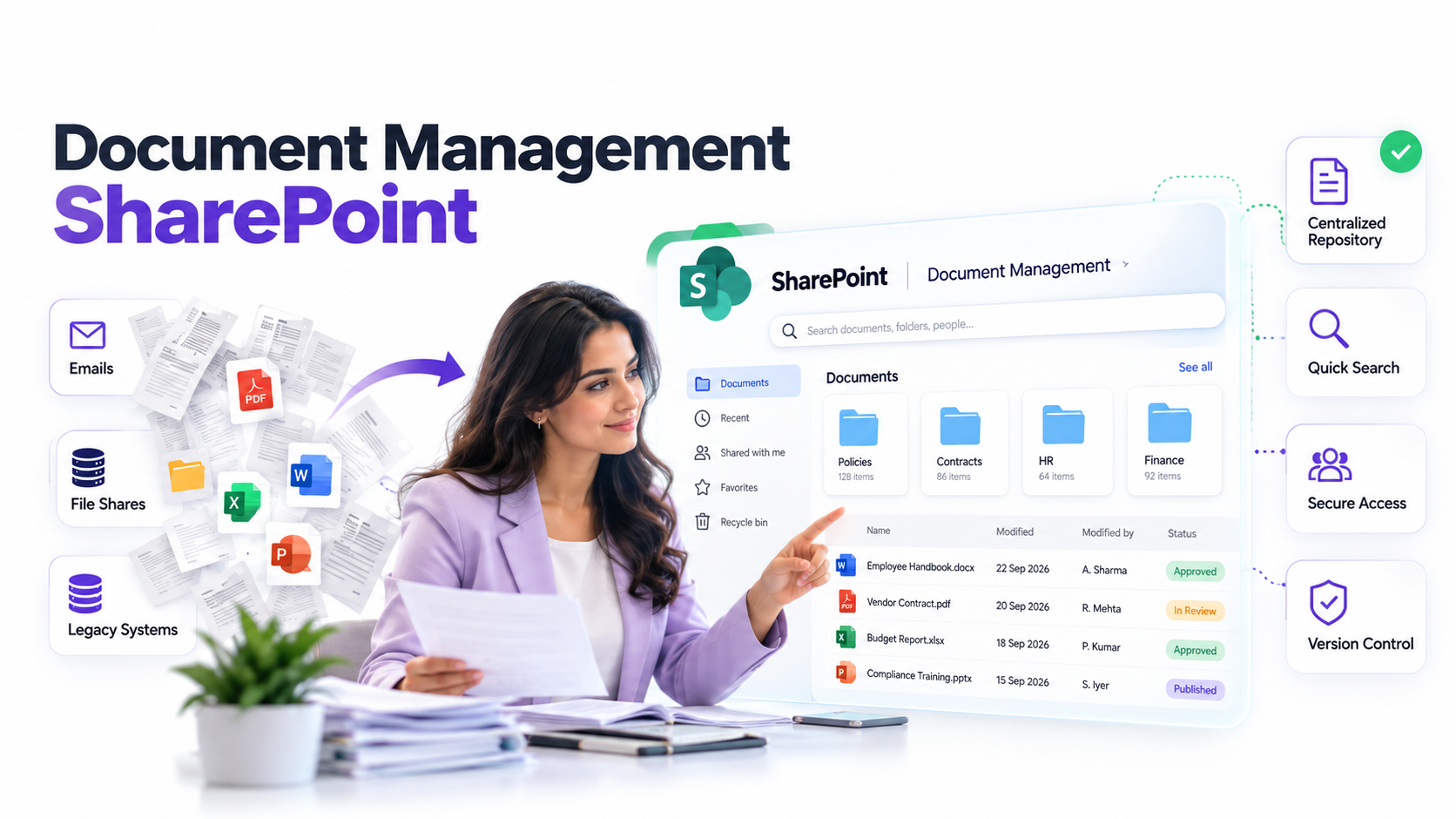
SharePoint is a powerful collaboration platform, and it supports many compliance capabilities out of the box: retention policies, eDiscovery, audit logging, and access controls. However, SharePoint development services can enhance governance and compliance by layering in custom approval workflows, DLP policies, and compliance reporting tailored to your specific regulations. For organizations with complex regulatory needs across multiple jurisdictions or with legacy document repositories, a dedicated document management system layered on top of SharePoint often delivers clearer control and easier auditing.
How do I know if my organization is ready for document management compliance optimization?
You’re ready if you’re experiencing any of these signs: auditors regularly request additional evidence or clarification on document handling; your team scrambles during audit season to gather proof of approvals; documents live in multiple systems with inconsistent access controls; approval workflows rely on email and spreadsheets; or you lack visibility into who accessed sensitive data and when. These are all strong indicators that optimization would reduce your regulatory risk and operational friction.
What role does encryption play in document management compliance?
Encryption is foundational. It protects sensitive documents both at rest (stored on disk or in cloud) and in transit (moving across networks). Most regulatory frameworks, including GDPR, HIPAA, and PCI-DSS, expect encryption for data classified as sensitive or personal. A modern document management compliance system encrypts by default, so you don’t have to remember to protect each document individually. Access logs track decryption events, adding another layer of auditability.
How often should I review and update my document retention policies?
Retention policies should be reviewed whenever regulatory requirements change, when your organization expands into new industries or geographies, or when legal counsel identifies new holds or litigation concerns. Additionally, as part of your annual compliance assessment, validate that your retention policies still align with current regulations. This prevents documents from being deleted prematurely when they should be held, or kept too long after they should be discarded. Automation helps: once your policies are configured in your document management system, the system enforces them consistently without requiring manual intervention each time.
Ready to Strengthen Your Document Management Compliance?
Discover how a modern, optimized document management system can transform your regulatory posture. Our compliance specialists will assess your current environment and design a roadmap tailored to your industry and regulatory landscape.