Business Benefits of Hiring a SharePoint Consulting Company
SharePoint consulting company services unlock measurable business value from your Microsoft 365 investment by transforming fragmented workflows into connected digital workplaces. Many organizations spend $50,000 to $500,000+ annually on Microsoft 365 licenses, yet SharePoint remains underutilized, governance is inconsistent, and user adoption stalls. A dedicated SharePoint consulting company bridges that gap, accelerating adoption, reducing operational risk, and delivering strategic clarity that in-house teams or generic vendors simply cannot match.
Key Takeaway
A qualified SharePoint consulting company accelerates adoption, reduces risk, and unlocks measurable business value from your existing Microsoft 365 investment without the cost and complexity of building costly internal teams.
In This Article
- Why SharePoint Consulting Matters in Today’s Digital Workplace
- The Core Challenges Organizations Face Without Specialized Expertise
- How a SharePoint Consulting Company Solves These Challenges
- Why Organizations Choose Professional SharePoint Consulting
- Industry-Specific Applications and Use Cases
- How to Get Started with a SharePoint Consulting Partner
- Frequently Asked Questions

Why SharePoint Consulting Matters in Today’s Digital Workplace
Remote and hybrid work models have made collaboration platforms critical to organizational survival. Here’s the problem: many enterprises deployed Microsoft 365 quickly during rapid digital transformation but skipped the strategic planning needed to govern, secure, and optimize those platforms effectively. The result? Fragmented information silos, inconsistent access controls, and frustrated employees who can’t find documents or collaborate across teams.
On top of that, compliance requirements have tightened considerably. Regulations like GDPR, HIPAA, and SOC 2 require organizations to demonstrate clear governance, data classification, and retention policies. SharePoint consulting services help enterprises map their content management practices to these regulatory frameworks, reducing audit risk and legal exposure.
Business leaders are also facing mounting pressure to maximize existing software investments and do more with less. Gartner research indicates that organizations leveraging modern workplace collaboration platforms with proper governance see 20-30% improvements in knowledge worker productivity. Yet without expert guidance, most organizations fail to unlock that potential.
“Organizations that implement enterprise content management with structured governance and automation are 3x more likely to meet compliance objectives and report higher employee satisfaction than those without professional oversight.”
Forrester Research, Digital Workplace Adoption Study 2024
The Core Challenges Organizations Face Without Specialized Expertise
When organizations try to manage SharePoint internally or rely on generalist IT vendors, specific pain points emerge. Understanding these challenges clarifies why a dedicated SharePoint consulting company becomes essential.
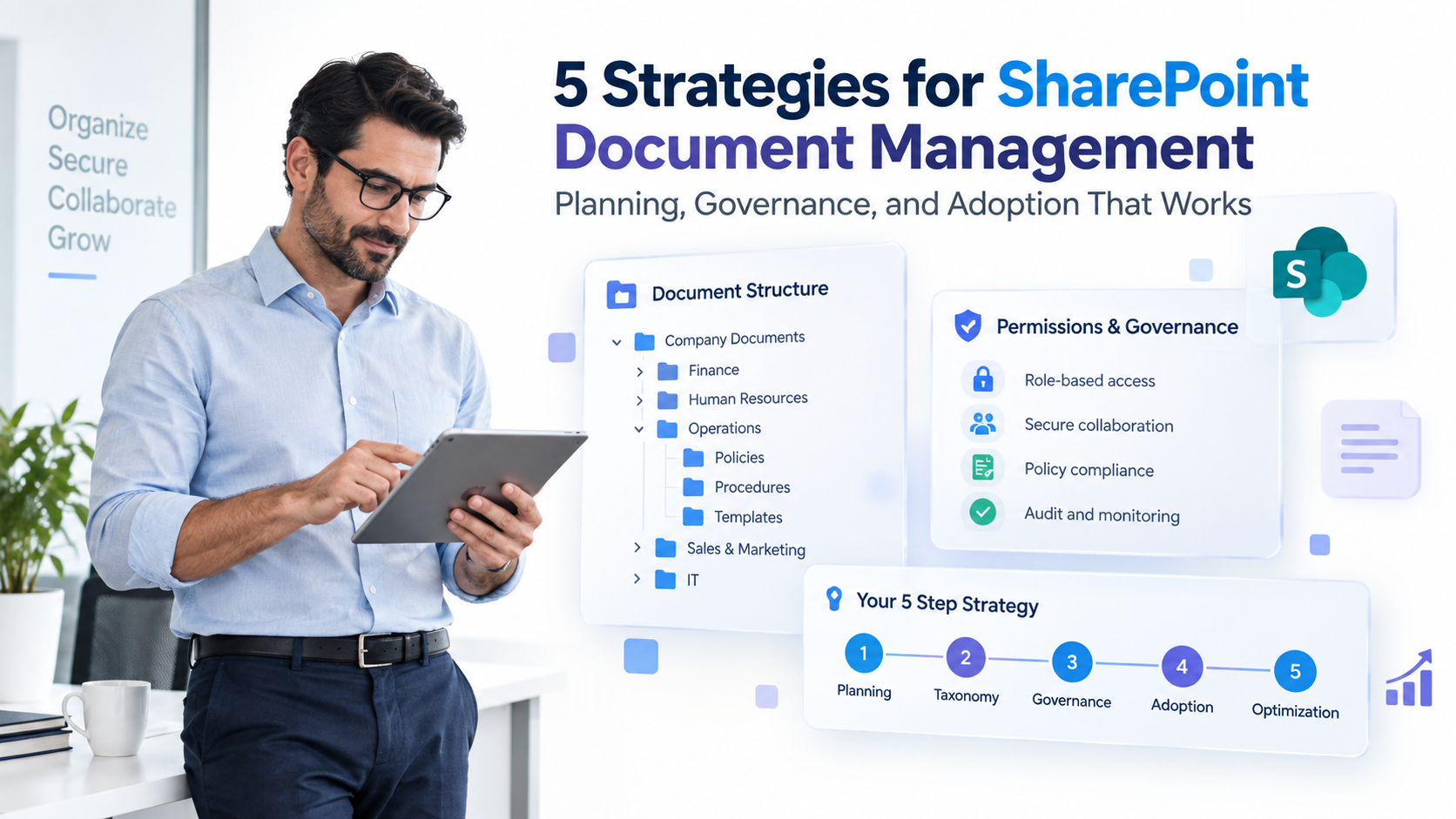
- Fragmented document repositories and poor information architecture: Files scattered across multiple SharePoint sites, inconsistent naming conventions, missing metadata, and broken folder hierarchies make knowledge discovery slow and error-prone. Employees waste time searching for documents or, worse, recreate them because they can’t find the originals.
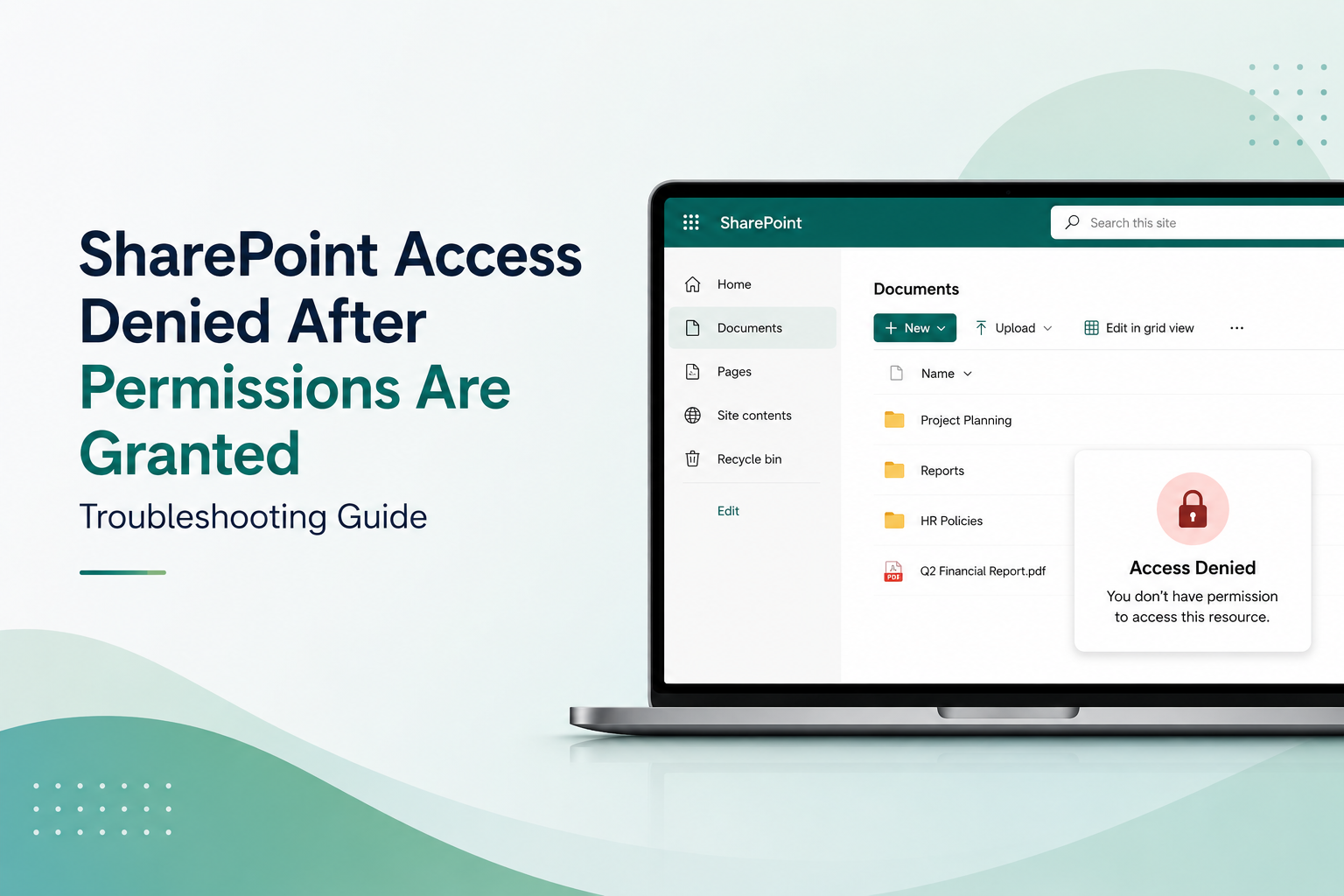
- Weak governance and access controls: Without a clear governance framework, document access becomes chaotic. Sensitive information may be overshared, inactive users retain unnecessary access, and compliance audits reveal blind spots that create legal and security liability.
- Underutilized workflow and automation opportunities: Teams continue relying on email approvals, manual spreadsheet updates, and disconnected task lists instead of automating repetitive processes with Power Automate workflows. Employees spend time on low-value work instead of strategic initiatives.
- Poor integration between SharePoint, Teams, OneDrive, and Power Apps: When these platforms aren’t connected strategically, data silos persist. Employees bounce between applications, duplicate information, and lose context. The promised unified digital workplace never materializes.
- Inefficient or failed migrations from legacy platforms: Migrating from legacy document management systems, older SharePoint versions, or on-premises servers introduces risk of data loss, broken links, incomplete metadata mapping, and unexpected downtime if not executed by someone with proven migration expertise.
- High cost and scarcity of in-house SharePoint talent: Hiring full-time SharePoint architects, developers, and governance specialists is expensive and difficult. Competition for Microsoft 365 experts is fierce, and building expertise in-house takes months or longer.
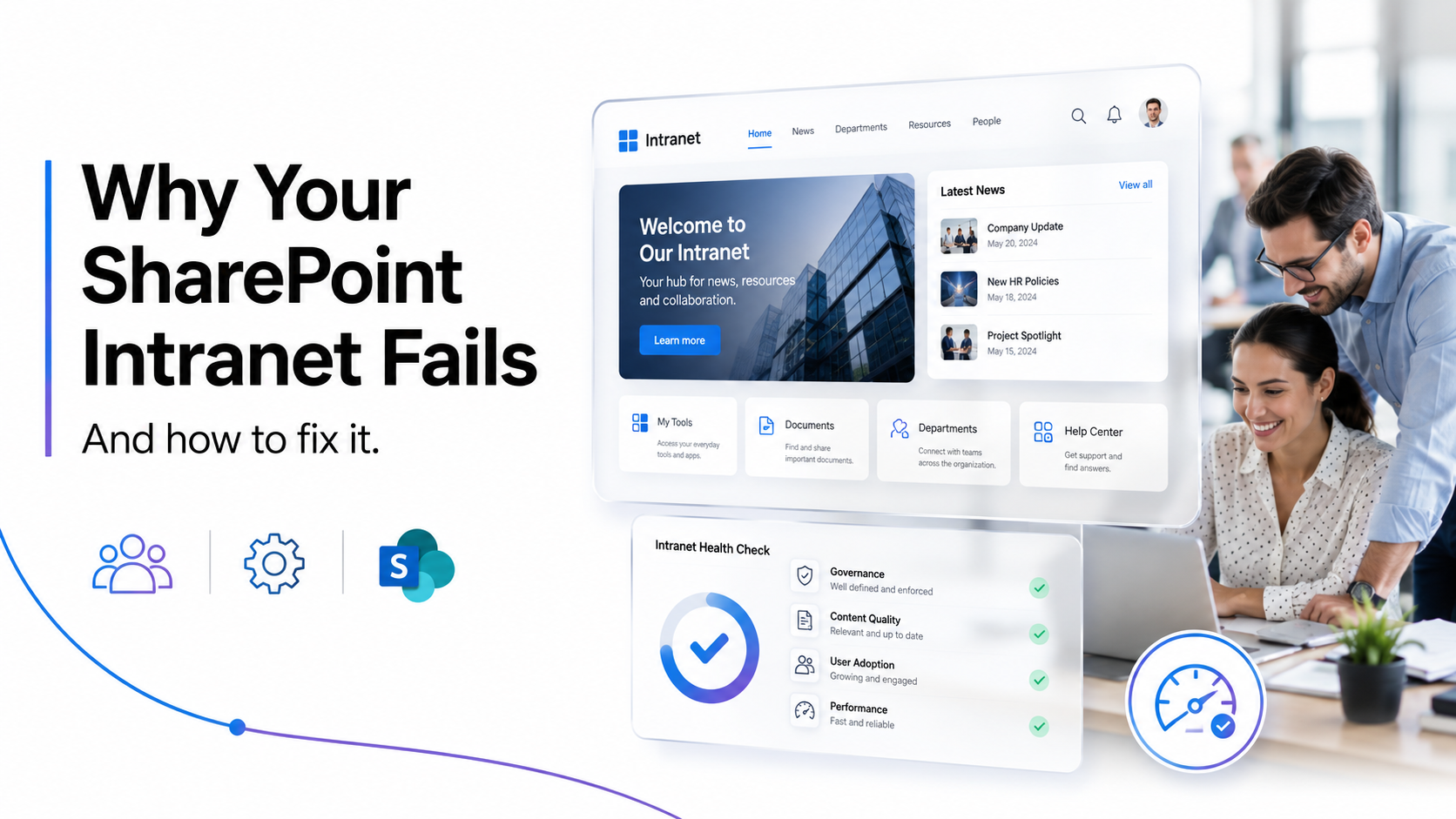
- Low user adoption and organizational resistance: Technology without clear purpose, training, and change management fails. Users don’t understand why they should move from familiar email folders to SharePoint. Adoption stalls, and the investment deteriorates.
When these challenges compound, organizations waste licensing spend, fail compliance audits, experience productivity delays, and struggle to retain employees who expect modern, intuitive digital tools. The financial and reputational cost becomes substantial. Sound familiar?

How a SharePoint Consulting Company Solves These Challenges
A SharePoint consulting company approaches these challenges systematically, mapping each solution directly to specific pain points and organizational goals. This structured methodology differentiates professional consulting from ad-hoc fixes.
Governance and Information Architecture
SharePoint consulting services begin with discovery and assessment. A consultant evaluates your current state: existing site collections, content volume, metadata maturity, and governance gaps. From that foundation, they design a scalable taxonomy, implement managed metadata frameworks, and establish access control policies. The result transforms chaos into organization. Teams know where to publish content. Search becomes effective. Compliance audits reveal clear, defensible practices.
Workflow Automation and Process Efficiency
Here’s the thing: a SharePoint consulting company identifies manual, repetitive processes ripe for automation. Purchase requests currently require five email handoffs? A Power Automate workflow can replace that with a single form submission, automatic routing based on budget amount, and real-time approver notifications. Document reviews that take two weeks can be shortened to days through automated routing and parallel approvals. Employees focus on high-value decisions, not administrative busywork.
Integrated Digital Workplace and Platform Connectivity
Worth noting: consultants design a cohesive Microsoft 365 ecosystem where SharePoint, Teams, OneDrive, Power Apps, and Power Automate work together seamlessly. Teams channels can be pinned to SharePoint team sites, giving employees instant access to documentation. Power Apps built on SharePoint lists eliminate separate systems. Power BI dashboards aggregate data across platforms. Employees experience a unified digital workplace instead of application chaos.
Migration and Modernization
When organizations need to migrate from on-premises SharePoint to cloud, import legacy platform data, or consolidate fragmented site collections, a migration consultant plans and executes the transition with minimal downtime and complete data integrity. They map old metadata to new taxonomies, redirect broken links, and ensure no content is orphaned during the transition.
Change Management and User Adoption
Beyond technology, a SharePoint consulting company recommends training programs, communication cadences, and success metrics to drive user adoption. They help you identify adoption champions within departments, create role-specific training, and establish feedback loops so you can iterate based on real user needs. Technology alone fails. People-focused consulting ensures your investment delivers lasting organizational change.
Expert Perspective
In our work with clients, we’ve seen adoption rates improve by 40-60% when organizations hire a SharePoint consulting company specifically for change management and governance, not just technology setup. The difference lies in addressing organizational readiness, training design, and clear communication of value.
What to Look For in a SharePoint Consulting Partner
Not all consulting firms are equal. When evaluating a SharePoint consulting company, prioritize these factors. First, verify Microsoft partnership status and relevant certifications. A Microsoft Gold Partner or firms with Microsoft Certified Solutions Architects (MCSA) and Certified Data Specialists demonstrate credibility. Second, examine their cross-industry experience. Have they worked in finance, healthcare, manufacturing, and government? Different industries have different governance and compliance requirements. A consultant who’s navigated HIPAA, PCI-DSS, and SOX regulations brings awareness you can’t learn in a classroom.
Third, assess their approach to change management. Do they offer training and adoption services, or only technical implementation? Do they conduct stakeholder interviews and design communication plans? Finally, request references and case studies. Ask what went wrong in past projects, not just what succeeded. Mature consulting firms acknowledge trade-offs and challenges candidly.
Why Organizations Choose Professional SharePoint Consulting
Deciding between in-house team building, a SharePoint consulting company, and a generic vendor requires honest comparison. Consider these factors alongside the strategic implications of each choice.
| Factor | SharePoint Consulting Company | In-House Team | Generic IT Vendor |
|---|---|---|---|
| Expertise Depth | Deep, multi-industry, current on latest features and best practices | Limited initially; takes months or longer to build competency | Generalist; often lacks specialized SharePoint depth |
| Time to Value | Fast; immediate impact from day one with proven methodologies | Slow learning curve; expect 6-12 months before productivity gains | Unpredictable; may require multiple vendor handoffs and rework |
| Scalability | Flexible resource scaling; ramp up for large projects, scale down for maintenance | Fixed headcount; difficult and expensive to scale up or down | May lack technical specialization or become a long-term dependency |
| Cost Structure | Variable; pay for expertise when needed without long-term payroll commitment | High long-term salary, benefits, and training investment; ongoing cost regardless of utilization | Often higher overall due to inefficiency, rework, and multiple projects |
| Governance & Compliance | Industry best practices; audit-ready frameworks from day one | Risk of gaps; inconsistent application of standards across projects | May miss nuanced regulatory requirements specific to your industry |
| Knowledge Transfer | Structured training and documentation; strengthens internal capability | Limited external perspective; knowledge gaps remain | Typically minimal; dependency on vendor support continues |
The comparison reveals three critical differentiators. First, specialized expertise matters enormously. A SharePoint consulting company lives and breathes the platform. They know which configuration choices create maintenance headaches long term. They understand which third-party integrations play nicely with SharePoint governance and which create future problems. That institutional knowledge takes in-house teams months or years to accumulate.
Second, flexibility and scalability provide financial advantage. During a migration project, you may need five consultants on-site daily. After launch, ongoing optimization requires one part-time expert. A consulting model scales resource allocation to actual need. In-house payroll creates pressure to keep teams busy or justify their existence, regardless of actual workload.
Third, a SharePoint consulting company reduces organizational risk through proven methodologies, pre-built governance templates, and compliance mappings tested across industries. An in-house team invents those frameworks from scratch, often learning through costly mistakes. A generic vendor may lack the specific expertise to navigate SharePoint complexity, resulting in solutions that work initially but create maintenance nightmares later.
Industry-Specific Applications and Use Cases
Different industries have distinct SharePoint consulting needs shaped by regulatory requirements, collaboration patterns, and data sensitivity. Understanding how SharePoint consulting services apply to your sector clarifies tangible value.
Finance and Banking
Financial institutions must maintain audit trails, demonstrate regulatory compliance, and manage sensitive customer and operational data. A SharePoint consulting company designs document management systems with immutable audit logs, retention policies aligned to regulatory holds, and automated compliance workflows. Power Automate can route loan applications through required approval chains with timestamp documentation. Managed metadata ensures proper classification of sensitive documents. The result: regulatory confidence, reduced audit friction, and faster transaction processing.
Healthcare
Healthcare organizations face HIPAA compliance requirements, physician collaboration across departments, and the need to centralize procedure documentation and patient-facing materials. SharePoint consulting services configure intranet portals with strict access controls ensuring protected health information reaches only authorized personnel. Teams integration with SharePoint enables secure inter-departmental communication without patient data breaching external email. Automated workflows route consent forms and medical records through required gatekeepers. The outcome: compliance assurance, improved care coordination, and defensible privacy practices.
Manufacturing and Supply Chain
Manufacturing organizations require centralized access to equipment manuals, procedure documentation, supply chain partner collaboration, and audit trail maintenance for quality assurance. A SharePoint consulting company establishes collaborative portals where equipment specifications, maintenance schedules, and safety procedures live in a single source of truth. Supply chain partners access controlled areas via modern authentication without needing VPN access. Automated workflows track equipment maintenance and generate compliance reports. The benefit: faster troubleshooting, fewer errors, and auditable quality processes.
Government and Education
Public sector organizations handle sensitive records, coordinate across multiple agencies or departments, and must demonstrate public records compliance. SharePoint consulting services design systems with multi-level security clearance, complex permission hierarchies, and immutable records retention aligned to public records legislation. Automated e-signature and workflow routing accelerate permit approvals and inter-agency coordination. Search and discovery tools help citizens and employees find information efficiently. The advantage: transparency, efficiency, and documented compliance with public accountability requirements.
How to Get Started with a SharePoint Consulting Partner
Engaging a SharePoint consulting company follows a structured path from assessment through ongoing optimization. Understanding each phase helps you set realistic expectations and plan internal resource allocation.
Step 1: Assess Your Current State and Define Business Goals
A consulting partner conducts a discovery workshop with IT leadership, business stakeholders, and end users. They evaluate your current SharePoint footprint, Microsoft 365 adoption, pain points, and desired business outcomes. They interview key stakeholders to understand competing priorities. The output is a clear assessment document identifying gaps, opportunities, and strategic recommendations aligned to your business goals.
Step 2: Define Governance Framework and Implementation Strategy
Based on discovery findings, the consultant develops a multi-phased implementation plan, governance framework, and success metrics. They align recommendations with business priorities, resource availability, and organizational change capacity. This phase produces an executive-ready strategy document that secures stakeholder alignment and budget approval.
Step 3: Design Solution Architecture with Pilot Validation
The consultant designs detailed solution architecture covering information taxonomy, site structure, metadata models, workflow logic, and security frameworks. In most cases, this phase includes a proof-of-concept or pilot implementation where a subset of teams tests the designed approach. User feedback validates assumptions before full-scale rollout. The pilot reduces implementation risk and builds organizational confidence.
Step 4: Execute Implementation and Deploy User Training
During this phase, the consultant builds sites, configures governance policies, deploys automation workflows, migrates legacy data, and conducts comprehensive user training. They work closely with your internal IT team, transferring knowledge so your team can support the platform long term. Training is role-specific, acknowledging that executives, power users, and casual users need different approaches.
Step 5: Establish Ongoing Support and Measure Adoption
After launch, the consultant establishes support models, monitors adoption metrics, gathers user feedback, and recommends iterative improvements. They help you transition from consulting support to internal ownership, ensuring your team feels confident and capable. Success is measured against the metrics defined in Step 2: adoption rates, time saved through automation, compliance audit results, or user satisfaction scores.
Frequently Asked Questions
How do I know if my organization needs a SharePoint consulting company?
Several signals indicate consulting value. If your Microsoft 365 adoption is stalled, governance is unclear, you’re struggling with migrations or integrations, or you lack in-house expertise, a SharePoint consulting company delivers immediate impact. Additionally, if you’ve experienced a failed implementation or have compliance audit findings related to document management, professional guidance becomes essential. A brief discovery call with a consultant helps you determine fit.
What’s the difference between SharePoint consulting and ongoing managed services?
Consulting focuses on strategy, design, implementation, and organizational change around a specific initiative or roadmap. Managed services provide ongoing operational support, maintenance, and optimization after launch. Many organizations benefit from both: consulting to design and build a modern environment, followed by managed services to support and optimize it long term. A good consulting partner can recommend which model suits your situation.
Will a SharePoint consulting company work with my existing IT team?
Yes. Professional SharePoint consulting companies view your internal IT team as partners, not competitors. They conduct knowledge transfer, involve your team in design decisions, and ensure handoff documentation and training so your team owns the platform after the engagement concludes. A consultant should strengthen your internal capability, not create dependency.
How does SharePoint consulting differ from custom SharePoint development?
SharePoint consulting services focus on governance, information architecture, integration, and organizational change using primarily out-of-the-box features, Power Automate workflows, and Power Apps. Custom SharePoint development involves building solutions beyond standard capabilities, such as custom web parts, API integrations, or specialized extensibility. Most consulting engagements use 80-90% out-of-the-box functionality, with custom development reserved for genuine business needs that can’t be met otherwise. Learn more about when custom SharePoint development becomes necessary versus out-of-the-box solutions.
What happens after the consulting engagement ends?
A professional SharePoint consulting company ensures you’re not left stranded. They provide comprehensive documentation, train your internal team, and establish clear support transition. Some engagements include a post-launch optimization period where the consultant monitors metrics and helps your team address issues. Beyond that, you may transition to managed services for ongoing support, engage the consultant on an ad-hoc basis for future projects, or manage the platform independently if your team is prepared. The end goal is your team’s confidence and capability.
How can SharePoint consulting help with document management and compliance?
A SharePoint consulting company designs governance frameworks that align your document management practices to regulatory requirements specific to your industry. They establish data classification schemes, implement retention policies, configure access controls, and create audit trails. Automated workflows route sensitive documents through required approval chains. The result is a defensible, auditable system that satisfies compliance auditors. For detailed guidance, explore how document management systems ensure compliance without compromising efficiency.
Can a SharePoint consulting company help improve employee productivity and adoption?
Absolutely. Beyond technology setup, a strong SharePoint consulting company focuses on change management, user training, and adoption strategy. They help you communicate the value of SharePoint to employees, address concerns, and design training specific to different roles. They identify adoption champions within departments and establish feedback loops so you continuously improve the user experience. They measure adoption metrics and iterate based on what’s working. The best technology fails without people-focused change management. Discover how modern SharePoint intranets enhanced with AI tools can unlock employee productivity.
Ready to Transform Your Digital Workplace
A SharePoint consulting company designed specifically for your business unlocks adoption, streamlines workflows, and delivers measurable ROI from your Microsoft 365 investment. Let’s discuss how strategic SharePoint consulting accelerates your digital transformation and strengthens your organization’s collaboration foundation.