Centralized Records Management for Enterprise Organizations
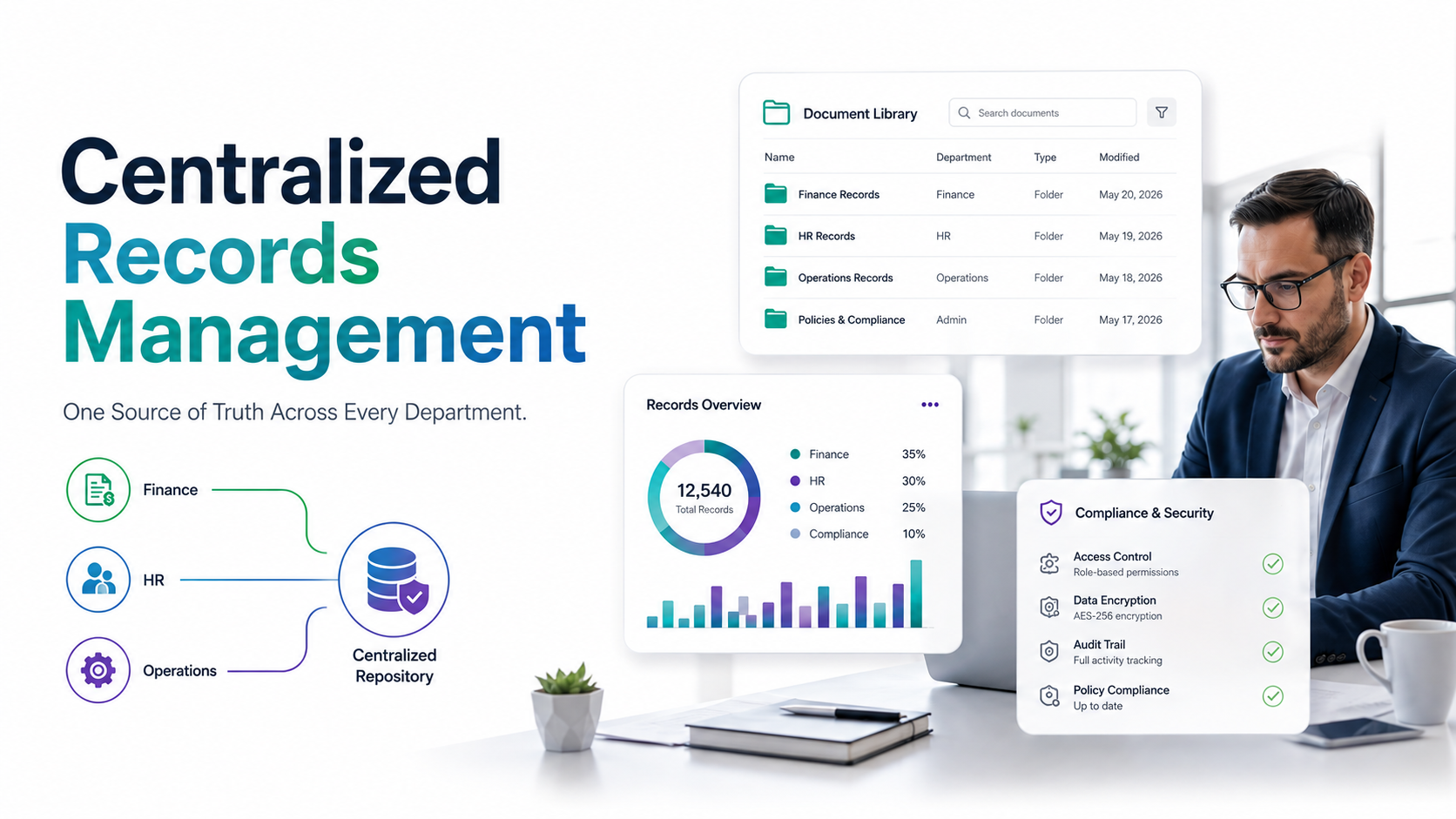
Centralized records management eliminates the chaos of scattered documents across departments, creating a unified system where Finance, HR, Operations, and every other team works from the same source of truth. When your organization spreads business records across email servers, shared drives, and departmental systems, compliance becomes nearly impossible and operational friction multiplies. A unified approach to managing records across multiple departments transforms how organizations handle retention, discovery, and regulatory control while cutting through the silos that waste time and create legal risk.
Key Takeaway
A unified records management system eliminates silos, enforces consistent policies across all departments, and dramatically reduces compliance risk while improving operational efficiency.
In This Article
- The Rising Pressure: Why Records Management Matters Now
- The Core Challenge: Records Fragmentation Across Departments
- The Solution: Enterprise Records Management System
- Why Leading Organizations Choose a Unified Approach
- Industry Applications and Use Cases
- How to Get Started with Centralized Records Management
- Frequently Asked Questions
The Rising Pressure: Why Records Management Matters Now
Organizations face unprecedented pressure to control records across departments. Regulatory frameworks like GDPR, HIPAA, SOX, and industry-specific compliance mandates now require demonstrable control over where records exist, who can access them, and how long they’re retained. On top of that, the explosion of digital work, email, cloud storage, and collaboration tools has made records management exponentially more complex. When records exist in multiple systems with no central governance, organizations can’t prove compliance even when they’re trying.
“Organizations that cannot demonstrate centralized control over their records face average audit costs that exceed those with unified systems by 40% or more, plus exposure to regulatory penalties.”
ARMA International, Records Management Standards & Compliance Report
Beyond compliance, there’s a hidden cost in operational efficiency. When employees spend hours searching for documents across departments, or when Finance can’t locate a contract that Operations filed under a different name, productivity suffers. Worth noting: inconsistent retention practices mean organizations either hoard data they should have deleted (storage waste and security liability) or accidentally dispose of records they need to keep (legal exposure). The honest answer is that the solution isn’t another departmental system. It’s unified governance applied across your entire organization.

The Core Challenge: Records Fragmentation Across Departments
Here’s the thing: centralized records management across departments fails in most organizations because records don’t exist in one place. Instead, they scatter across systems, creating a nightmare for anyone trying to enforce policy or prove compliance. Specifically, this fragmentation shows up in several critical pain points:
- No Single Source of Truth: Records live in email inboxes, personal shared drives, departmental systems, cloud storage folders, and legacy file servers simultaneously. Nobody knows where the authoritative version lives.
- Inconsistent Naming and Tagging: Finance names files “Invoice_2024_Q1” while Procurement uses “PO_Jan_Feb_Mar_2024.” Without metadata standards, searching across departments becomes guesswork.
- Enforcement Gaps: Some departments follow a 5-year retention schedule; others keep everything. Legal hold requests affect one system but miss records in another, creating gaps in legal discovery.
- Slow Document Discovery: When records exist across multiple systems, finding what you need for a regulatory request or audit takes manual coordination across teams. A task that should take hours takes days.
- Audit Trail Blindness: Without centralized logging, organizations can’t prove who accessed what records, when changes occurred, or whether retention policies were followed. Regulators penalize this lack of visibility.
- Compliance Risk Multiplies: Each uncontrolled repository is a potential violation. Regulators now expect organizations to demonstrate control, not just good intentions.
The consequence is immediate and expensive. Organizations with fragmented records face longer discovery timelines during audits, compliance violations that damage reputation, and wasted employee time coordinating across departments. In regulated industries like healthcare, insurance, and finance, this fragmentation directly increases legal liability.
The Solution: Enterprise Records Management System
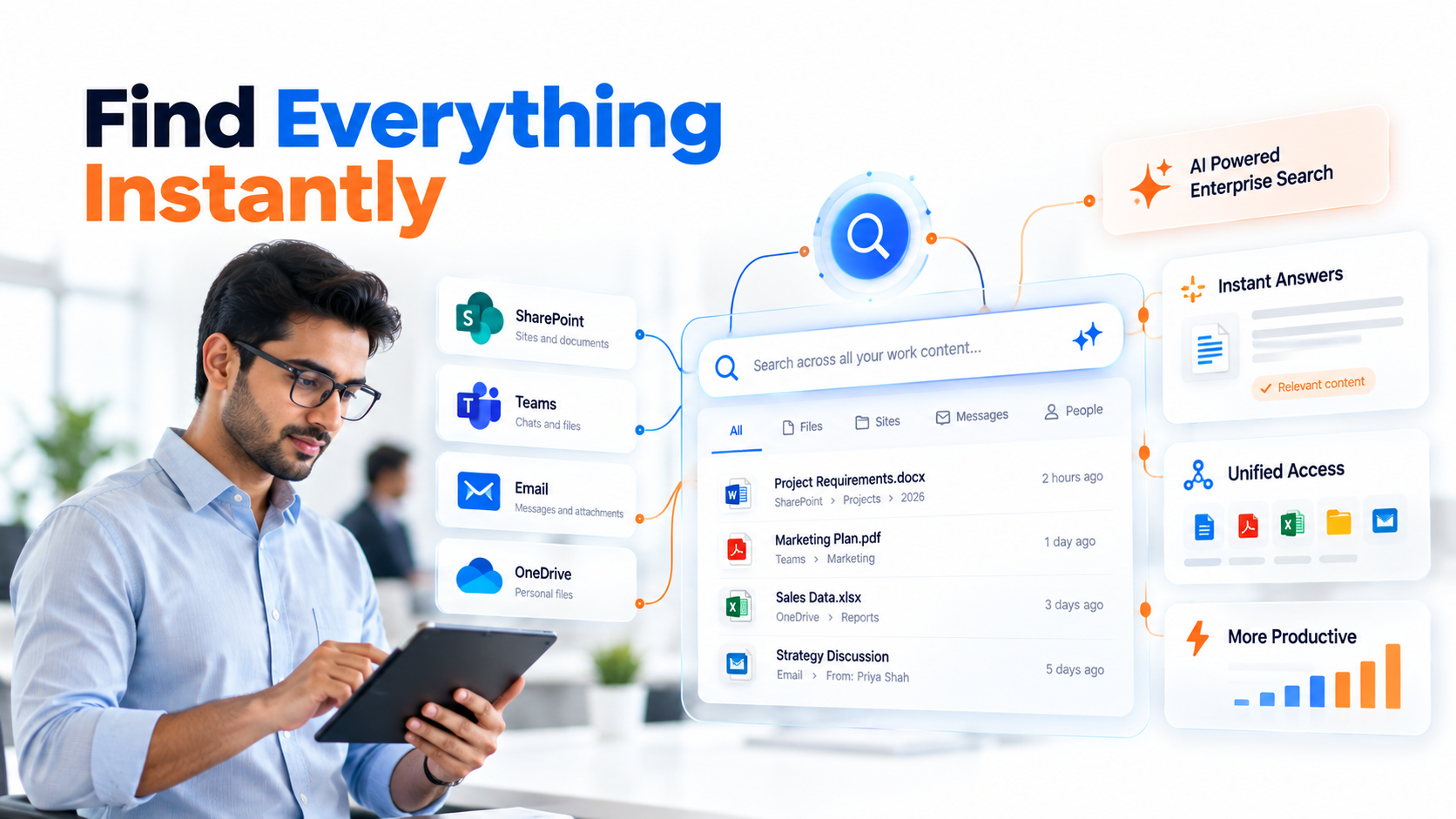
Centralized records management solves fragmentation by creating unified governance that multiple departments can use simultaneously without losing their autonomy. The right system addresses every pain point we listed above: it establishes a single repository with enforced metadata standards, applies retention schedules uniformly, provides search and discovery that works across department boundaries, and maintains complete audit trails for regulatory proof.
Here’s how a centralized approach transforms each challenge. First, a single repository with department-specific classification schemes means Finance, HR, and Operations can organize records their way while still contributing to a unified whole. Second, automated retention schedules and deletion workflows eliminate manual coordination. When a retention date arrives, the system deletes records according to policy. No exceptions, no human error. Third, full-text search combined with metadata standards lets anyone find records in seconds instead of hours, regardless of which department created them. Fourth, centralized access controls ensure only authorized personnel can view sensitive records. Finally, automated audit trails prove to regulators exactly what happened to every record.
Expert Perspective
True centralization isn’t about forcing every department into identical workflows. It’s about unified governance, one retention schedule, one security model, one source of truth, while allowing department-specific document organization and retrieval methods. The system enforces compliance at the infrastructure level so policy compliance doesn’t depend on employee discipline.
When evaluating a centralized records management system, prioritize these capabilities:
- Flexible Department Workflows: Teams need to organize records in ways that match their business process, not force-fit a one-size-fits-all structure.
- Role-Based Access Controls (RBAC): Granular permissions ensure Finance sees financial records, HR sees employee files, and executives can access what they need without exposing unnecessary data.
- System Integration: The solution must connect to email systems, CRM platforms, HR systems, and other repositories where records currently live. Centralization fails if people still maintain separate systems.
- Compliance Templates: Regulated industries need built-in retention schedules, legal hold capabilities, and audit reporting aligned with HIPAA, GDPR, SOX, and similar frameworks.
- Scalability: The system must grow with your organization’s data volume and user base without performance degradation.
Why Leading Organizations Choose a Unified Approach
Enterprise organizations increasingly recognize that centralized records management isn’t optional. It’s foundational to modern operations. The comparison below shows why unified systems outperform fragmented approaches across every dimension that matters to decision-makers:
| Factor | Unified Records Management | Department-Specific Systems | Shared Drives + Manual Process |
|---|---|---|---|
| Governance Consistency | One retention schedule, enforced automatically across all departments | Each department sets own rules; conflicts and gaps emerge | No enforcement; compliance depends on manual adherence |
| Multi-Department Workflow Support | Centralized metadata with flexible department-level organization | Records can’t easily move between systems; requires manual handoff | No central coordination; duplicate records create confusion |
| Legal Hold & Compliance | One command applies hold across all departments; complete audit trail | IT must manually identify and freeze records in each system | Holds are incomplete; regulators can’t verify enforcement |
| Search & Discovery Speed | Full-text search across all departments in seconds with unified metadata | Must search each system separately; inconsistent naming makes retrieval unpredictable | Manual searching or IT extraction; hours per request |
Organizations using unified records management systems report measurable operational improvements. They achieve faster compliance responses to regulatory requests, shorter legal discovery timelines during litigation, and reduced storage costs through enforced deletion of outdated records. Beyond these direct benefits, they eliminate the friction between departments caused by unclear ownership of records and inconsistent naming conventions.
The real advantage of centralization isn’t the software. It’s the governance framework the software enforces. When your organization standardizes on one retention schedule, one set of metadata standards, and one system of record for where things live, coordination between departments becomes seamless. This is why leading enterprises in finance, healthcare, insurance, and manufacturing have moved away from departmental systems toward unified records management.

Industry Applications and Use Cases
Centralized records management solves specific, mission-critical challenges in every regulated industry. Here’s how different sectors benefit:
Finance and Accounting
Finance departments manage hundreds of thousands of records spanning accounts payable, accounts receivable, general ledger entries, contracts, tax documents, and audit files. These records must be retained for 5, 7 years depending on jurisdiction and document type. A unified system ensures all financial records follow the same retention schedule, automatically purges expired documents, and provides auditors with proof of proper record management. Additionally, when Finance needs to locate a specific contract for a dispute or negotiation, unified search across all departments (including procurement and legal) returns results instantly.
Healthcare Organizations
Healthcare faces real complexity in centralized records management because patient records, billing documents, and compliance files exist in clinical systems, billing systems, and administrative databases simultaneously. HIPAA requires organizations to control access, maintain audit trails, and prove retention compliance. Centralization brings all these record types together under one retention schedule and one access control system. Clinicians see only patient data they need, billing staff access financial records, and compliance teams can instantly verify that records were deleted on schedule.
Manufacturing and Supply Chain
Manufacturing organizations manage production records, procurement documents, quality assurance files, and supply chain records spread across Operations, Procurement, Quality, and Finance. Retention requirements vary, some records must be kept for product warranty periods (5+ years), others for regulatory compliance. Centralized records management ensures a defective product manufactured in 2018 can be instantly located across all department records because metadata standards and retention policies apply uniformly. This capability becomes critical during product recalls or liability investigations.
Insurance and Legal Services
Insurance and legal firms manage policies, claims, case files, and correspondence under strict legal hold requirements. When litigation begins, organizations must instantly identify all records related to a specific case or policyholder and apply legal holds across all systems. Centralized records management applies the hold once and it takes effect everywhere. This eliminates the risk of missing critical documents during discovery because they were filed in the wrong departmental system.
How to Get Started with Centralized Records Management
Implementing centralized records management doesn’t require replacing all existing systems at once. Instead, a phased approach builds momentum while minimizing disruption. Here’s what we recommend:
- Assess Current State: Document where records currently exist (email, shared drives, departmental systems, cloud storage) and identify gaps in governance. Understand which departments have existing processes and which rely on ad-hoc management. The outcome is a baseline inventory of your records landscape and the barriers to centralization.
- Define Records Classification and Retention Schedules: Work with department heads, compliance, and legal to establish standardized metadata (record types, departments, retention periods, access levels). This step requires cross-functional alignment but creates the foundation for all downstream decisions. The outcome is a records retention schedule that all departments agree to follow.
- Plan Migration and Rollout Strategy: Decide whether to migrate all records at once or phase by department. Choose a phased approach if you want to validate processes and build team confidence. Choose full migration if rapid standardization is critical to compliance. The outcome is a realistic timeline and resource plan for moving records into the centralized system.
- Configure Access Controls and Workflows: Set up role-based permissions so Finance sees financial records, HR sees employee files, and audit teams can access everything. Define department-specific workflows if needed. The outcome is a configured system ready for daily use with security and governance enforced at the technical level.
- Train Teams and Monitor Adoption: Equip department heads and record custodians to use the system effectively. Establish compliance KPIs (e.g., percentage of new records classified correctly, retention policy adherence rate) and track them monthly. The outcome is sustained adoption and continuous improvement as teams develop proficiency and the organization learns what works.
Frequently Asked Questions
How do we ensure different departments comply with a centralized records management system?
Compliance is enforced at two levels. First, the system itself enforces policy through workflows and restrictions: records can’t be deleted before their retention date, access is controlled by role, and metadata is required before filing. Second, department heads receive dashboard visibility showing compliance metrics in their area. This combination of technical enforcement and leadership visibility creates accountability across departments.
Can a centralized system handle department-specific record types?
Yes. Modern centralized records management platforms support custom metadata, classification schemes, and workflows per department while maintaining central governance. Finance records flow through Finance-specific workflows, HR records through HR-specific workflows, but all records follow the same retention schedule and security model. This flexibility is essential for adoption because it respects how departments actually work.
What’s the difference between centralized records management and document management?
Records management focuses on compliance, retention, legal holds, and regulatory control. Document management emphasizes collaboration, version control, and ease of access. Most organizations need both. Document management systems excel at helping teams work together on active documents; records management systems ensure those documents are retained and disposed of correctly. A unified platform handles both, but with records management as the foundation layer.
How much time and resources does centralized records management implementation require?
Implementation scope depends on your current infrastructure, data volume, and organizational readiness. The key variables are how many departments you’re coordinating, how much data needs migration, and how aligned departments already are on retention policy. Rather than estimate broadly, we recommend scheduling a discovery conversation where we assess your specific situation and provide realistic scope. Every organization’s path is different.
Is centralized records management required for regulatory compliance?
Regulations like GDPR, HIPAA, and SOX require organizations to demonstrate control over their records. Centralized records management is the most effective way to prove that control because it creates audit trails, enforces retention policies, applies legal holds uniformly, and provides search capability for regulatory requests. Regulators increasingly expect this level of control, making centralization not just beneficial but necessary for compliance confidence.
Take Control of Records Across All Departments
Fragmented records create compliance risk, operational waste, and legal exposure. A unified records management approach eliminates silos while giving departments the autonomy they need. Our team has helped enterprise organizations implement centralized systems that balance governance with flexibility, reducing audit costs while improving search and discovery for everyone.